
Climate change
Between 2030 and 2050, climate change is expected to cause approximately 250 000 additional deaths per year from malnutrition, malaria, diarrhoea and heat stress alone. The direct damage costs to health are estimated to be between US$ 2–4 billion per year by 2030. Areas with weak health infrastructure – mostly in developing countries – will be the least able to cope without assistance to prepare and respond.
Greenhouse gas emissions that result from the extraction and burning of fossil fuels are major contributors to both climate change and air pollution. Many policies and individual measures, such as transport, food and energy use choices, have the potential to reduce greenhouse gas emissions and produce major health co-benefits, particularly by abating air pollution. The phase out of polluting energy systems, for example, or the promotion of public transportation and active movement, could both lower carbon emissions and cut the burden of household and ambient air pollution, which cause 7 million premature deaths per year
Climate change is already impacting health in a myriad of ways, including by leading to death and illness from increasingly frequent extreme weather events, such as heatwaves, storms and floods, the disruption of food systems, increases in zoonoses and food-, water- and vector-borne diseases, and mental health issues. Furthermore, climate change is undermining many of the social determinants for good health, such as livelihoods, equality and access to health care and social support structures. These climate-sensitive health risks are disproportionately felt by the most vulnerable and disadvantaged, including women, children, ethnic minorities, poor communities, migrants or displaced persons, older populations and those with underlying health conditions.
In the short to medium term, the health impacts of climate change will be determined mainly by the vulnerability of populations, their resilience to the current rate of climate change and the extent and pace of adaptation. In the longer term, the effects will increasingly depend on the extent to which transformational action is taken now to reduce emissions and avoid the breaching of dangerous temperature thresholds and potential irreversible tipping points.
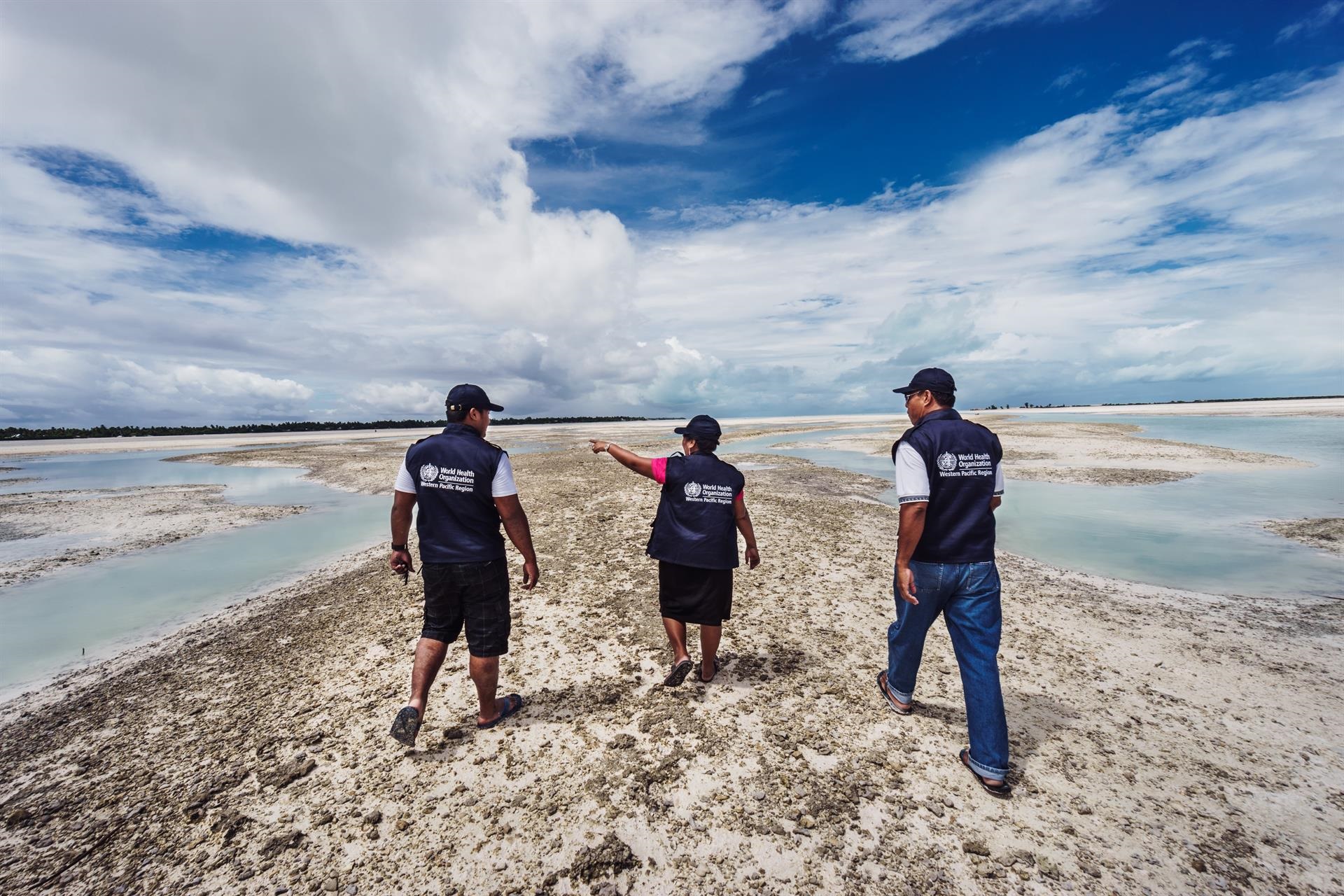
WHO supports countries in building climate-resilient health systems and tracking national progress in protecting health from climate change, as well as in assessing the health gains that would result from the implementation of the existing Nationally Determined Contributions to the Paris Agreement, and the potential for larger gains from more ambitious climate action.
WHO’s work plan on climate change and health includes:
- advocacy and partnerships: coordinating with partner agencies within the UN system, and ensuring that health is properly represented in the climate change agenda, as well as providing and disseminating information on the threats that climate change presents to human health and opportunities to promote health while cutting carbon emissions;
- monitoring science and evidence: coordinating reviews of the scientific evidence on the links between climate change and health; assessing country's preparedness and needs when facing climate change; and developing a global research agenda;
- supporting countries to protect human health from climate change: strengthening national capacities and improving the resilience and adaptive capacity of health systems to deal with the adverse health effects of climate change; and
- building capacity on climate change and human health: assisting countries to build capacity to reduce health vulnerability to climate change and promoting health while reducing carbon emissions.

/environment-climate-change-and-health-(ech)/air-quality-energy-and-health-(aqh)/module-5-card.tmb-144v.png?sfvrsn=83bcff7d_4)


