Spread awareness
Share information about the campaign using #WorldBloodDonorDay #GiveBlood

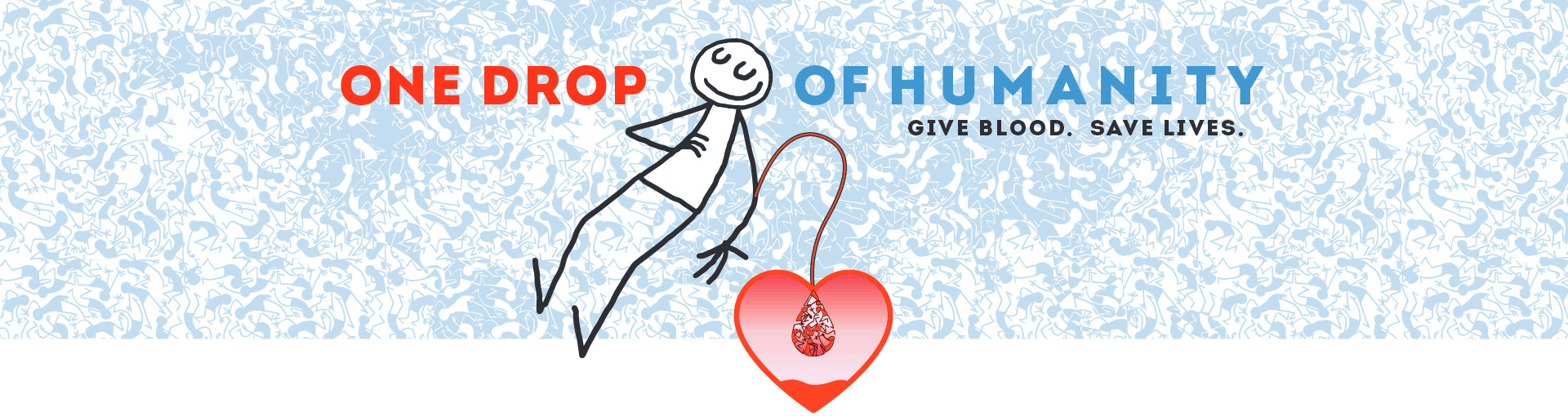
One Drop of Humanity. Give Blood. Save Lives.
Every year on 14 June, the world comes together to celebrate World Blood Donor Day, a global tribute to the millions of voluntary, unpaid blood donors whose generosity saves lives every day. Their contributions are essential to health systems everywhere, supporting patients during emergencies, childbirth, surgeries, cancer treatment and the lifelong care of many serious conditions.
This year’s campaign, “One Drop of Humanity. Give Blood. Save Lives.”, places humanity at the heart of every blood donation. It reminds us that each donation is more than a medical act: it is a powerful expression of solidarity, compassion and collective responsibility. Inspired by the idea that the whole of humanity can be reflected in a single drop, the campaign highlights how every donor helps form a lifeline that connects and protects us all.
While advances in science, testing and blood safety systems have made transfusion safer than ever, safe blood remains dependent on people willing to donate regularly and voluntarily. Yet many countries continue to face shortages and unequal access to safe blood and blood products, particularly in low- and middle-income settings.
The objectives of this year’s campaign are to:
Together, we can help ensure that safe blood is available for everyone, everywhere, whenever it is needed.
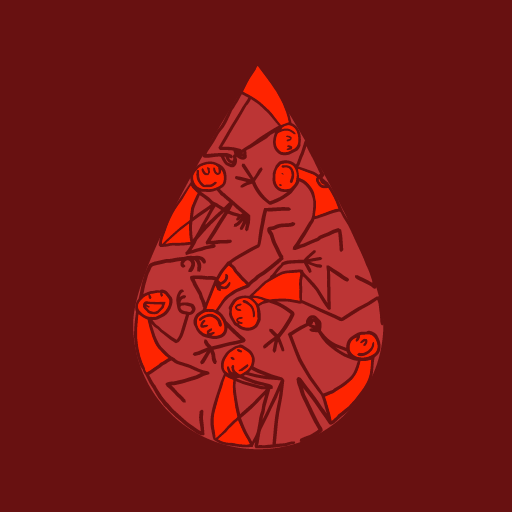
Drop your DropJoin people from every country and pledge to give blood this year. Together, 8 donors form one living drop. |

| One unit saves up to 3 lives |
| 120 million donations collected yearly |
| Voluntary donors are the safest source |
 Vismita Gupta-Smith
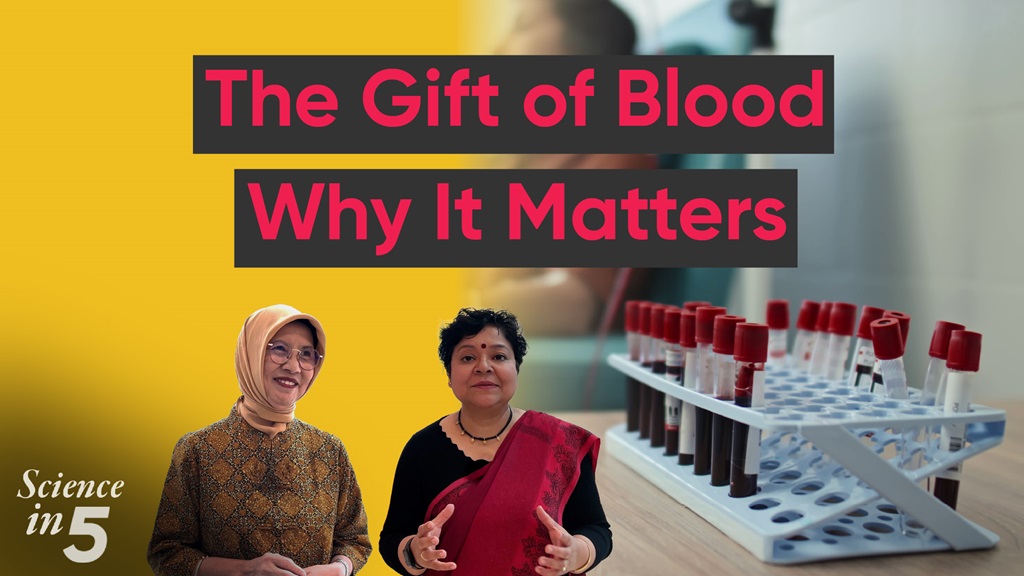
VGS We're talking about something powerful, invisible and life-saving. Your blood. It's a gift only you can give. Our expert is Dr Yuyun Maryuningsih and we’re talking about blood donation. Welcome, Yuyun. As a student, I used to donate blood quite regularly and also throughout my work life. What about you?
YM Of course, I have, and I always tell people that donating blood is easy, safe and makes a real difference.
VGS But there's something new I learned, that when you donate blood, you could be saving up to three lives, right?
YM Yes, exactly. You are right, because when you donate blood, your blood will be separated into red blood cells, platelets and plasma. And each can be given to a different patient. For example, we can give the red blood cells for an anaemia patient. And then we can give the platelets to a bleeding patient and plasma for the infectious patients. All at once.
VGS And there is an expiry date for the donated blood. Talk to us about that.
YM Yes, for example, the platelets only last for five days, red blood cells for six weeks, and then plasma if frozen, it lasts for one year. That is why regular donation is very important to keep the blood stock of the blood bank, especially during emergency and outbreak situations.
VGS But it's not just about emergencies, right?
YM Absolutely. So for cancer treatment and surgeries, and also for treatment of severe anaemia, and mothers who have complications during childbirth, none of these are possible without safe blood.
VGS So now, let’s talk about how to donate blood. It’s important that it’s voluntary, right?
YM Voluntary unpaid donations are safer, because this donor is usually more honest about their health and it avoids exploiting vulnerable people, who might feel pressured to sell blood. And the voluntary blood donation systems, in general, are more reliable over the long term.
VGS So, Yuyun, when I was in university, I had a classmate who had haemophilia, and he needed regular blood donation. I think he needed blood plasma. And I'm talking about a few decades back when maybe the blood systems weren’t that safe. Unfortunately, he contracted HIV with infected blood. So talk to us about national blood donation systems. What does it take to keep it safe?
YM So the key is that the country needs to have a strong national blood system. That means that each unit of blood should be tested and then should be processed, and of course, storage and distribution according to the standard.
VGS Yuyun I remember, I was in Sri Lanka many years ago and they have a beautiful tradition of donating blood on full moon nights. And this donation happens in communities, universities, temples, isn’t that amazing?
YM Yes, that is a wonderful tradition. And for those wondering actually, you can donate blood more than once. So for example, if you want to donate red blood cell you can donate every 8-12 weeks. And if you want to donate platelets or plasma, you can donate every 2-4 weeks.
VGS Let's talk about who can donate blood.
YM Almost all can donate blood, from 18 to 65 years old and healthy, minimum 50 kilograms of body weight. And before donating blood, you will get a quick health check. So nothing scary.
VGS Okay, and it doesn't take very long, right? Just ten minutes?
YM Yes, of course, just ten minutes to get blood to be drawn and then, to complete collecting the blood, it takes 35, 30 minutes to 40 minutes, including refreshments.
VGS Okay, that's like your lunch break. You can go donate blood if you're eligible during your lunch break. Take a friend with you, get an appointment, and please donate blood. That was science in five today. Thank you, Yuyun. Until next time then. Stay safe, stay healthy, and stick with science.

One Drop of Humanity · WHO × ELYX 2026
A minimum of 1–2% of the population donating blood is vital to meet national needs – most countries have yet to reach this level. Together, with WHO and ELYX, pledge to give blood this year and shape that promise into a living drop with 7 others from around the world.
Each drop seals at 8 donors from 8 different countries. When complete, a new drop begins. Be part of the wall.