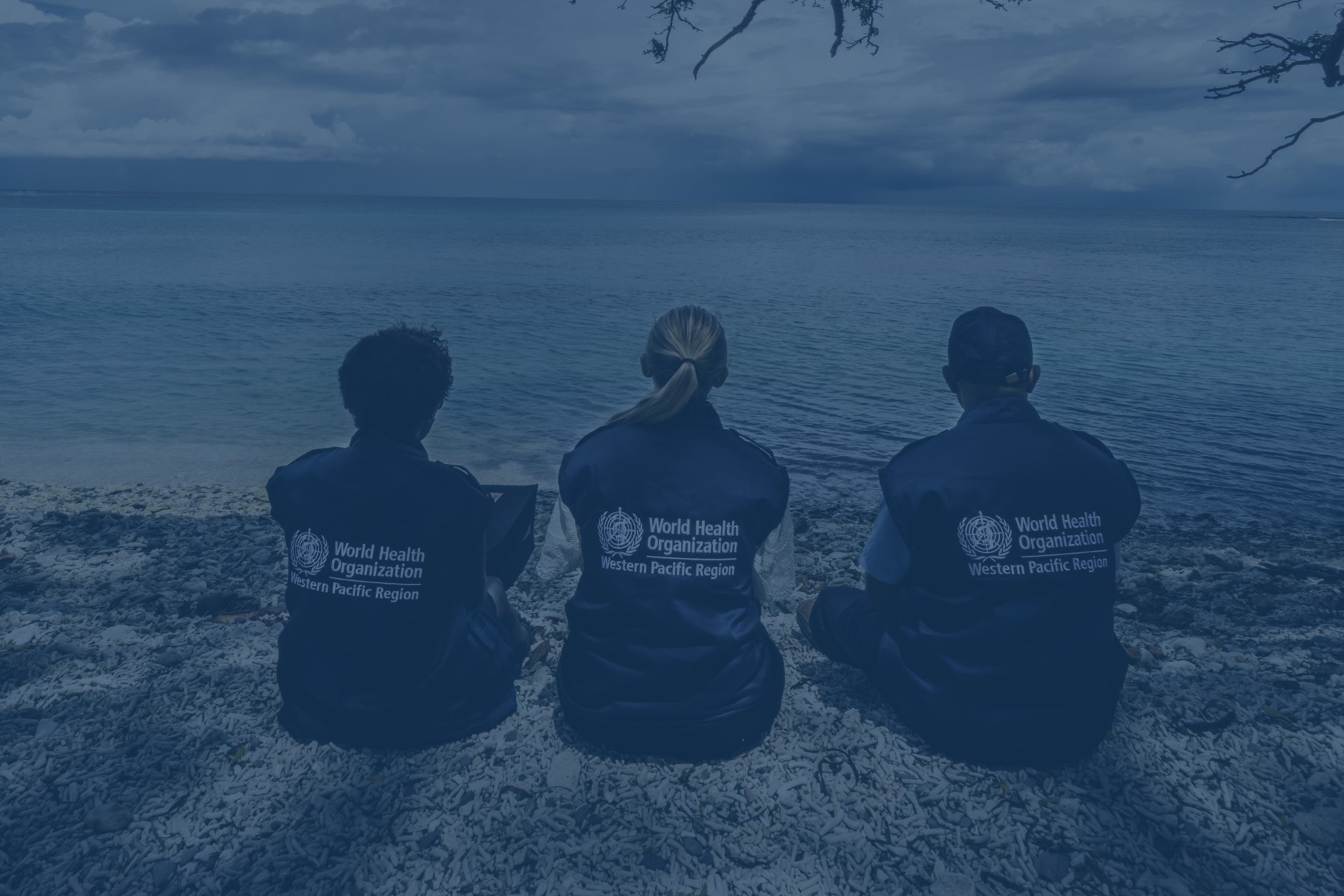
In 2023, as the World Health Organization (WHO) marked its 75th anniversary, the Organization began making sweeping changes to strengthen its foundations on the ground, with incremental but momentous steps taken to empower and better resource its 153 country offices across the world.
A plan underway proposes the most significant reforms ever seen for country offices in WHO’s history.
Firmly backing the plan is WHO Director-General Dr Tedros Adhanom Ghebreyesus. Early in 2024, he said that one of his main priorities for the year was to “strengthen our country offices in a way that has never been done before.”
He declared when he took office in 2017: “We must put countries at the centre of WHO’s work… Results don’t happen in Geneva or in regional offices; they happen in countries, on the frontlines."
The WHO leadership understood that achieving results in WHO’s priorities, such as in universal health coverage, had to be realized at the country level, and that country offices play a critical role on the ground, by providing leadership and technical support, convening partners, setting health agendas and facilitating local adoption of WHO guidelines.
The leadership increased multiple efforts to “deliver impact” in countries, including a major transformation drive, a bold strategic plan, and a new planning and budget process. Yet there was still a need to strengthen forces on the ground.
That became acutely apparent during the COVID-19 pandemic. Many WHO country offices were then thinly stretched, hampered by inadequate human and financial resources, yet were playing a pivotal role, providing crucial technical support to governments, leading United Nations teams and partners, and securing the supply and rollout of critical goods, such as vaccines.
In the aftermath, there were calls to better capacitate country offices. In January 2023, an “Action for Results Group” (ARG) began work on this front. Notably, it constituted WHO Representatives (WRs) of country offices, who knew the issues, from all WHO regions.
The ARG’s task ahead however was immense. Other attempts to strengthen work in countries over the past two decades had struggled to achieve lasting impact on the ground. Could WHO’s core structure present a challenge?
Traditionally, WHO’s institutional structure was not geared for countries. The Organization was set up in 1948 with regional autonomy to integrate the already established Pan American Sanitary Organization. A structure of strong regionalization evolved, with each of WHO’s six regions having its own director, budget and priorities.
Countries, by contrast, took less precedence initially, with just 26 Member States on 7 April 1948 and no WRs until 1951. Dozens more countries emerged in the 1960s following decolonization. In the African Region, Member States rose 10-fold over a decade, from three to 31 in 1968. Regional offices and WRs handled technical assistance with these countries; headquarters, meanwhile, focused on normative work and eradication campaigns, notably smallpox.
The arrival of Dr Gro Harlem Brundtland as WHO Director-General led to a strong shift towards a country focus. Additionally, the Millenium Development Goals and more development partners in countries were compelling renewed approaches and attention to country-level action.
Brundtland held a meeting with WHO representatives – the first of its kind – and ordered a study on WHO’s work in countries, which called for WHO to have an “essential presence” in countries. In May 2002, she launched the Country Focus Initiative (CFI). It aimed to not just strengthen country offices, but to find a way “for the entire Organization to work better with countries”, said CFI’s first director Xavier Leus.
CFI began doing “country cooperation strategies”, which were novel in taking a country perspective and engaging all stakeholders, not just ministries of health. But moving from strategy to implementation was fraught with challenges. It necessitated considering all processes in the Organization, such as budget and planning, many of which did not favour country offices or decentralising decisions.
Ultimately, the impetus for change was driven by leadership. The Director-General (DG), Dr Tedros, and the Regional Directors (RDs) reinvigorated the strong focus towards countries. A new operating model and restructuring aimed to optimize impact in countries. The 2024-2025 budget saw record sums earmarked for country offices. External factors also call for stronger country offices. “The world of public health has changed. There are now many topics and players,” explained Jos Vandelaer, WR for WHO’s Thailand country office and an ex-ARG co-chair. “People are talking about climate change and noncommunicable diseases which were not on the radar a couple of decades ago. The landscape of partners has changed, with many more agencies at the country level. So what we’re trying to do [in the ARG] is catch up and make WHO more fit-for-purpose.”
When the ARG engaged WRs to identify pressing priorities and problems, the need for expert staff emerged as a key issue. “As a technical agency, our value is in the people we put in countries,” said Vandelaer. Thailand, he said, values WHO’s “social and intellectual capital” most rather than funding.
The ARG’s bottom-up process, with Dr Tedros’s support, is achieving results, with progress already made on the ARG’s action plan, which prioritises six steps – implementing a “core predictable country presence”, better human resource management, greater delegation of authority to WRs, streamlined planning of work in countries, workforce mobility, and open communications.
Over the last two years, key country office positions have been identified and prioritized, and post descriptions have been standardized for greater efficiency and aligned with plans. With an allocation of US$200 million, technical capacities are being bolstered in country offices.
Significantly, a new Delegation of Authority to WRs was signed by the DG and five RDs. This is empowering WRs with more authority to run their offices, and enable country offices to be more agile and responsive. WRs have also been given a stronger voice by their inclusion in key WHO decision-making processes.
The boost in financial and human resources as well as greater authority for WRs has strengthened leadership capacity. Dr Jamela Al-Raiby, WR for Iraq, said, “This is very important. We are now trusted as a WR. If you are to be a leader in the health sector and with UN partners, you need some authority.” This helped build trust with partners, with tangible results – the WHO country office (WCO) Jordan which she was WR until March this year raised $15 million of funds recently.
Much still remains to be done. Yet already, such changes mark a pivotal moment in WHO’s history. After 75 years, the Organization is reshaping itself at the bottom so it can lead in the 21st century.