Tracking SARS-CoV-2 variants


All viruses, including SARS-CoV-2, the virus that causes COVID-19, change over time. Most changes have little to no impact on the virus’ properties. However, some changes may affect the virus’s properties, such as how easily it spreads, the associated disease severity, or the performance of vaccines, therapeutic medicines, diagnostic tools, or other public health and social measures. 

WHO, in collaboration with partners, expert networks, national authorities, institutions and researchers have been monitoring and assessing the evolution of SARS-CoV-2 since January 2020. During late 2020, the emergence of variants that posed an increased risk to global public health prompted the characterisation of specific Variants of Interest (VOIs) and Variants of Concern (VOCs), in order to prioritise global monitoring and research, and ultimately to inform the ongoing response to the COVID-19 pandemic.  

WHO and its international networks of experts are monitoring changes to the virus so that if significant amino acid substitutions are identified, we can inform countries and the public about any changes that may be needed to respond to the variant, and prevent its spread. Globally, systems have been established and are being strengthened to detect “signals” of potential VOIs or VOCs and assess these based on the risk posed to global public health. National authorities may choose to designate other variants of local interest/concern. 

Reducing transmission through established and proven disease control methods/measures, as well as avoiding introductions into animal populations, are crucial aspects of the global strategy to reduce the occurrence of mutations that have negative public health implications.

Current strategies and measures recommended by WHO continue to work against virus variants identified since the start of the pandemic. Evidence from multiple countries with extensive transmission of VOCs has indicated that public health and social measures (PHSM), including infection prevention and control (IPC) measures, have been effective in reducing COVID-19 cases, hospitalizations and deaths. National and local authorities are encouraged to continue strengthening existing PHSM and IPC measures. Authorities are also encouraged to strengthen surveillance and sequencing capacities and apply a systematic approach to provide a representative indication of the extent of transmission of SARS-CoV-2 variants based on the local context, and to detect unusual epidemiological events.

This content is last updated on 2 September 2021.

Naming SARS-CoV-2 variants

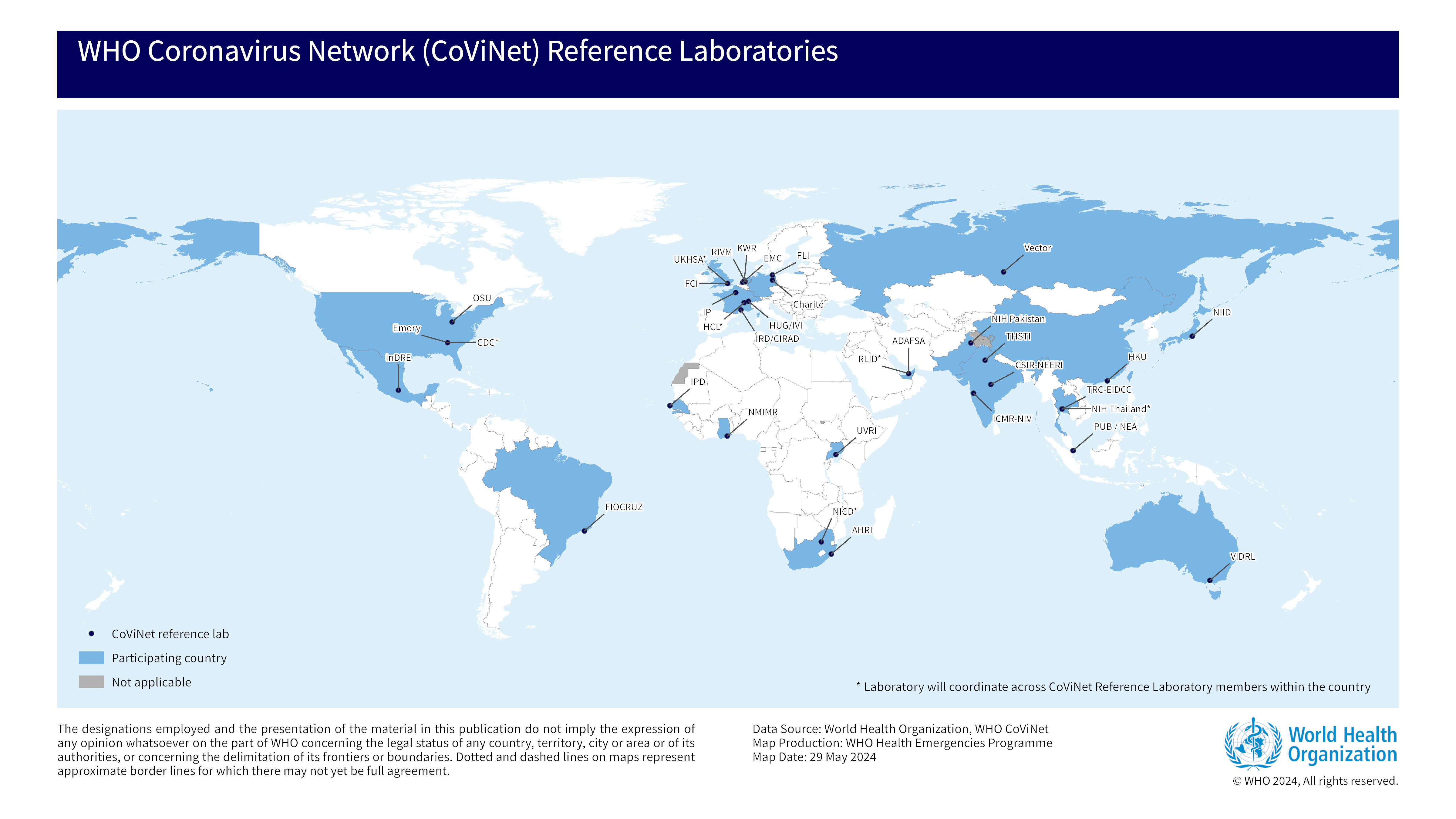
The established nomenclature systems for naming and tracking SARS-CoV-2 genetic lineages by GISAID, Nextstrain and Pango are currently and will remain in use by scientists and in scientific research. To assist with public discussions of variants, WHO convened a group of scientists from the WHO Virus Evolution Working Group, the WHO COVID-19 reference laboratory network, representatives from GISAID, Nextstrain, Pango and additional experts in virological, microbial nomenclature and communication from several countries and agencies to consider easy-to-pronounce and non-stigmatising labels for VOI and VOC. At the present time, this expert group convened by WHO has recommended using letters of the Greek Alphabet, i.e., Alpha, Beta, Gamma, Delta which will be easier and more practical to be discussed by non-scientific audiences. 


SARS-CoV-2 Variants, Working Definitions and Actions Taken

Given the continuous evolution of the virus that leads to SARS-CoV-2 and the constant developments in our understanding of the impacts of variants, these working definitions may be periodically adjusted. When necessary, variants not otherwise meeting all criteria outlined in these definitions may be designated as VOIs/VOCs, and those posing a diminishing risk relative to other circulating variants may be reclassified, in consultation with the WHO Technical Advisory Group on Viral Evolution. 

Variants of Concern (VOC)

Working definition:

A SARS-CoV-2 variant that meets the definition of a VOI (see below) and, through a comparative assessment, has been demonstrated to be associated with one or more of the following changes at a degree of global public health significance: 

  • Increase in transmissibility or detrimental change in COVID-19 epidemiology; OR
  • Increase in virulence or change in clinical disease presentation; OR
  • Decrease in effectiveness of public health and social measures or available diagnostics, vaccines, therapeutics.  


Currently designated Variants of Concern:

WHO label 

Pango  
lineage*
GISAID cladeNextstrain  
clade 
Additional amino acid changes monitored°Earliest documented  
samples 
Date of designation 

Alpha 

B.1.1.7 #

GRY

20I (V1) 

+S:484K
+S:452R

United Kingdom,  
Sep-2020 

18-Dec-2020

Beta 

B.1.351 

GH/501Y.V2  20H (V2)+S:L18F
South Africa,  
May-2020 
18-Dec-2020
Gamma 

P.1 

GR/501Y.V3  20J (V3) +S:681HBrazil,  
Nov-2020 
11-Jan-2021
Delta 

B.1.617.2§

G/478K.V1  21A +S:417N
India,  
Oct-2020 
VOI: 4-Apr-2021 
VOC: 11-May-2021 


*Includes all descendent lineages. The full list of Pango lineages can be found here: https://cov-lineages.org/lineage_list.html ; for FAQ, visit: https://www.pango.network/faqs/

° only found in a subset of sequences

# includes all Q.* lineages (in the Pango nomenclature system, Q is an alias for B.1.1.7)

§ includes all AY.* lineages (in the Pango nomenclature system, AY is an alias for B.1.617.2); for more information on AY.* lineages, please visit: https://www.pango.network/new-ay-lineages/


Actions taken by WHO and Member States: 

Primary actions by WHO for a potential VOC: 

  • Comparative assessment of variant characteristics and public health risks by WHO and the Technical Advisory Group on Viral Evolution 

  • If determined necessary, coordinate additional laboratory investigations with Member States and partners. 

  • Communicate new designations and findings with Member States and public through established mechanisms.  

  • Evaluate WHO guidance through established WHO mechanisms and update, if necessary.  

Primary actions by a Member State, if a VOC is identified: 

  • Submit complete genome sequences and associated metadata to a publicly available database, such as GISAID. 

  • Report initial cases/clusters associated with VOC infection to WHO through the IHR mechanism. 

  • Where capacity exists and in coordination with the international community, perform field investigations and laboratory assessments to improve understanding of the potential impacts of the VOC on COVID-19 epidemiology, severity, effectiveness of public health and social measures, diagnostic methods, immune responses, antibody neutralization, or other relevant characteristics. 

Variants of Interest (VOI)

Working definition

A SARS-CoV-2 variant : 

  • with genetic changes that are predicted or known to affect virus characteristics such as transmissibility, disease severity, immune escape, diagnostic or therapeutic escape; AND 
  • Identified to cause significant community transmission or multiple COVID-19 clusters, in multiple countries with increasing relative prevalence alongside increasing number of cases over time, or other apparent epidemiological impacts to suggest an emerging risk to global public health.  


Currently designated Variants of Interest:

WHO label  Pango  
lineage*
GISAID cladeNextstrain  
clade 
Earliest documented  
samples 
Date of designation 
Eta  B.1.525  G/484K.V3  21D Multiple countries, 
Dec-2020 
17-Mar-2021 
Iota  B.1.526   GH/253G.V1 21F  United States of America,  
Nov-2020 
24-Mar-2021 
Kappa  B.1.617.1   G/452R.V3  21B  
India,  
Oct-2020  
4-Apr-2021 

Lambda

C.37

GR/452Q.V1

21G

Peru, Dec-2020

14-Jun-2021
MuB.1.621GH21HColombia, Jan-202130-Aug-2021

*includes all descendent lineages. The full list of Pango lineages can be found here:https://cov-lineages.org/lineage_list.html; for FAQ, visit: https://www.pango.network/faqs/


Actions taken by WHO and Member States: 

Primary actions by a Member State, if a new potential VOI is identified: 

  • Inform WHO through established WHO Country or Regional Office reporting channels with supporting information about VOI-associated cases (person, place, time, clinical and other relevant characteristics). 

  • Submit complete genome sequences and associated metadata to a publicly available database, such as GISAID. 

  • Perform field investigations to improve understanding of the potential impacts of the VOI on COVID-19 epidemiology, severity, effectiveness of public health and social measures, or other relevant characteristics. 

  • Perform laboratory assessments according to capacity or contact WHO for support to conduct laboratory assessments on the impact of the VOI on relevant topics. 

Primary actions by WHO for a potential VOI: 

  • Comparative assessment of variant characteristics and public health risks by WHO. 

  • If determined necessary, coordinated laboratory investigations with Member States and partners.  

  • Review global epidemiology of VOI. 

  • Monitor and track global spread of VOI 

Reclassifying VOIs/ VOCs

A previously designated Variant of Interest (VOI) or Variant of Concern (VOC) which has conclusively demonstrated to no longer pose a major added risk to global public health compared to other circulating SARS-CoV-2 variants, can be reclassified. 

This is undertaken through a critical expert assessment, in collaboration with Technical Advisory Group on Virus Evolution, of several criteria, such as the observed incidence/relative prevalence of variant detections among sequenced samples over time and between geographical locations, the presence/absence of other risk factors, and any ongoing impact on control measures. 

Alerts for Further Monitoring

Working definition 

A SARS-CoV-2 variant with genetic changes that are suspected to affect virus characteristics with some indication that it may pose a future risk, but evidence of phenotypic or epidemiological impact is currently unclear, requiring enhanced monitoring and repeat assessment pending new evidence.  

Note: It is expected that our understanding of the impacts of these variants may fast evolve, and designated Alerts for Further Monitoring may be readily added/removed; therefore, WHO labels will not be assigned at this time. Former VOIs/VOCs may, however, be monitored for an extended period under this category, and will maintain their assigned WHO label until further notice. 

Currently designated Alerts for Further Monitoring:

Pango  
lineage* 
GISAID cladeNextstrain  
clade 
Earliest documented  
samples 
Date of designation 
B.1.427
B.1.429
GH/452R.V1   21C United States of America, 
Mar-2020 
VOI: 5-Mar-2021 
Alert: 6-Jul-2021
R.1GR -
Multiple countries,
Jan-2021
07-Apr-2021
B.1.466.2  GH - Indonesia,
Nov-2020
28-Apr-2021 
B.1.1.318GR-Multiple countries,
Jan-2021
02-Jun-2021
B.1.1.519GR20B/S.732AMultiple countries,
Nov-2020
02-Jun-2021
C.36.3
GR-Multiple countries,
Jan-2021
16-Jun-2021
B.1.214.2G-Multiple countries, Nov-202030-Jun-2021
B.1.1.523GR-

Multiple countries, May-2020

14-July-2021

B.1.619

G20A/S.126AMultiple countries, May-202014-July-2021
B.1.620G-Multiple countries, November 202014-July-2021
C.1.2GR-South Africa, May 202101-Sep-2021

*includes all descendent lineages. The full list of Pango lineages can be found here: https://cov-lineages.org/lineage_list.html ; for FAQ, please visit: https://www.pango.network/faqs/


Publications

All →
Genomic sequencing of SARS-CoV-2: a guide to implementation for maximum impact on public health

Sequencing enabled the world to rapidly identify SARS-CoV-2 and develop diagnostic tests and other tools for outbreak management. Continued genome sequencing...

SARS-CoV-2 genomic sequencing for public health goals: Interim guidance, 8 January 2021

The growing understanding of how sequence information can contribute to improved public health is driving global investments in sequencing facilities and...