Human rights
Health is a fundamental right of every human being. Health as a human right is recognized in the WHO Constitution (1948), the Universal Declaration of Human Rights (1948) and many international and regional human rights treaties. All WHO Member States have ratified at least one treaty that recognizes the right to the highest attainable standard of physical and mental health.
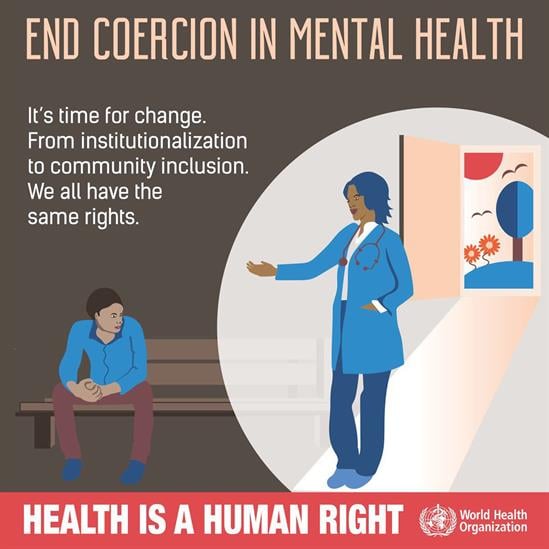
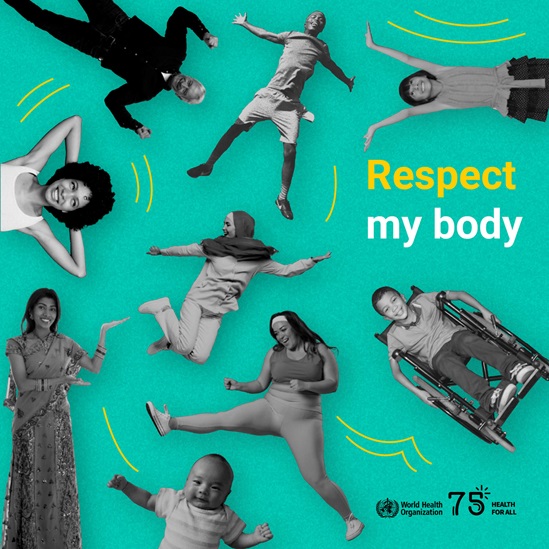
This means that countries have legal obligations, while acknowledging that time and resources are required to fully achieve them. Some immediate obligations for countries include the guarantees of non-discrimination and equal treatment in health. The right to health includes entitlements, such as the right to control one’s health, informed consent, bodily integrity, and participation in health-related decision-making. It also includes freedoms, like freedom from torture, ill-treatment and harmful practices.
The right to health is closely related to and dependent on the realization of other human rights, including the rights to life, food, housing, work, education, privacy, access to information, freedom from torture and the freedoms of association, assembly and movement. It includes both nondiscriminatory access to quality, timely and appropriate health services and systems and to the underlying determinants of health.
A human rights-based approach (HRBA) aims to support sustainable development by addressing inequalities, discriminatory practices and unjust power relations that are often at the core of unequal outcomes. HRBA focuses on the groups of people who are most marginalized and discriminated against. The United Nations common understanding of a HRBA serves as a guiding framework. It has the following elements.
Goal: All programmes, policies and technical assistance should further the realization of the right to health and other health-related human rights.
Process: Human rights standards and principles – such as participation, accountability, equality and non-discrimination – are integrated into all stages of the health programming cycle, including assessment, priority setting, planning and design, implementation and monitoring and evaluation.
Outcome: Institutions, processes and systems need to ensure that people are empowered to understand and claim their health-related rights. States are the primary duty bearers and must be supported to deliver on their human rights obligations. Non-State actors, like the private sector and non-governmental organizations, also have human rights obligations. Policy makers and parliamentarians must use their regulatory powers to ensure the respect, protection and fulfilment of health-related rights, health and safety standards and labour rights, among others.
WHO supports country efforts to integrate human rights into health systems, programmes and policies. To achieve this, WHO provides guidance on human rights in the context of health issues, such as HIV, maternal and child health, mental health and others. WHO also provides support to countries to strengthen national health systems to ensure that services are universally available, accessible, acceptable and of high quality. WHO's political leadership on the right to health focuses on supporting countries to review laws, policies and practices to ensure they support the right to health.
WHO's human rights work aligns with the Sustainable Development Goals (SDGs). To meet the SDGs, WHO produces and disseminates tools and guidance to identify who is being left behind and why, as well as guidance on social participation to ensure accountability. WHO also supports countries to use international and regional human rights accountability mechanisms to advance health related rights.