Surveillance Data Standards

Surveillance Data Standards

for Pandemic and Epidemic Intelligence

Current context

Data fragmantation

  • Multiple forms, formats and tools
  • Difficulty with data harmonization
  • Incomplete interpretation of outbreak dynamics

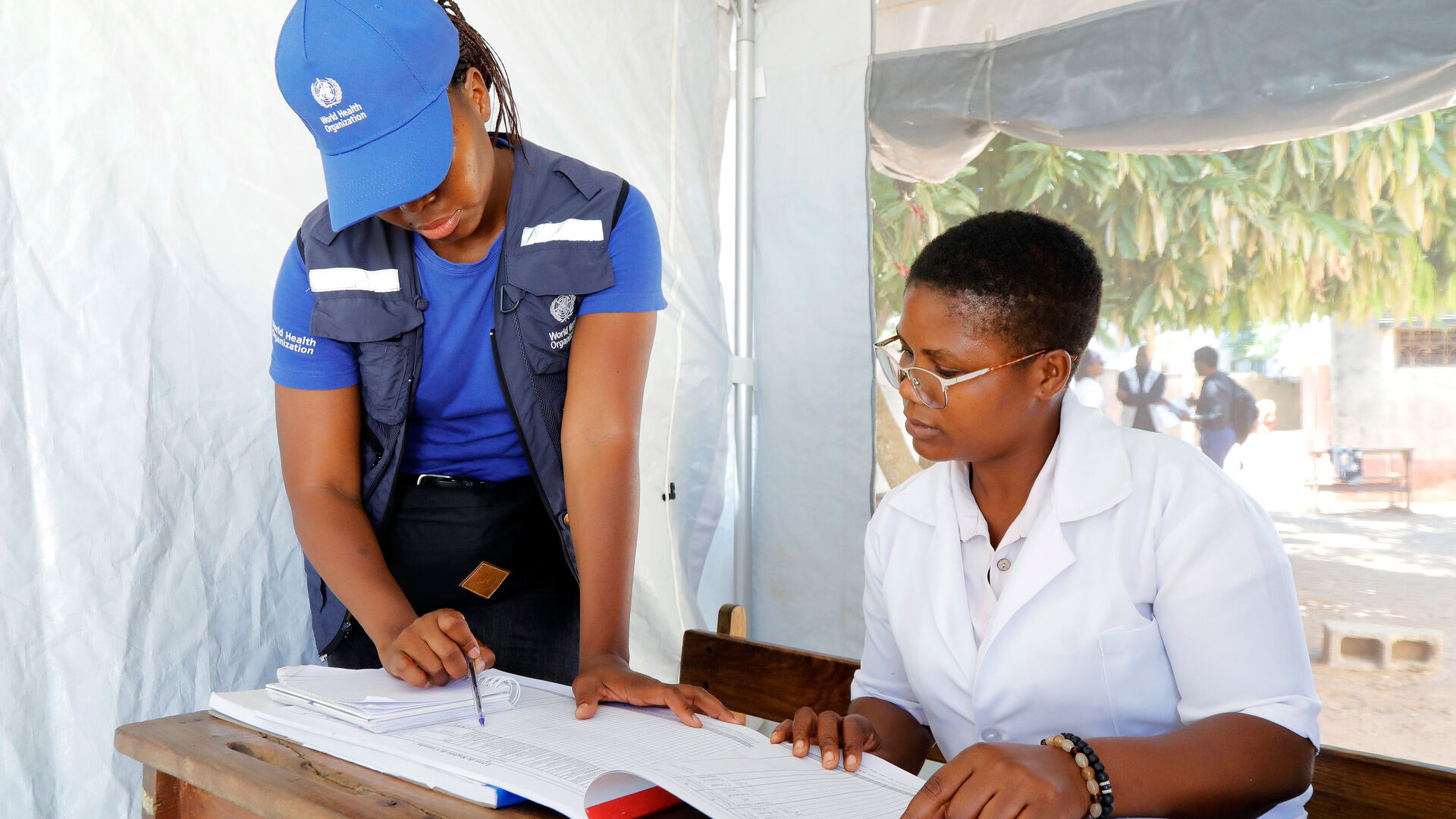
Two women look though a notebook in Gaza, Mozambique

Data collection burden

  • Parallel data collection efforts
  • Limited guidance on minimum datasets
  • Poor integration with routine surveillance and clinical systems

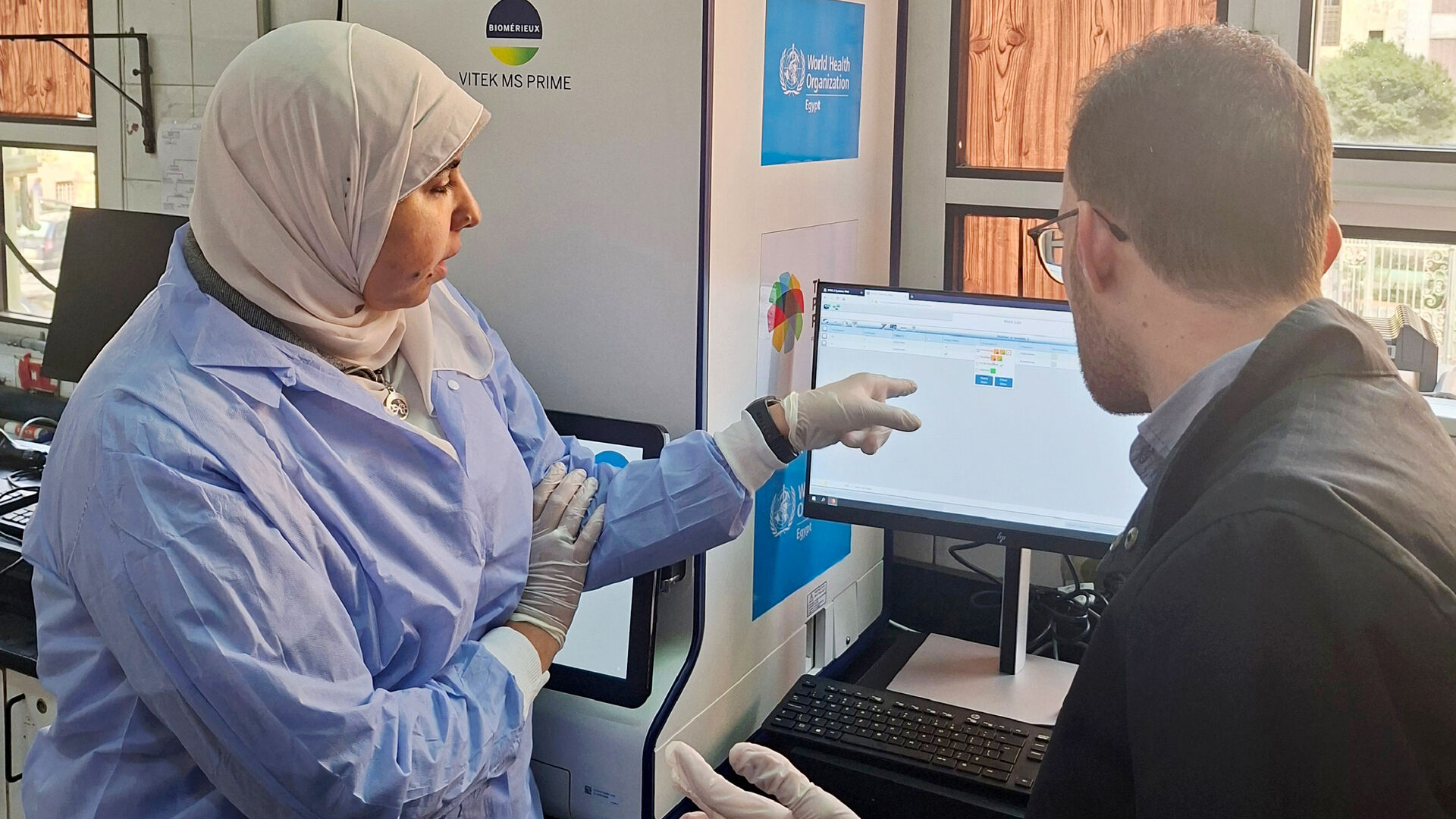
A health worker wearing protective gear stidies data on computer with another colleague, in Egypt

Inconsistent adoption of guidelines

  • Changing case definitions
  • Varying interpretation and collection of data
  • Inconsistent reporting of indicators

These issues are further exacerbated by the lack of standardized terminologies and interoperability standards. 


Scope and solution

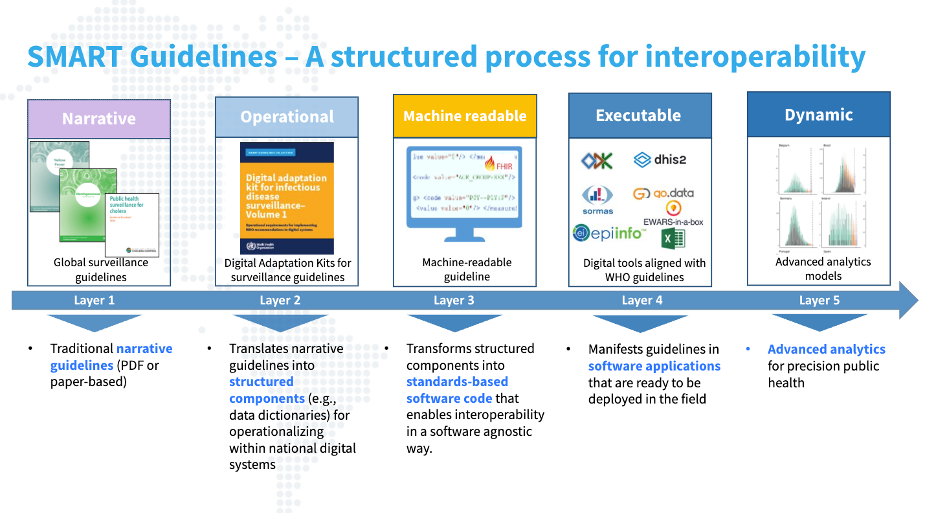
As part of the SMART Guidelines framework, we developed the Digital Adaptation Kit (DAK) for infectious disease surveillance to enable countries to accelerate the development of interoperable systems aligned with WHO guidelines through practical and adaptable digital components.
Our approach


Collaboration

Co-developing surveillance data standards with the people who use, develop and implement surveillance systems.

  • WHO disease focal points provide programmatic expertise and normative guidance
  • Regional advisors, country offices and member states across all six WHO regions ensure the tools are practical, adaptable and responsive to diverse country needs and implementation realities.
  • Public health institutions, academic groups, software developers and implementing partners contribute practical and technical perspectives.
Show less Show more

Accountability

Clear governance structures define roles and responsibilities for decision-making processes throughout the DAK development process.

  • A Steering Committee composed of senior advisors, programme leads and cross-cutting experts provides strategic oversight and alignment with WHO priorities.
  • A Technical Working Group (TWG) reviews, validates and refines DAK components to ensure relevance and adaptability across different diseases and settings.
Show less Show more


Integrity

Grounded in scientific evidence and adhering to WHO's quality and standards for publication.
  • All DAK components undergo technical review against WHO’s normative guidance
  • Strict quality, norms and standards processes are applied prior to publication
Show less Show more

Usability

Iterative and user-centric approach to ensure practical and implementable standards.

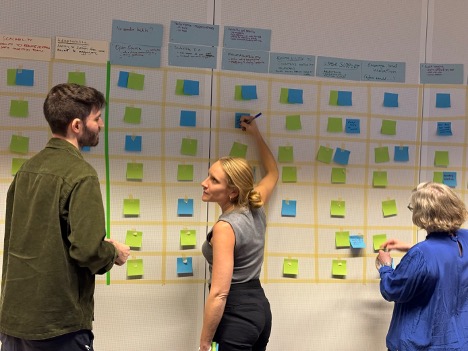
  • Feedback is gathered through our workshops and community of practice meetings.
  • Draft DAK components are tested against real-world workflows and other published DAKs.
Show less Show more

Surveillance digital adaptation kit

The Surveillance DAK helps transform WHO guidance on infectious disease surveillance into actionable digital components that countries can adapt and use. In addition to user personas, user scenarios and structured workflows, the DAK includes a Core data dictionary, indicators and performance metrics, decision-support logic, as well functional and non-functional requirements.

Community and events

200+

Stakeholders engaged

6

Regions

12+

Global, regional and country-level workshops

See how countries, partners, and WHO teams connect through regular workshops, technical consultations, and the Community of Practice. This section showcases how shared learning, feedback, and engagement are shaping the future of digital surveillance—and how you can get involved.

Community of practice

Join the Community of Practice to connect with others working on the development and use of surveillance data standards. As a member, you’ll receive updates, access resources, and be invited to participate in discussions, webinars, and technical exchanges. Whether you're implementing a DAK, providing feedback, or learning from peers, the CoP offers a space to stay informed and contribute to ongoing work.

 

To join, start by visiting the Collaboratory Homepage using the button below and submitting a request for access to the platform. After your access is approved, navigate back to the homepage and scroll to the Data Harmonization Community of Practice. This specific community is open, so no separate join request is required once you have Collaboratory access.

Contact

Have questions or want to get involved? We want to hear from you. srvdatastandards@who.int.