
As a health surveillance assistant, Chrissy Taula knows her small community of Mngwere, Dedza district, Malawi well. For the past 12 years, she has immunized children against vaccine-preventable diseases, advised families on exclusive breastfeeding and infant nutrition, educated families about family planning methods, and measured children to ensure their growth is on track.
“I really enjoy being able to go into the community and interact with the families,” says Taula, who became a health surveillance assistant after years of seeing people in her community suffer from ill health. “With me, families are free to express their mind and their views.”
Though Taula serves as the first level of care in her community, she’s limited in the care she can provide to families, especially small and sick infants aged up to two months.
Up until three years ago, whenever she saw an infant who was breathing rapidly, not feeding well, and having a fever – all potential signs of a bacterial infection or pneumonia – she’d refer the family to the district hospital for treatment. However, few families would seek care due to the cost of travel and treatment or concerns about quality of care. As a result, many infants died.
Serious bacterial infection is a leading cause of newborn mortality worldwide, contributing to an estimated one in five deaths in the first month of life. In Malawi, approximately 12 000 (46%) of an estimated 26 000 under 5 deaths in 2019 occurred in the first 28 days of life. Most of these deaths are from preventable or treatable causes, including infections like pneumonia.
Treating infants at the community level
To support health surveillance assistants like Taula provide care to small and sick infants in low-resource settings, WHO released a Guideline for managing possible serious bacterial infection in young infants when referral is not feasible in 2015, and worked with UNICEF to advise countries to implement it at first-level health facilities. The guideline recommends a simplified, outpatient antibiotic treatment regimen for managing possible severe bacterial infections and fast breathing in young infants.
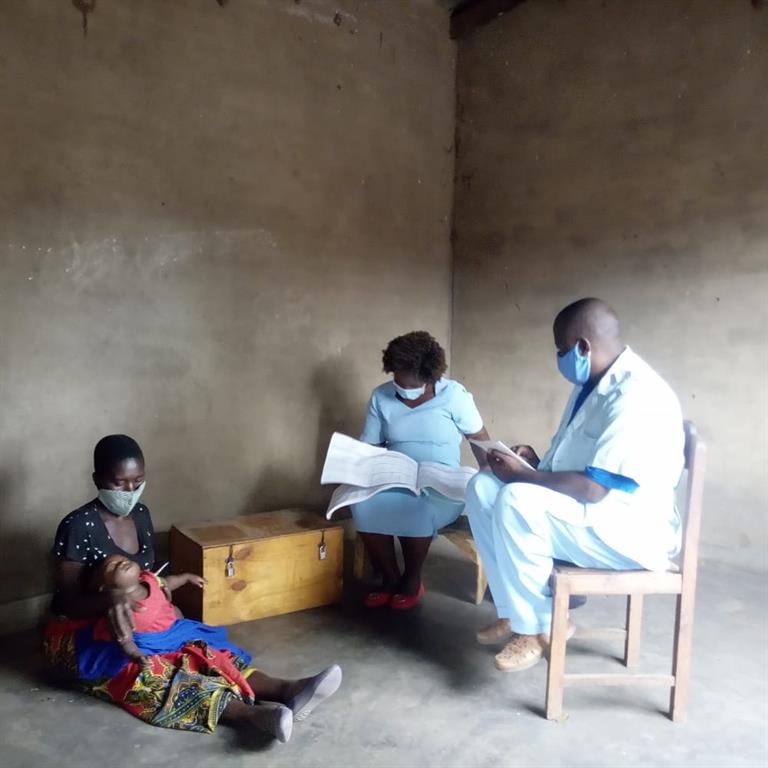
However, before the Ministry of Health in Malawi would implement the guideline nationwide, they wanted to understand the feasibility of delivering a simplified treatment through the country’s health surveillance assistants, and whether families would accept the treatment. Working with WHO and Save the Children, the Ministry of Health conducted a pilot programme from February to November 2017 in first-level health facilities to train health workers to assess, classify and identify treatment for sick infants under 2 months of age.
At the time, the district that Taula came from was also introducing a new community-based maternal newborn care package, that included training health surveillance assistants to counsel families on newborn danger signs during pregnancy and postnatal home visits, and to assess and refer sick young infants.
When infants with signs of possible severe bacterial infections were identified, health workers were guided to treat the infants with two injections of gentamicin for 2 days in the hospital, plus oral amoxicillin for 7 days, if referral was not feasible. However, if the infants only had fast breathing, they were treated with oral amoxicillin for 7 days at home without referring to a higher facility, and health surveillance assistants followed up with families through home visits on days 3 and 6 to ensure treatment adherence.
The study found that more than 90% of infants recommended for outpatient treatment completed their treatment, and that families accepted the outpatient treatment due to the reduced travel time and costs associated, as well as the follow-up by the health surveillance assistants. The Ministry of Health is now planning to further study feasibility in more districts and expects to scale-up implementation of the guideline throughout the country.
“Our findings showed that treatment for the most vulnerable babies can be increased at the lowest level of care in Malawi,” says Humphreys Nsona, Programme Manager for Integrated Management of Childhood Illnesses Unit in the Ministry of Health in Malawi. “Apart from increasing access to treatment, this study showed that preventative health programmes should not be standalone programmes. Rather, they should be harmonized and integrated into care at the community level.”
“By increasing quality of care at the community level, we have a better opportunity to achieve Sustainable Develop Goal 3 and further contribute to reducing newborn mortality in Malawi,” he continues.
Referral for hospital care continues to be the preferred method for the management of neonates and young infants with possible severe bacterial infection in settings where it is accepted and available. However, WHO’s guideline for treating infants with fast breathing pneumonia without referral is essential to saving lives in low-resource settings and reduces overcrowding in hospitals.
“Prior to training, parents would come to me with their sick babies, but I didn’t have the skills to treat them. All I could do was refer them to the hospital,” says Taula. “Now, through this training and guidance, I am able to assess the children, identify their problems, and manage their treatment at the community level.”