
Coronavirus disease (COVID-19): Risks and safety for older people
8 May 2020 | Questions and answers
COVID-19 is a disease caused by a new coronavirus, which has not been previously identified in humans. In most cases, COVID-19 causes mild symptoms including dry cough, tiredness and fever, though fever may not be a symptom for some older people. Other mild symptoms include aches and pains, nasal congestion, runny nose, sore throat or diarrhoea. Some people become infected but don’t develop any symptoms and don't feel unwell. Most people recover from the disease without needing special treatment. Around 1 out of every 6 people who get COVID-19 becomes seriously ill and has difficulty breathing.
People can catch COVID-19 from others who have the virus. The disease can spread from person to person through small droplets from the nose or mouth, which are spread when a person with COVID-19 coughs or exhales. These droplets land on objects and surfaces around the person. Other people then catch COVID-19 by touching these objects or surfaces, and then touching their eyes, nose or mouth. People can also catch COVID-19 if they breathe in droplets from a person with COVID-19 who coughs out or exhales droplets.
Older people, and people of all ages with pre-existing medical conditions (such as diabetes, high blood pressure, heart disease, lung disease, or cancer) appear to develop serious illness more often than others.
While some western, traditional or home remedies may provide comfort and alleviate symptoms of mild COVID-19, there are no medicines that have been shown to prevent or cure the disease. WHO does not recommend self-medication with any medicines, including antibiotics, as a prevention or cure for COVID-19. However, there are several ongoing clinical trials of both western and traditional medicines. WHO is coordinating efforts to develop vaccines and medicines to prevent and treat COVID-19 and will continue to provide updated information as soon as research results become available.
To prevent infection, there are a five things that you can do.
1. Wash your hands frequently and thoroughly with soap and water and dry them thoroughly.
You can also use alcohol-based hand rub if your hands are not visibly dirty and if this product is available. Cleaning your hands frequently will remove the virus if it is on your hands. You can learn how to wash your hands in this video (or this visual). If an alcohol-based hand rub or soap is not available, then using chlorinated water (0.05%) for handwashing is an option, but it is not ideal because frequent use may irritate your skin.
2. Cover your mouth and nose with a flexed elbow or tissue when coughing and sneezing.
And remember to throw away the used tissue immediately in a bin with a lid and to wash your hands. This way you protect others from any virus released through coughs and sneezes.
3. Avoid touching your eyes, nose and mouth.
Hands touch many surfaces which can be contaminated with the virus. If you touch your eyes, nose or mouth with unclean hands, you can transfer the virus from the surface to yourself.
4. Keep physical distance from others.
If your national or local authorities have put in place confinement measures, it is important to respect them. Taking exercise outside is good for your physical and mental health, but should only be undertaken if regulations for your area allow it. When you do go out, avoid crowded spaces and maintain at least 1 metre distance (3 feet or arms-length) from others. Avoid unnecessary visits to your house. If visits are necessary (e.g. caregiver to support with activities of daily living), ask your visitor to regularly check for symptoms to ensure that they are symptom free when visiting you. Ask them to also follow these five key actions, including washing their hands when they first enter your home.
5. Clean and disinfect frequently touched surfaces every day.
This includes tables, doorknobs, light switches, countertops, handles, desks, phones, keyboards, toilets, taps, and sinks. If surfaces are dirty, use detergent or soap and water prior to disinfection. Learn more by clicking here.
There is a lot that you can do to prepare for COVID-19 in your community.
- Inform yourself of the special measures taken in your community as well as the services and the sources of reliable information that are availableduring the health emergency (e.g. home deliveries, psychosocial support, health ministry website, alternative access to your pension).
- Create a list of the basic supplies that you will need for at least two weeks and try to get these delivered where possible (e.g. non-perishable food items, household products, batteries for assistive devices you may use, and prescription medicines). Alternatively, ask family members, caregivers, neighbours or community leaders to help with ordering and/or delivery of groceries or prescription medicines. Make sure that your mobile phone credit is topped up and identify a safe place to charge your phone regularly so that you can keep in contact with family and friends and reach emergency services if needed.
- Make a list of emergency numbers (e.g. COVID-19 local helpline, nearby hospital and health emergencies numbers, hotline for victims of abuse, psychosocial support hotline) and support contacts (e.g. family members and friends, main caregiver, community care worker, associations of older persons). If you live alone, you may wish to share this list and ask your neighbours, family or caregiver to be in touch regularly, for example, by phone or video chat.
- Discuss with your health-care worker how your health needs can be addressed during COVID-19. This may involve postponing non-urgent appointments, talking to your doctor or health-care worker by phone or video chat instead of in person and/or revising your vaccination schedule.
- If you rely on the support provided by a caregiver, identify with him or her another person that you trust to support your daily living and care needs in case your caregiver is unable to continue to provide care. Together, you can note down all the personal care and assistance that you require and how it should be provided and share it with this trusted person so that they can be ready to provide care in case of need.
- If you are the primary caregiver of another person who is care dependent (e.g. grandchild, older spouse, child with a disability), identify a person that you and the person that you care for trust to take on your caregiving responsibilities in case you fall sick. Local authorities or volunteer organizations that provide support in these situations in your community might be able to help.
- If multiple people live in your home, if possible prepare a separate room or space in your home so that anyone showing symptoms compatible with COVID-19 can be isolated from others. If you do not have space for self-isolation, contact your community leaders or local health authorities to see if there is community space that could help you or other household members self-isolate.
- Think about what matters most to you regarding care and support, including medical treatment, in case something happens to you and you are unable to make your own decisions. If you want to develop an advanced care plan to record your treatment and care wishes, you can talk about it with your health-care worker or someone that you trust. You can write down your wishes and share them with people you trust.
You can follow these 10 steps to keep healthy during the COVID-19 pandemic.
- Keep to your regular routines as much as possible and maintain a daily schedule for yourself including sleeping, meals and activities.
- Stay socially connected. Speak to loved ones and people you trust every day or as much as possible, using the telephone, video-calls or messaging, through writing letters, etc. Use this time to share your feelings and to do common
hobbies together.
- Be physically active every day. Reduce long periods of sitting and set up a daily routine that includes at least 30 minutes of exercise. Make sure to do activities that are safe and appropriate for your level of physical fitness as
indicated by your health-care worker. You can use household chores as a way to keep physically active, follow an on-line class (e.g. Tai Chi, yoga) or choose your favourite music and dance to that.
- Drink water and eat healthy and well-balanced meals. This will keep you hydrated, help strengthen your immune system and lower the risk of chronic illnesses and infectious diseases. For nutrition advice click here.
- Avoid smoking and drinking alcohol. Smokers are likely to be more vulnerable to COVID-19 because smoking can affect lung capacity and because the act of smoking increases the possibility of transmission of virus from hand
to mouth. Drinking alcohol not only disturbs your sleep but may also increase your risk of falls, weaken your immune system, and interact with any prescription medicines that you are taking. Limit the amount of alcohol you drink or don’t
drink alcohol at all.
- Take breaks from news coverage about COVID-19 as prolonged exposure can cause feelings of anxiety and despair. Seek updates at specific times of the day from a reliable source like the
WHO website (click here) or national or local channels in order to help you distinguish facts from rumours or scams.
- Engage in hobbies and activities that you enjoy or learn something new. Cognitive exercise such as reading a book or doing crosswords/Sudoku will keep your mind active and distract you from worrying. You can also use this time to
keep a well-being diary (click here for an example.)
- If you have ongoing health conditions, take your prescribed medicines and follow the advice of your health-care worker regarding any health visits or phone consultations.
- If you have an emergency medical condition that is not related to COVID-19, contact health emergencies immediately and ask what you should do next. Follow the instructions of the health-care worker.
- If stress, worry, fear or sadness get in the way of your daily activities for several days in a row, seek psychosocial support from available services in your community. If you are subject to abuse or violence from others, tell someone you trust and report this to the relevant authorities. You can also seek support from dedicated helplines that may be available in your country.
- If you present symptoms related to COVID-19, seek medical advice. Call by phone first if possible and give information about pre-existing health conditions and medicines that you are taking. Follow the instructions of the health-care worker and monitor your symptoms regularly.
- If you have difficulty breathing, contact health emergencies immediately as this may be due to a respiratory infection. Call by phone first if possible to learn what to do next.
- If you live with others, make sure that you isolate yourself as soon as you suspect infectionby using the space that you identified in advance. You and other members of the household should also wear a medical mask as much as possible if these are available. You can learn how to wear a mask here.
- If you live with others and home care for COVID-19 is advised by your health-care worker, other household members should follow available guidance on home care for patients with COVID-19 presenting with mild symptoms and management of their contacts (guidance here). See related flyers for people who are ill, for household members and for caregivers.


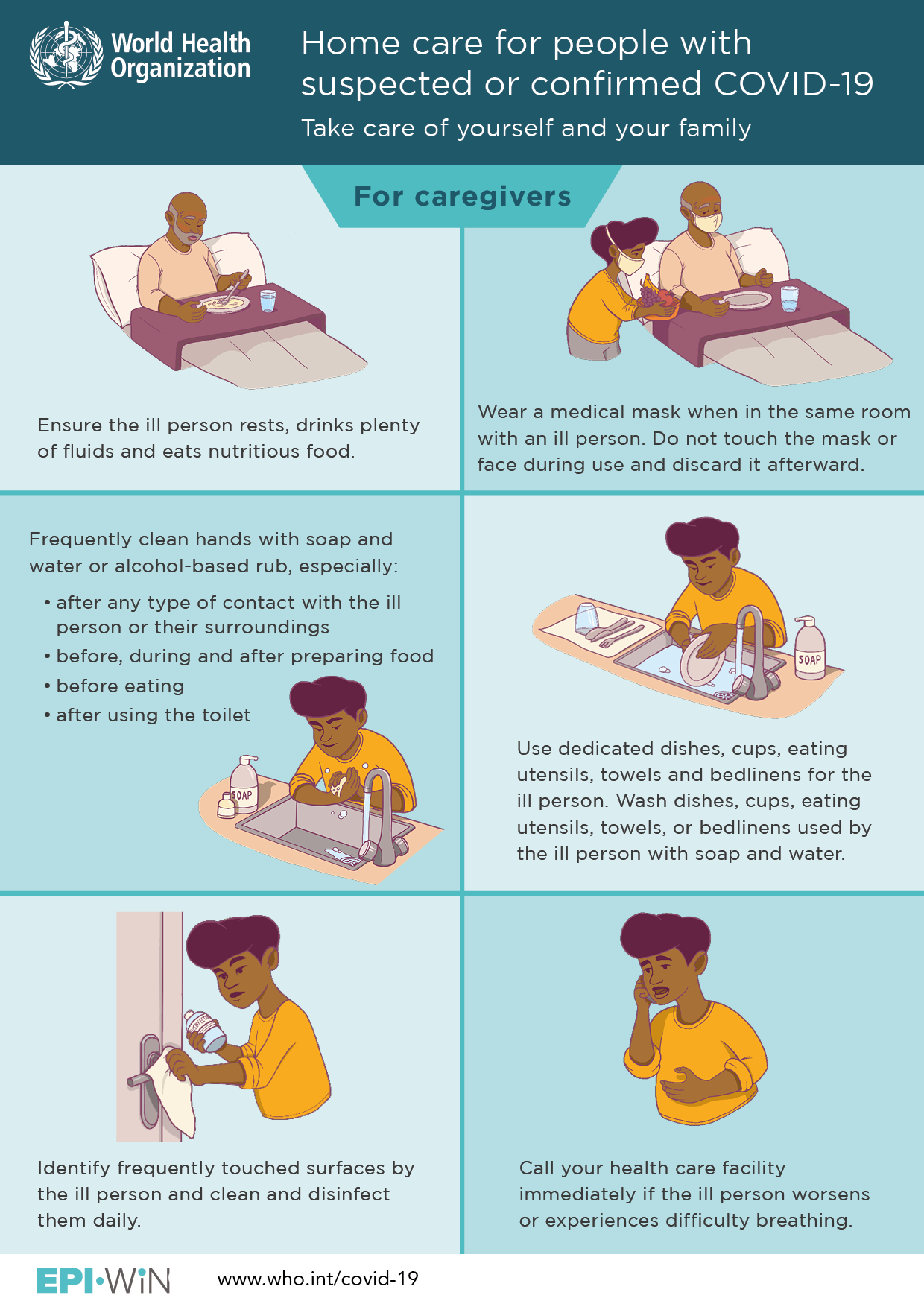
- If you live alone and home care for COVID-10 is advised by your health-care worker, ask your family, friends, neighbours, health-care worker or a local volunteer organisation to check in on you regularly and to provide support as needed following existing guidance for caregivers (guidance here).
Losing someone close to you is always hard, whatever the cause. During these extraordinary circumstances, when your usual routine may be disrupted and when funerals may not be permitted, it may be even harder. Following this advice may help.
- Do not criticise yourself for how you feel. When you lose a family member or friend to COVID-19, you may experience a range of emotions. You may also have difficulty sleeping or low levels of energy. All these feelings are normal and there is no right or wrong way to feel grief.
- Allow yourself time to process your emotions in response to your loss. You may think that the sadness and pain that you feel will never go away, but in most cases, these feelings lessen over time.
- Talk regularly with people that you trust about your feelings.
- Keep to your routines as much as you feel able and try to focus on activities that bring you joy.
- Seek advice and comfort from people that you trust (e.g. religious/faith leaders, mental health workers or other trusted members of your community) while maintaining physical distance (e.g. attending virtual mass).
- Think of alternative ways to say goodbye to the person who passed away such as writing a letter or dedicating a drawing to your loved one. These are small actions that can help you cope with grief and loss, particularly in situations where funeral services are not permitted
If you have been in contact with someone suspected or confirmed with COVID-19, or are feeling unwell, do not visit any health or long-term care facility.
Follow the facility guidelines on any visit requirements, including screening and wearing a mask.
Clean your hands before entering and try to keep at least a 1 metre distance from others.
If you are 60 or over, or have a chronic condition like heart disease, take extra precautions by wearing a medical mask during your visit.