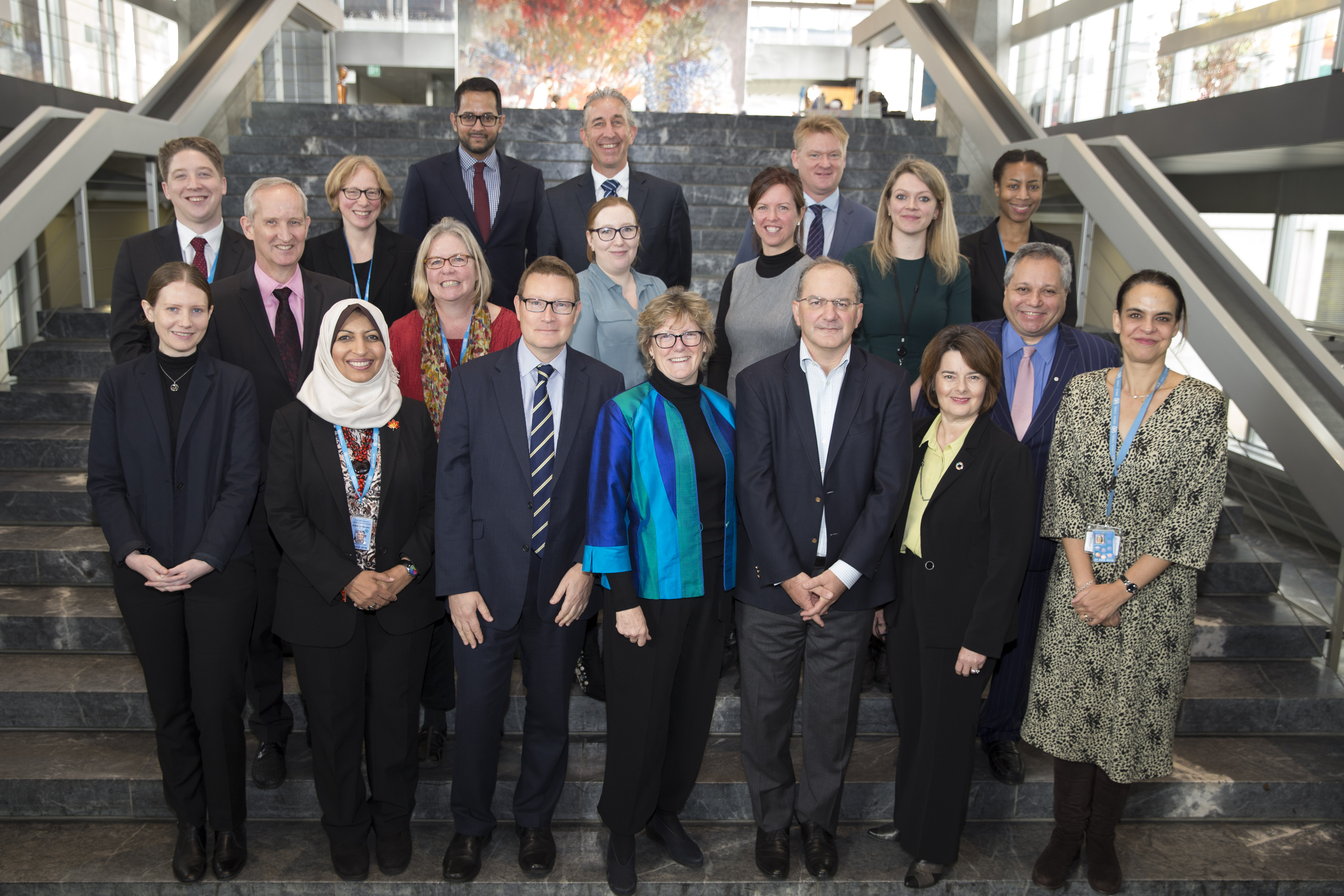
Senior representatives of the United Kingdom of Great Britain and Northern Ireland visited WHO headquarters this week for their annual strategic dialogue. As well as hearing updates about the ongoing WHO Transformation project and the wider UN reform agenda, the dialogue focused on key health areas such as health system strengthening, anti-microbial resistance, polio eradication and transition, emergency response and patient safety.
“We look forward to supporting WHO in translating the ambition of the General Programme of Work into real world impact,” said Professor Dame Sally Davies, Chief Medical Officer for England, who led the delegation.
In opening the dialogue, Dr Soumya Swaminathan, Deputy-Director General for Programmes at WHO, thanked the UK for its strong support and vital inputs over the years. She reflected on the longstanding partnership between the UK and WHO, and the importance of keeping transparency, value for money and accountability at the heart of WHO’s work.
Jane Ellison, WHO’s Deputy Director-General of Operations, highlighted the UK’s strong leadership in many areas of global health and described how WHO is improving its core business processes. She stressed “We want to ensure that our organizational reforms assist WHO staff to drive measurable differences to the lives of people in countries”.
The theme of partnership was important throughout the dialogue “WHO is striving to be a leader in the UN reform process, we see huge opportunities to work differently, more effectively and be more agile across the organization and through work with our partners,” said the Director General’s Chef de Cabinet, Dr Bernhard Schwartlander.
The UK is the WHO’s third largest donor, donating a total of US$ 341.1 million [in the 2016-17 biennium]. Of this, US$ 32.2 million went toward WHO’s Core Voluntary Contribution Account, which allows WHO to fill in critical strategic gaps and act quickly by allocating funds when and where they are needed.
Dr Peter Salama, WHO Deputy Director-General, Emergency Preparedness and Response paid tribute to the UK’s support in health emergencies “The UK is helping WHO to save lives in emergencies such as the current Ebola outbreak in the Democratic Republic of the Congo and protracted conflicts such as in Syria”. Daniel Graymore, Head of Global Funds Department and Senior DFID Representative in Geneva acknowledged the WHO’s persistent progress and strong leadership: “An enormous amount has been achieved in a short amount of time and a lot of that is derived from Dr. Tedros’ vision and the people working at WHO.”