
Leishmaniases: Epidemiological Report of the Americas
Nº 4 - 2016, July
Overview
The leishmaniases are vector-borne diseases with a zoonotic cycle in the Americas and remain a problem to public health. This disease presents a high burden capable of yielding severe clinical forms that may cause deformities, disabilities and death. Bolivia and Peru are among the countries with the highest global DALYs (Disability Adjusted Life of Years) of cutaneous/mucosal leishmaniasis and Brazil is among the countries with the highest fatality rates for visceral leishmaniasis.
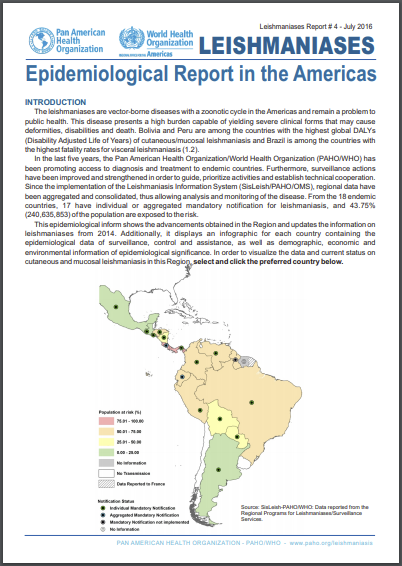
In the last five years, the Pan American Health Organization/World Health Organization (PAHO/WHO) has been promoting access to diagnosis and treatment to endemic countries. Furthermore, surveillance actions have been improved and strengthened in order to guide, prioritize activities and establish technical cooperation. Since the implementation of the Leishmaniasis Information System (SisLeish/PAHO/OMS), regional data have been aggregated and consolidated, thus allowing analysis and monitoring of the disease. From the 18 endemic countries, 17 have individual or aggregated mandatory notification for leishmaniasis, and 43.75% (240,635,853) of the population are exposed to the risk.
This epidemiological inform shows the advancements obtained in the Region and updates the information on leishmaniases from 2014. Additionally, it displays an infographic for each country containing the epidemiological data of surveillance, control and assistance, as well as demographic, economic and environmental information of epidemiological significance. In order to visualize the data and current status on cutaneous and mucosal leishmaniasis in this Region.