
Public Health Situation Analysis - Somalia
04 March 2026
Overview
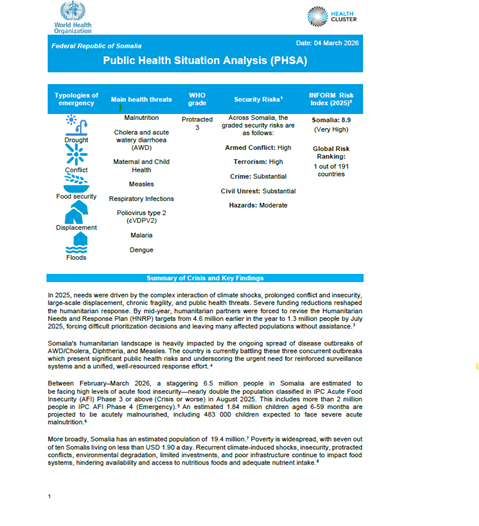
In 2025, needs were driven by the complex interaction of climate shocks, prolonged conflict and insecurity, large-scale displacement, chronic fragility, and public health threats. Severe funding reductions reshaped the humanitarian response. By mid-year, humanitarian partners were forced to revise the Humanitarian Needs and Response Plan (HNRP) targets from 4.6 million earlier in the year to 1.3 million people by July 2025, forcing difficult prioritization decisions and leaving many affected populations without assistance.
Somalia's humanitarian landscape is heavily impacted by the ongoing spread of disease outbreaks of AWD/Cholera, Diphtheria, and Measles. The country is currently battling these three concurrent outbreaks which present significant public health risks and underscoring the urgent need for reinforced surveillance systems and a unified, well-resourced response effort.
Between February–March 2026, a staggering 6.5 million people in Somalia are estimated to be facing high levels of acute food insecurity—nearly double the population classified in IPC Acute Food Insecurity (AFI) Phase 3 or above (Crisis or worse) in August 2025. This includes more than 2 million people in IPC AFI Phase 4 (Emergency). An estimated 1.84 million children aged 6-59 months are projected to be acutely malnourished, including 483 000 children expected to face severe acute malnutrition.
More broadly, Somalia has an estimated population of 19.4 million. Poverty is widespread, with seven out of ten Somalis living on less than USD 1.90 a day. Recurrent climate-induced shocks, insecurity, protracted conflicts, environmental degradation, limited investments, and poor infrastructure continue to impact food systems, hindering availability and access to nutritious foods and adequate nutrient intake.