Nipah Virus Infection

Nipah Virus Infection

© brydyak/Freepik
© Credits

Latest update

On 27 January 2026 India confirmed two cases of Nipah virus infection in West Bengal. Both are 25-year-old health care workers at a hospital North 24 Parganas district. The two cases were confirmed at the National Institute for Virology in Pune.
A total of 196 contact persons linked to the confirmed cases have been identified, traced, monitored, and tested. All contact persons have been found asymptomatic and have tested negative for Nipah virus. No additional Nipah case has been detected so far.
Prompt and comprehensive public health measures in accordance with established protocols have been initiated – including enhanced surveillance, laboratory testing, and field investigations by Central and State health agencies. The situation is being monitored.
WHO assesses the risk from the event to be low at regional and global levels. WHO does not recommend any travel or trade restrictions based on the currently available information.
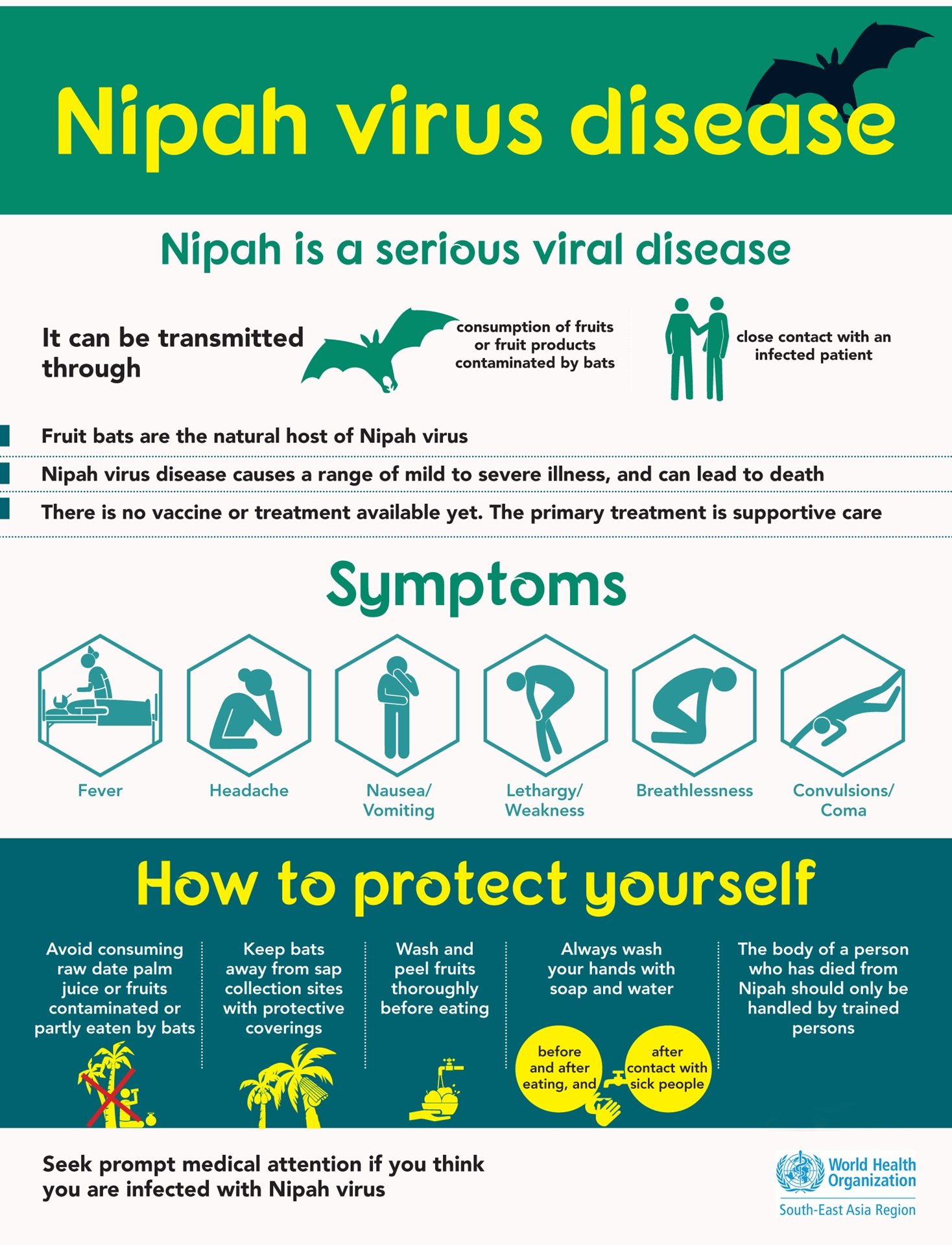
Nipah virus is a zoonotic disease transmitted mainly from bats to humans, sometimes through contaminated food or close contact. With no licensed vaccine or treatment currently available, early detection, supportive care, and strong infection prevention measures remain essential.

Disease Outbreak News: Nipah virus infection - India

Disease Outbreak News (DONs)

Description of the situation

12 February 2004

From 4 January 2004 – 8 February 2004, WHO has received reports of a total of 42 cases and 14 deaths attributed to Nipah-like virus infections in Bangladesh. The infections have occurred in Manikganj (7 cases, 4 deaths) and Rajbari provinces (35 cases, 10 deaths). An additional 45 cases are under investigation.

Laboratory testing, performed by Centers for Disease Control and Prevention (CDC), Atlanta has confirmed Nipah-like virus in 9 of the cases to date. A team comprising experts from WHO, partners in the Global Outbreak Alert and Response Network, (CDC Atlanta, Epiet, France and the International Centre for Diarrhoeal Disease Research, Bangladesh) and the Institute of Epidemiology Disease Control and Research, Bangladesh is assisting the Ministry with epidemiological investigations.

Further activities include case control studies, sero-surveys of humans, and sero-surveys of animals in the region to identify the viral reservoir.

For more information on Nipah virus, see the WHO Fact Sheet.

Technical documents

Technical Brief: Enhancing readiness for a Nipah virus event in countries not reporting a Nipah virus event

Nipah virus infection is an emerging serious zoonotic disease transmitted to humans through infected animals (such as fruit bats of the Pteropodidae family...

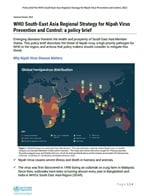
WHO South-East Asia Regional Strategy for the prevention and control of Nipah virus infection 2023–2030

The Regional publication  “WHO South-east Asia Regional Strategy for the prevention and control of Nipah virus infection, 2023-2030  provides...

Facebook

SEARO X