
E-health technologies and substance abuse

Internet-based preventative and treatment self-help programs targeting alcohol misuse and alcohol use disorders have been developed, with the largest effect sizes reported for low-intensity, cognitive–behavioural therapy and self control-based internet pro- grams that target alcohol misuse in high-income countries. Such web-based programs can reach higher-risk individuals earlier, when more pronounced alcohol use disorders are not yet established fully. Moreover, these programs have the capacity to reach ‘hidden’drinkers in the general population who fail to contact any health professional, which is also of great importance from a public health perspective.
Innovative portals on alcohol and health with a web-based self-help intervention tool have been developed with the support by WHO in four pilot countries, Belarus, Brazil, India and Mexico. The portals were launched on December 6, 2012, and provide information not only for policymakers and professionals, but also for the public at large. They include a self-screening tool for hazardous and harmful use of alcohol and a fully computerized self-help programme for people who wish to reduce or stop drinking alcohol.
The WHO e-health project on alcohol and health has been implemented by WHO Department of Mental Health and Substance Use in collaboration with Trimbos Institute in the Netherlands, and institutes and organizations from Belarus, Brazil, India and Mexico. One of the key results of the project is the development of a generic portal on alcohol and health that can be easily translated into other languages and adapted to different cultures. Developing such a generic portal and making it available to interested organizations and institutions is a part of WHO`s implementation of the WHO Global strategy to reduce the harmful use of alcohol. The portal provides an overview of relevant information for policymakers and professionals, while the online intervention offers an innovative method of facilitating and supporting self-help strategies for those who want to reduce alcohol consumption or stop drinking.
Online self-help programs for different health conditions and risk factors are emerging in many countries. These programs have many advantages: they are user-friendly, available round the clock, don’t require waiting or travel time, are anonymous and free of cost. Young people, who are traditionally difficult to reach, and women are particularly attracted by help via the internet. Such programs for hazardous and harmful drinking are not a substitute for professional treatment and care, but they allow to reach out to many people with access to internet who risk their health through drinking alcohol and who otherwise may not receive advice on how to reduce alcohol consumption or stop drinking.
Overall project coordination is by done by the Alcohol, Drugs and Addictive Behaviours Unit in the Department of Mental Health and Substance Use. r Vladimir Poznyak has served as the project coordinator and co-investigator, Dr Isy Vromans lead the developement and implemenation of the portals and Mr Dag Rekve later as project manager and co-investigator. The lead external principal investigator is Dr Michael Schaub from the Swiss Research Institute for Public Health and Addiction.
For more information about the research project see:
This project received funding from the Government of the Netherlands.
For more information about the project, please contact: MSD-ADA@who.int
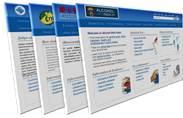
E-health project portals
Below are the four pilot countries and the names of the responsible institutes.
- Belarus
Responsible institution: The Information and Training Centre of Belarusian Psychiatric Association at the Republican Mental Health Research and Practice Centre - Brazil
Responsible insititutions: Associação Fundo de Incentivo à Pesquisa, Universidade Federal de Juiz de Fora, Universidade Federal de Sao Paulo and Universidade Federal do Parana - India
Responsible institution: National Drug Dependence Treatment Center (NDDTC) at the All India Institute of Medical Sciences - Mexico
Responsible institution: Insituto Nacional de Psiquiatría Ramón de la Fuente Muñiz