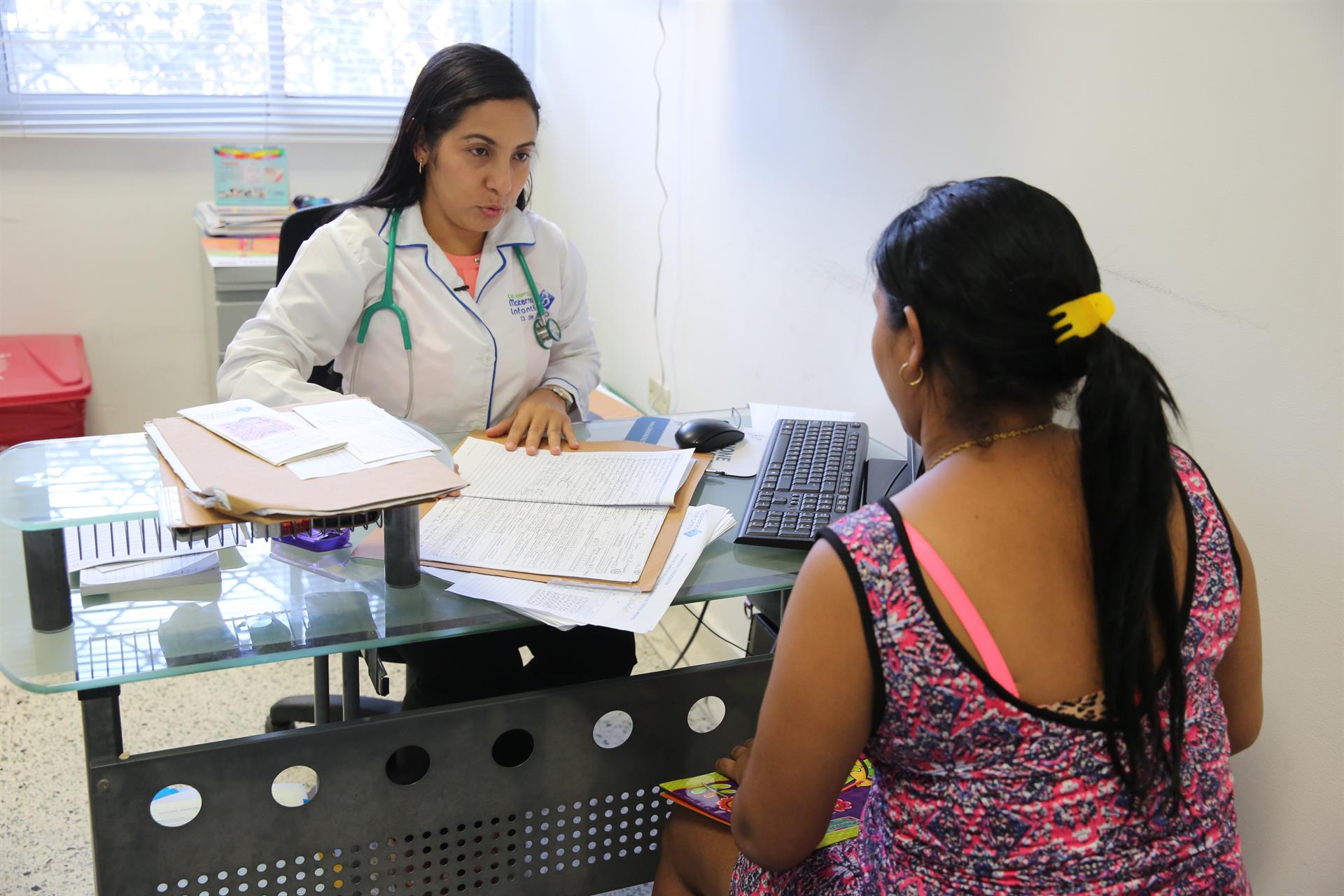
WHO/David Spitz
© Credits

Management of noncommunicable diseases

Noncommunicable diseases – including cardiovascular diseases, cancer, chronic respiratory diseases and diabetes – kill 41 million people every year. Prevention of NCDs is important. However, investing in better management is the other key component of the NCD response. 

Investing in better management of NCDs is critical. Management of NCDs includes detecting, screening and treating these diseases, and providing access to palliative care for people in need. High impact essential NCD interventions can be delivered through a primary health care approach to strengthen early detection and timely treatment. Evidence shows such interventions are excellent economic investments because, if provided early to patients, they can reduce the need for more expensive treatment.

Countries with inadequate health insurance coverage are unlikely to provide universal access to essential NCD interventions. NCD management interventions are essential for achieving the global target of a 25% relative reduction in the risk of premature mortality from NCDs by 2025, and the SDG target of a one-third reduction in premature deaths from NCDs by 2030.

41 million

deaths

Attributed to NCDs annually, equivalent to 71% of all deaths globally

15 million

people

die from a noncommunicable disease between the ages of 30 and 69 years

Over 85%

of NCD-related premature deaths occur in low- and middle-income countries

News

All →

Toolkit for developing a multisectoral action plan for noncommunicable diseases

thumbnail image of the overview cover

Overview

Access →

This toolkit is a "how to" guide for developing, implementing and evaluating a multisectoral action plan for prevention and control of NCDs. It is targeted at policy-makers, planners and programme managers, and is intended to help countries, provinces and cities meet the requirements for achieving global and national NCD targets and the Sustainable Development Goals. The toolkit takes the user through a series of actions related to the development of a multisectoral action plan ("MSAP development actions"), and provides forms and a template framework for users to complete as they undertake these actions. Developing a multisectoral action plan involves establishing health needs and engaging relevant stakeholders before determining the actions to take, identifying and prioritizing interventions, deciding on ways to address NCDs while establishing support and resources for prevention and control, and evaluating progress in implementing the plan.

Modules

Module 1: conducting a comprehensive assessment

Module 2: establishing stakeholder engagement and governance mechanisms

Module 3: establishing a framework for action

Module 4: developing an implementation plan

Module 5: evaluating the implementation of a multisectoral action plan

Download

Template

Checklist

The modules are presented as a web tool in the link https://apps.who.int/ncd-multisectoral-plantool/

Publications

All →
Risk reduction of cognitive decline and dementia: WHO guidelines, second edition

This publication provides updated evidence-based recommendations on interventions to reduce the risk of cognitive decline and dementia. The guidelines...

Disarmament, demobilization and reintegration and mental health and psychosocial support: operational guidance

This operational guidance addresses the integration of mental health and psychosocial support (MHPSS) into disarmament, demobilization and reintegration...

An illustration of people of various ages walking together

The Global status report on cancer 2026: the future we choose together provides a comprehensive assessment of the global burden of cancer, progress in...

Implementing what works in alcohol policy: progress report on the SAFER initiative

Alcohol-related harm causes millions of deaths each year and remains a major, preventable obstacle to health, equity and sustainable development. This...