
Germany
Partner in global health
This content was last updated on 25 March 2025.
Shaping global health
Germany stands as a global leader in public health, showcasing its commitment through robust health strategies, policies, and contributing with expertise and funding to the World Health Organization.
The partnership between WHO and Germany focuses on strengthening global health security, combating antimicrobial resistance and advancing universal health coverage, with the shared goal of building resilient health systems that save lives and protect the most vulnerable. Germany hosts the WHO Hub for Pandemic and Epidemic Intelligence in Berlin, a major initiative to enhance global preparedness for future health threats.
Germany's global health influence extends to global platforms like the G7 and G20, where it consistently prioritizes health. Notably, Germany called on WHO to lead the creation of the Global Action Plan for Healthy Lives and Well-being for All, to accelerate progress on the health-related Sustainable Development Goals.
At the 2024 World Health Summit in Berlin, Federal Chancellor Scholz announced Germany's commitment to WHO of nearly US$ 400 million over the next four years, including more than US$ 260 million in new voluntary funding. In his address, the Chancellor said: "The WHO's work benefits us all. What it needs for this work is sustainable financing that gives it the certainty to plan ahead and the flexibility to react."
During the COVID-19 pandemic, Germany played a pivotal role in the global response, steering the G20 finance ministers' economic action plan to address the crisis and actively supporting the ACT-Accelerator, an alliance focused on the equitable distribution of vaccines, tests, and treatments.
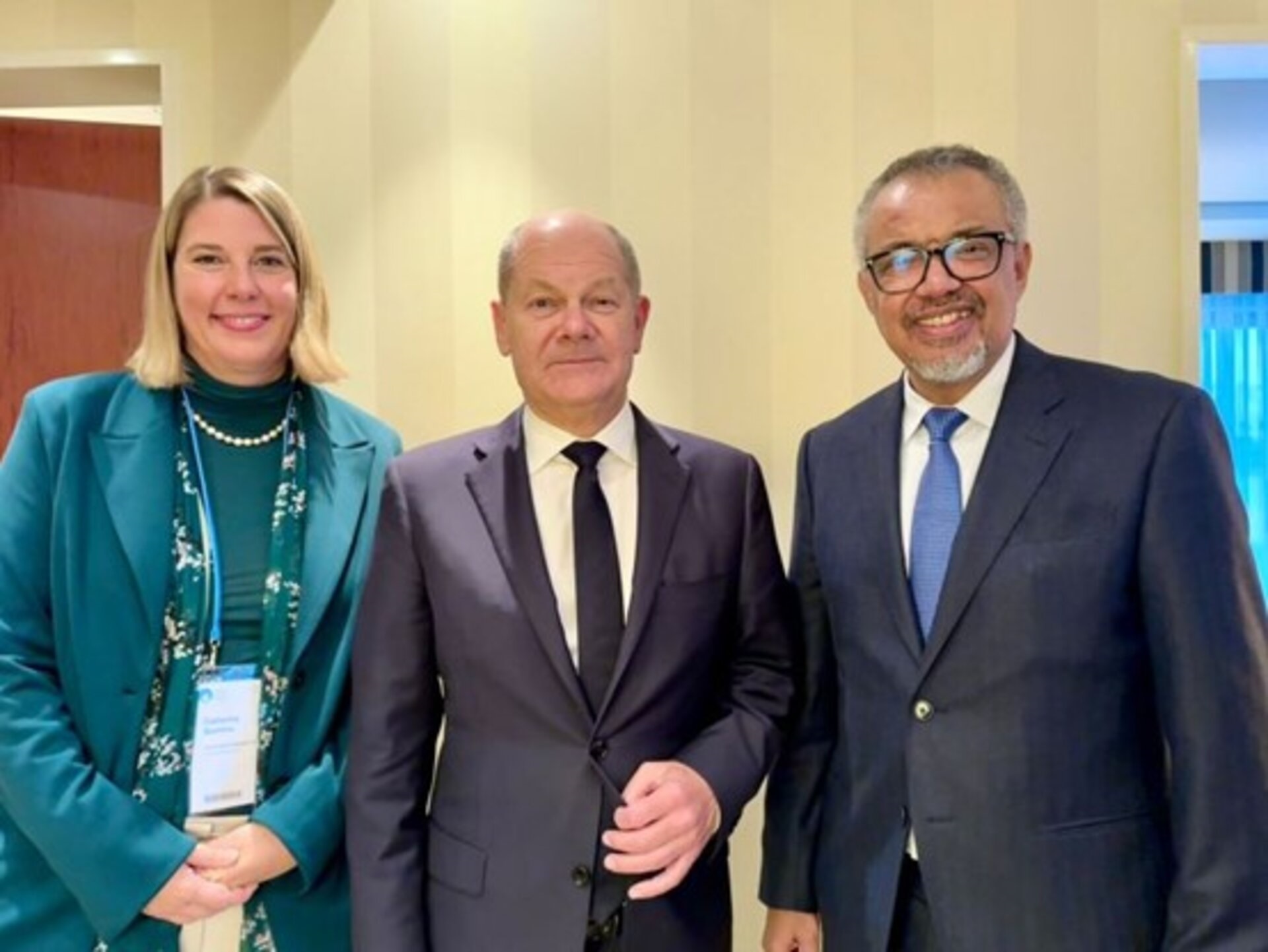
Dr Catharina Boehme, Chancellor Olaf Scholz, Dr Tedros at the World Health Summit 2024 in Berlin.
Germany: top WHO donor
WHO is proud to partner with Germany, which significantly increased its funding since the 2020-2021 biennium. Overall contributions from Germany rose from US$ 359.2 million in 2018-2019 to more than US$ 1.26 billion in the 2020-2021 biennium, making Germany the largest donor to WHO for the period and second-largest for the 2022-2023 biennium with US$ 826.4 million. In the same 2022-2023 biennium, Germany was the top donor for thematic funding. In addition, Germany is WHO's second-largest contributor for flexible funds — vital, non-earmarked resources that the Organization can deploy when and as needed to carry out the activities in its approved programme budget. At time of this update, Germany's contribution for the 2024-2025 biennium to WHO amounted to US$ 317.2 million.
Germany plays a key role in the gradual increase of Assessed Contributions and led the Member States' Working Group on WHO Sustainable Financing to secure durable and predictable funding for the Organization. Alongside France and Norway, Germany hosted a WHO Investment Round Signature Event at the 2024 World Health Summit in Berlin, strengthening global commitment to address the urgent need for investment in the Organization's mission to improve health outcomes worldwide. Germany also made financial commitments as part of the Investment Round.
Applying a vision for a "whole-of-government investment", Germany allocates WHO funding from the federal level (Ministry of Health, Ministry of Foreign Affairs, Federal Ministry for Economic Cooperation and Development), as well as the German Agency for International Cooperation GIZ, the German Development Bank KfW, the Ministry of Food and Agriculture, and the Ministry for the Environment.
During the 2022-2023 biennium, Germany supported a broad range of technical areas with an emphasis on flagship priorities: antimicrobial resistance, universal health coverage, noncommunicable diseases, WHO's health emergency programme and the International Health Regulations.
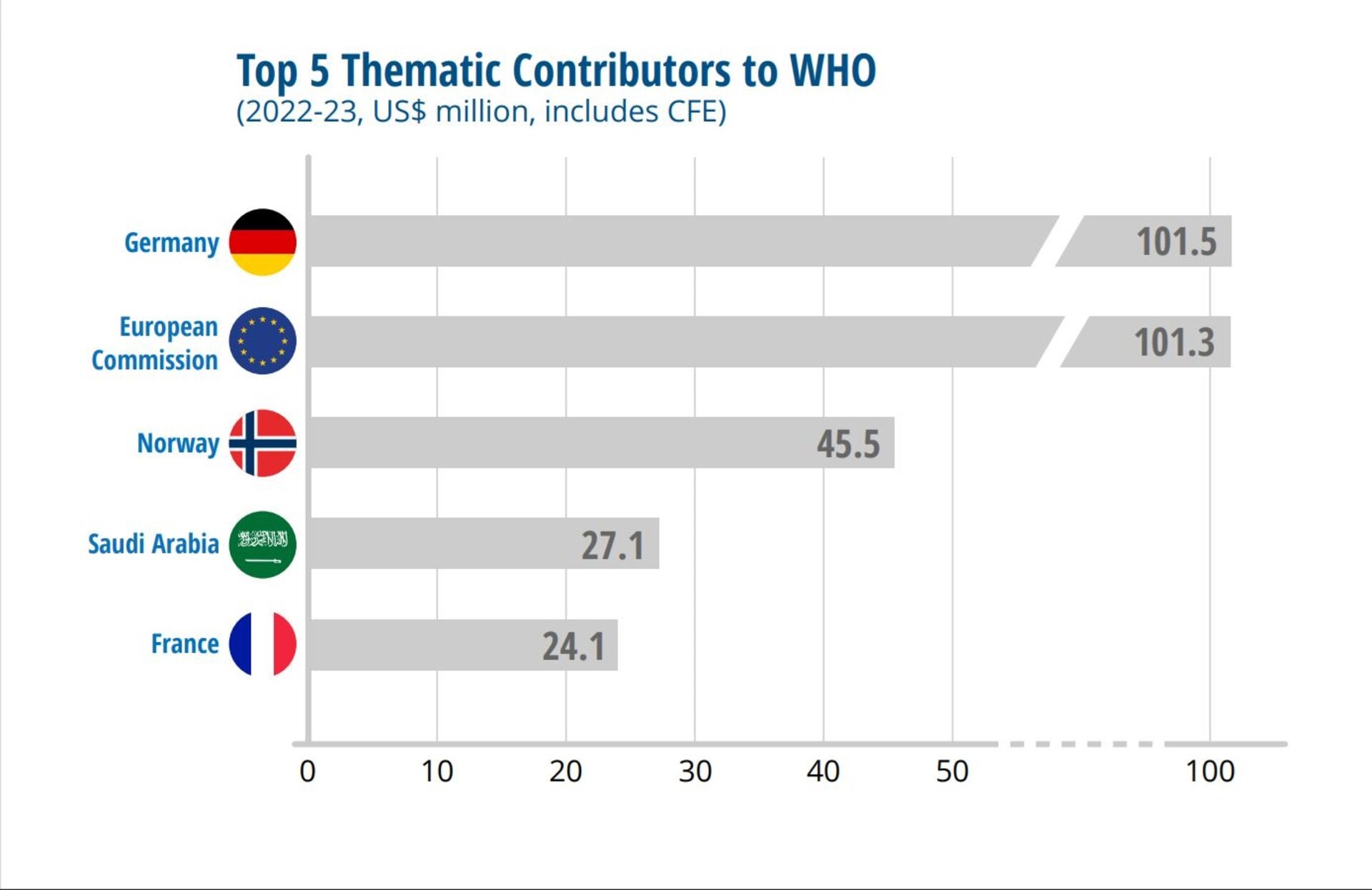
Note: The amounts represent the revenue received by WHO for the period stated. Figures in the Budget Portal may vary, as they represent funds available net of programme support costs.
WHO Global Hub for Pandemic and Epidemic Intelligence
On 1 September 2021, WHO launched its Hub for Pandemic and Epidemic Intelligence (WHO Pandemic Hub) with support from the German government. The goal is to transform the global surveillance of emerging public health threats and to build a collaborative intelligence ecosystem in preparedness for future health emergencies.
The Hub is at the centre of the global effort to strengthen pandemic and epidemic intelligence. Building on expertise across disciplines, sectors, and regions, it leverages WHO’s convening power to foster global solutions based on global trust.
The Hub convenes a multidisciplinary collaborative intelligence community, including national public health agencies, and regional and country level public health actors both within and outside WHO. It works to build a global system to improve the detection, assessment, and management of pandemic and epidemic risks.
The Hub develops innovative analytic tools and processes that facilitate experimentation, testing, and scaling of innovations in data analytics and modelling. These tools enable communities at all levels to make data-driven decisions. The Hub is also driving a global agenda for responsible research and development (R&D) in pandemic and epidemic intelligence.
The Hub manages trainings that supports countries’ pandemic and epidemic intelligence capacities. This includes guidance on data collection and quality and harmonization of key public health standards.
For more information: visit the WHO Pandemic Hub
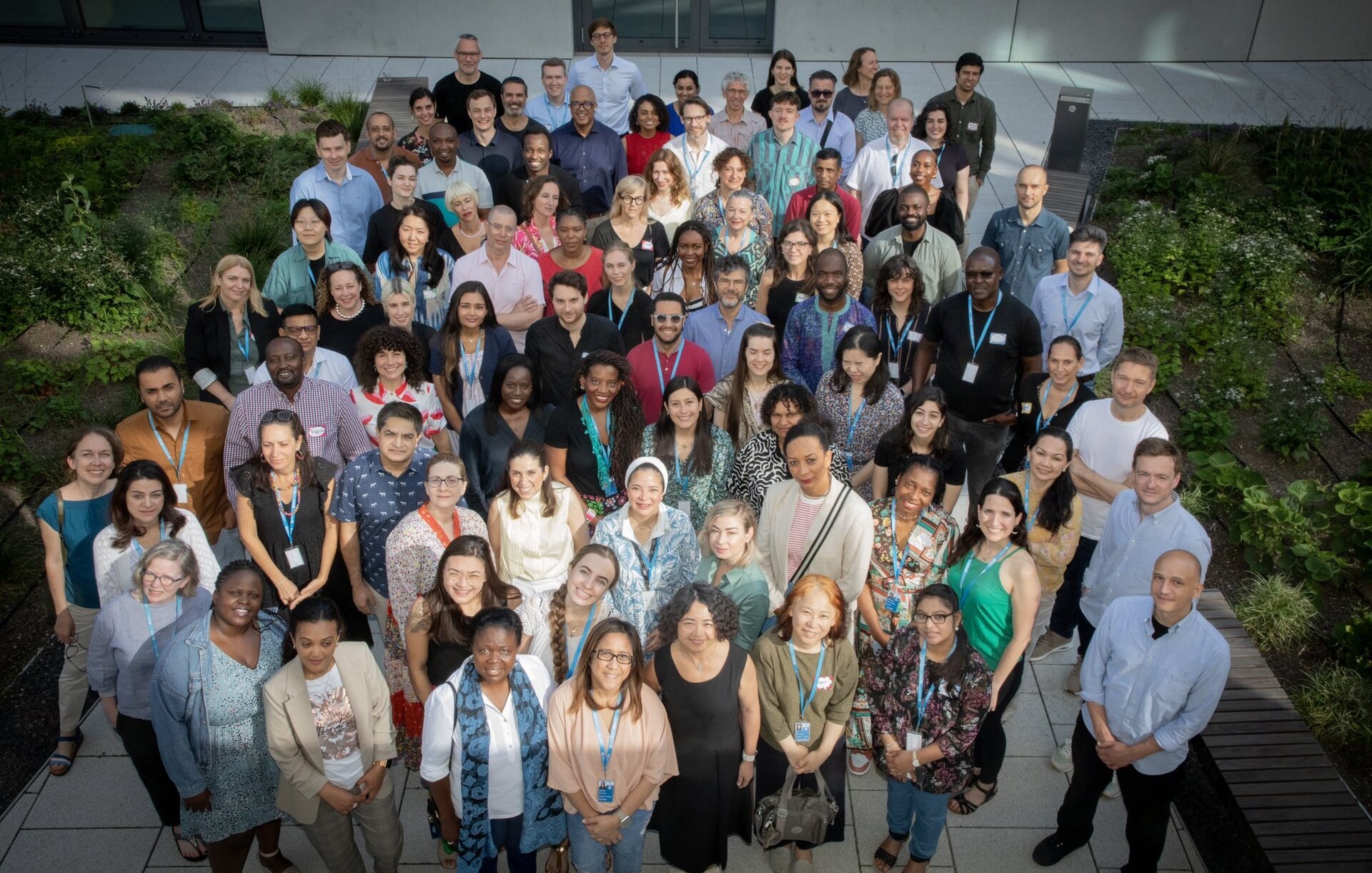
The WHO Pandemic Hub in Berlin team retreat, June 2024.
Today marks three years since we established the @WHO Hub for Epidemic and Pandemic Intelligence in Berlin.
— Tedros Adhanom Ghebreyesus (@DrTedros) September 1, 2024
In the face of these growing challenges - such as the global emergency over #mpox outbreaks and the climate crisis - the Hub stands resolute in its mission to provide the… https://t.co/kNrDZftz6l
Health emergencies and humanitarian assistance
Germany is a top donor to WHO's Health Emergencies Programme, providing vital support to the Organization's work in humanitarian crises and fighting disease outbreaks like mpox, Ebola and cholera.
Humanitarian health support
Germany has provided crucial support to WHO's work in humanitarian crises e.g. in Ukraine, Gaza/occupied Palestinian territory, Afghanistan, and Yemen, as well as to WHO's disease outbreak responses including mpox and Ebola. Germany's support helped WHO step up disease surveillance and infection prevention and control in the Democratic Republic of Congo and Guinea, procure and distribute more life-saving kits in Gaza and the West Bank, and deliver essential health services in Ukraine.
In 2023 Germany provided over € 53 million towards WHO's work in humanitarian settings, and € 45 million in 2024. Germany's flexible funding towards WHO's Health Emergency Appeal 2024 ensures that funds reach the most vulnerable populations and are used efficiently and effectively.
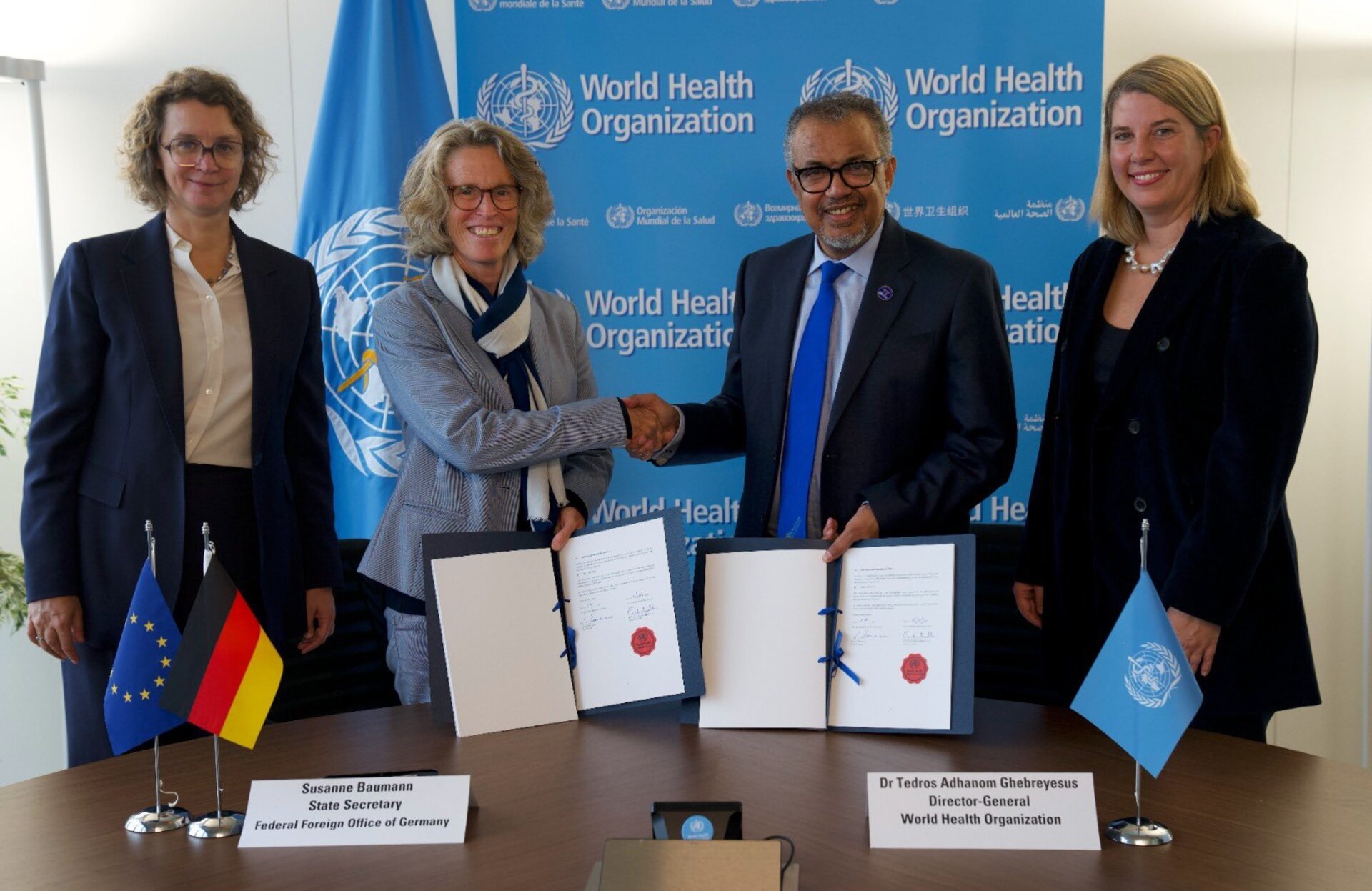
State Secretary of Germany, Susanne Baumann signs contribution to WHO’s Health Emergency Appeal with Dr Tedros and Catharina Boehme, October 2024
Enabling a quick response in emergencies: CFE
Germany is the largest donor to the WHO Contingency Fund for Emergencies (CFE), having contributed more than US$ 138 million in flexible funding since 2015, including US$ 44 million in 2022-2023 and US$ 10.6 million in 2024. This flexible funding enables WHO to respond without delay to health emergencies worldwide. In 2024, the CFE has enabled WHO to respond immediately to crises such as the violence escalation in Sudan, the crisis in Lebanon, as well as Marburg virus disease outbreak in Rwanda, and the global dengue response.
Germany's support during the COVID-19 pandemic
During the pandemic, Germany ramped up its global commitments through political, technical and financial support. Germany was the top donor to WHO's COVID-19 response and contributed over € 1.1 billion between 2020-2023 in support of critical ACT-A measures globally as well as COVID-19 interventions in equitable global access to safe, quality, effective, and affordable COVID-19 diagnostics, therapeutics, and vaccines, so that no one is left behind. Germany also provided dedicated funding for WHO's COVID-19 response in humanitarian settings, ensuring that even the most vulnerable receive life-saving treatments and vaccines.
WHO's partnership with the German Centre for international Peace operations (ZIF)
In May 2022, WHO and ZIF signed a Standby Partnership Agreement to deploy highly skilled humanitarian personnel for short-term assignments, funded by the German Foreign office. Since then, WHO and ZIF have collaborated on five deployments, to support emergencies including the Greater Horn of Africa Drought. ZIF and WHO worked together on capacity-building for the Global Health Cluster's all-women training in Berlin, enhancing skills in Health Cluster coordination and leadership. Participants included WHO staff, eight partner NGOs, and ZIF roster members.
Germany supports WHO's work to advance universal health coverage
Germany contributes to the Universal Health Coverage Partnership, which is one of WHO's largest initiatives for international cooperation for universal health coverage and primary health care, helping more than 120 countries to strengthen their health systems.
Through the UHC-Partnership, more than 140 health policy advisers deployed in WHO country offices provide day-to-day support to countries on health systems, including governance, financing, health workforce, access to medicines, packages of services and health information systems, according to national priorities.
Germany's contribution helped WHO respond to the evolving priorities and rapidly changing national contexts during the COVID-19 pandemic. The Partnership is also working to ensure that the investments made throughout the COVID-19 response will result in health system reforms that improve both health security and progress towards universal health coverage.
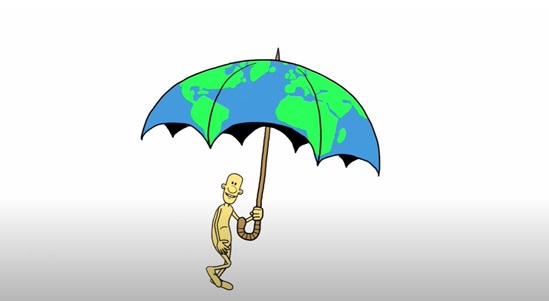
Global Action Plan for healthy lives and well-being for all
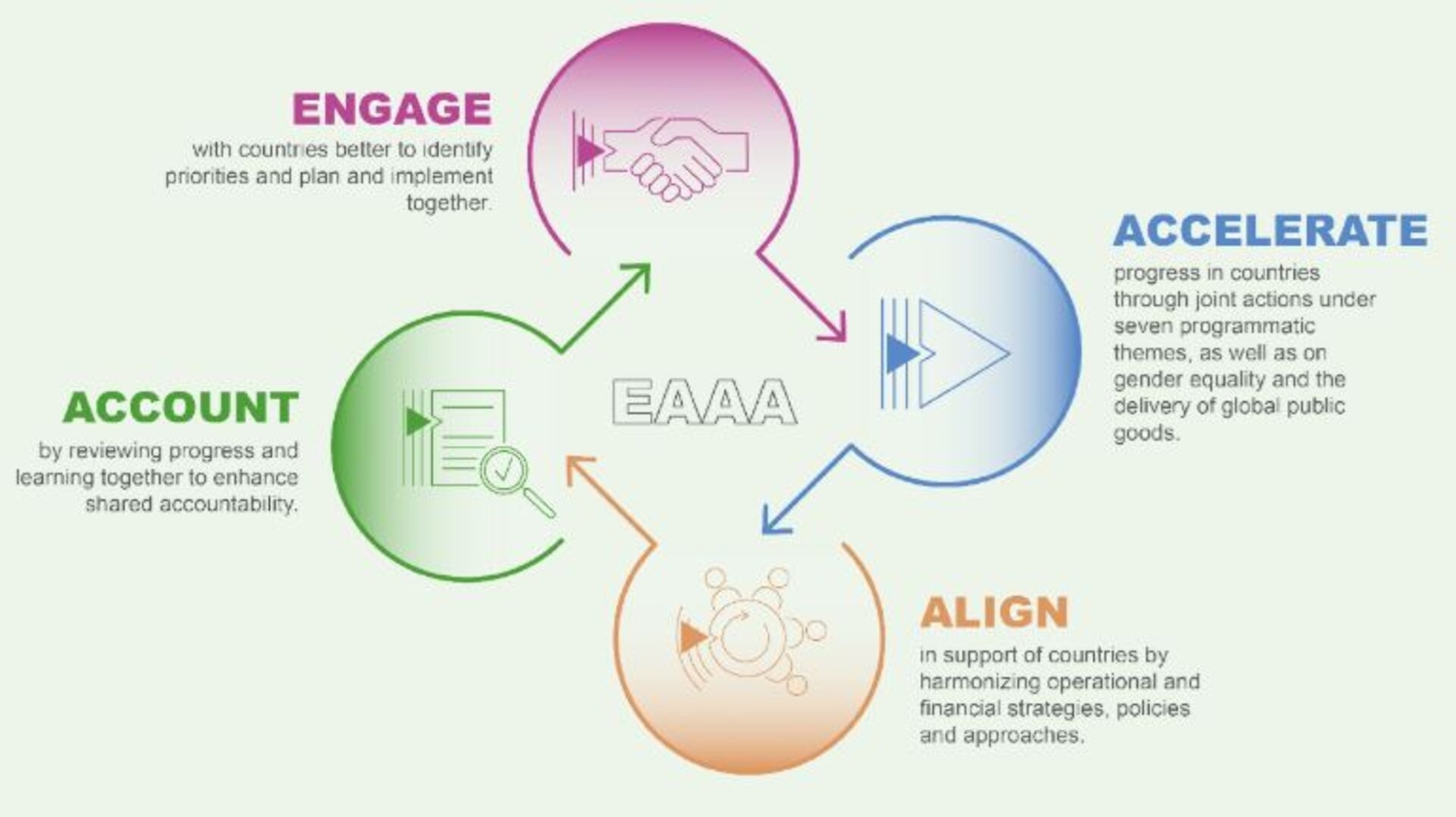
Global Action Plan for healthy lives and well-being for all, graphic from SDG3 GAP brochure: Multilateral agencies commit to Engage, Accelerate, Align, Account (EAAA)
Germany supports WHO’s core function of providing global leadership on health, engaging in partnerships where joint action is needed. Germany was instrumental for putting the Global Action Plan to accelerate progress on the health-related Sustainable Development Goals on the global agenda. The Global Action Plan and strengthened partnerships constituted a crucial asset at a time when countries are striving to protect health gains and build back better from the COVID-19 pandemic with more resilient health systems centred around primary health care, re-doubling efforts to achieve health and well-being for all.
Combating antimicrobial resistance
Since its G20 presidency in 2017, Germany has continuously recognized the global threat of antimicrobial resistance (AMR) and has been a strong supporter and a steadfast, critical WHO partner for addressing AMR globally. In addition to providing substantial financial and institutional support, as well as a Junior Professional Officer for AMR in recent years, Germany nurtures the AMR technical partnership WHO via the Robert Koch Institute — a WHO Collaborating Centre for AMR, consumption and health-care associated infections.
Germany also supports the Quadripartite Joint Secretariat (QJS), which is hosted by WHO and made up of the Food and Agriculture Organization of the UN (FAO), the UN Environment Programme (UNEP), and the World Organization for Animal Health (WOAH). Germany helped QJS to foster a One Health multisectoral approach to AMR at global, regional, and country level through the development of a Strategic Framework for Collaboration on AMR and its roll-out in countries. Germany also convened the first "Global Joint Summit of Human and Veterinary Medicines Regulatory Authorities"; has provided technical support and guidance on integrated surveillance and other One Health approaches to AMR in low- and middle-income countries; and contributed to the AMR Multi-Partner Trust Fund.
Global Polio Eradication Initiative
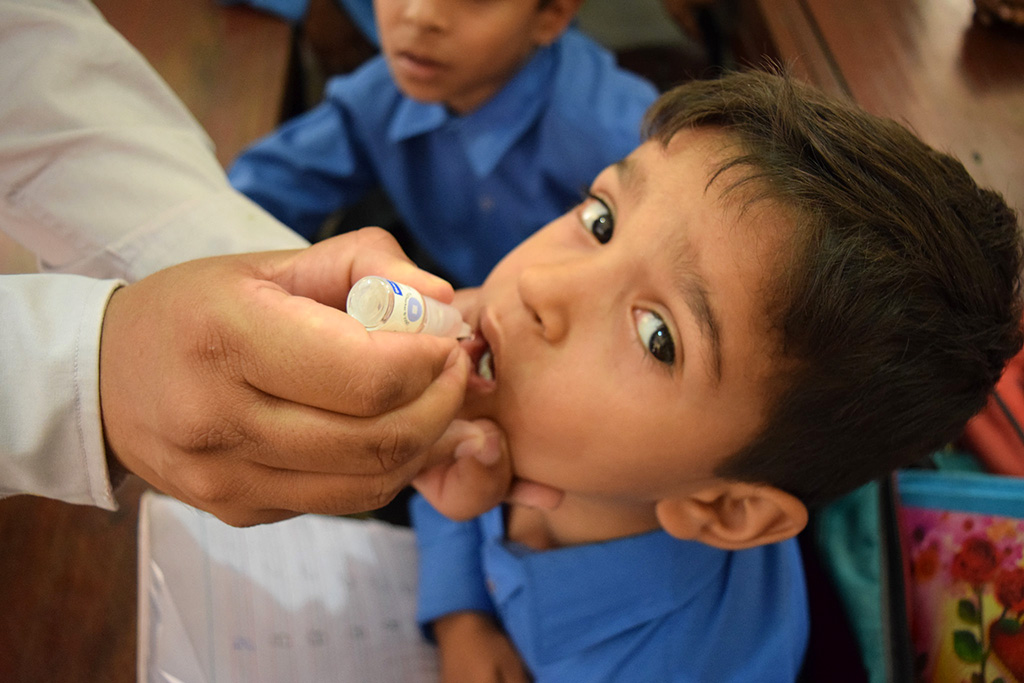
Germany is a long-time supporter of the Global Polio Eradication Initiative (GPEI) with contributions totaling more than US$ 898 million. Fostering global commitment to polio eradication during its G7 and G20 presidencies, Germany garnered international recognition at the highest levels.
At the 2019 World Health Summit, Germany called for continued universal commitment to finish the job. In Germany’s 2020 Strategy Paper Shaping Global Health, Taking Joint Action, Embracing Responsibility, polio eradication forms part of its commitment to global public health and global health security. On the margins of the 2022 World Health Summit, Germany, together with partners, co-hosted a global polio eradication pledging moment, giving the international development community the opportunity to recommit to the global polio eradication effort.
During the World Health Summit in 2024, Minister Svenja Schulze, Federal Minister for Economic Cooperation and Development, announced her new role as GPEI Gender Champion, recognizing the essential role of women in global immunization programs.
WHO European Centre for Environment and Health, Bonn, Germany
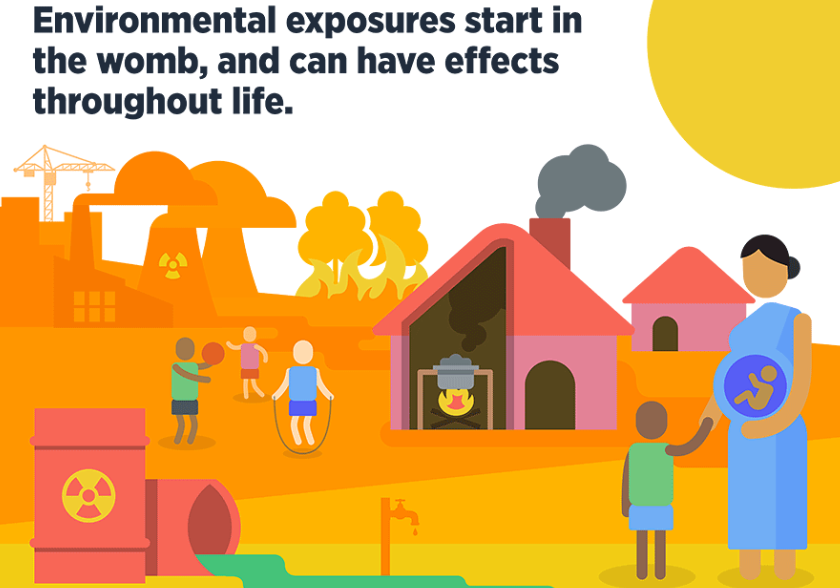
Thanks to the support of Germany and others, WHO made important progress in its work on reducing environmental threats to health, globally estimated to be responsible for about one quarter of all deaths.
The WHO European Centre for Environment and Health provides Member States with up-to-date evidence on environmental health risks and supports policy-making to protect and promote health. The Centre leads WHO normative work on air quality and noise and works to strengthen national capacities addressing environment and health challenges, particularly in the areas of climate change, water and sanitation.
As the "triple crises" of climate change, pollution and biodiversity loss is becoming an increasingly frequent source of health emergencies, the Centre plays a crucial role in the response by giving concrete guidance for such events, helping countries prepare, strengthening resilience and providing support when environment-related emergencies happen.
WHO collaborating centres in Germany
- WHO Collaborating Centre for Occupational Health
- WHO Collaborating Centre for Sexual and Reproductive Health
- WHO Collaborating Centre for Air Quality Management & Air Pollution Control
- WHO Collaborating Centre for Research in Male Reproduction
- WHO Collaborating Centre for Research on Drinking Water Hygiene
- WHO Collaborating Centre for Health Promoting Water Management and Risk Communication
- WHO Collaborating Centre for Tobacco Control
- WHO Collaborating Centre for the Family of International Classifications
- WHO Collaborating Centre for Viral Hemorrhagic Fevers
- WHO Collaborating Centre for Quality Assurance of Blood Products and in vitro Diagnostic Devices
- WHO Collaborating Centre for Radiation Emergency Medical Preparedness and Assistance
- WHO Collaborating Centre for Ionizing and Non-Ionizing Radiation and Health
- WHO Collaborating Centre for Obesity Prevention, Nutrition and Physical Activity
- WHO Collaborating Centre for Physical Activity and Public Health
- WHO Collaborating Centre on quality assurance and empowerment in mental health
- WHO Collaborating Centre for Standardization and Evaluation of Vaccines
- WHO Collaborating Centre for Global Outbreak Alert and Response – GOARN
- WHO Collaborating Centre for Environmental Health Inequities
- WHO Collaborating Centre for viral hepatitis and HIV
- WHO Collaborating Centre for Evidence-based Public Health
- WHO Collaborating Centre for Antimicrobial Resistance, Consumption and Health Care-Associated Infections
- WHO Collaborating Centre on Evidence Synthesis and Evaluation of Novel Cancer Therapies
- WHO Collaborating Centre for Health Literacy
- WHO Collaborating Centre Center for Behavioural Research in Global HealTh (BRIGHT)
- WHO Collaborating Centre for Diphtheria
- WHO Collaborating Centre for Research and Training for Health at the Human-Animal-Environment Interface
- WHO Collaborating Centre for Digital Health Education, Research & Development
WHO Collaborating Centres global database.