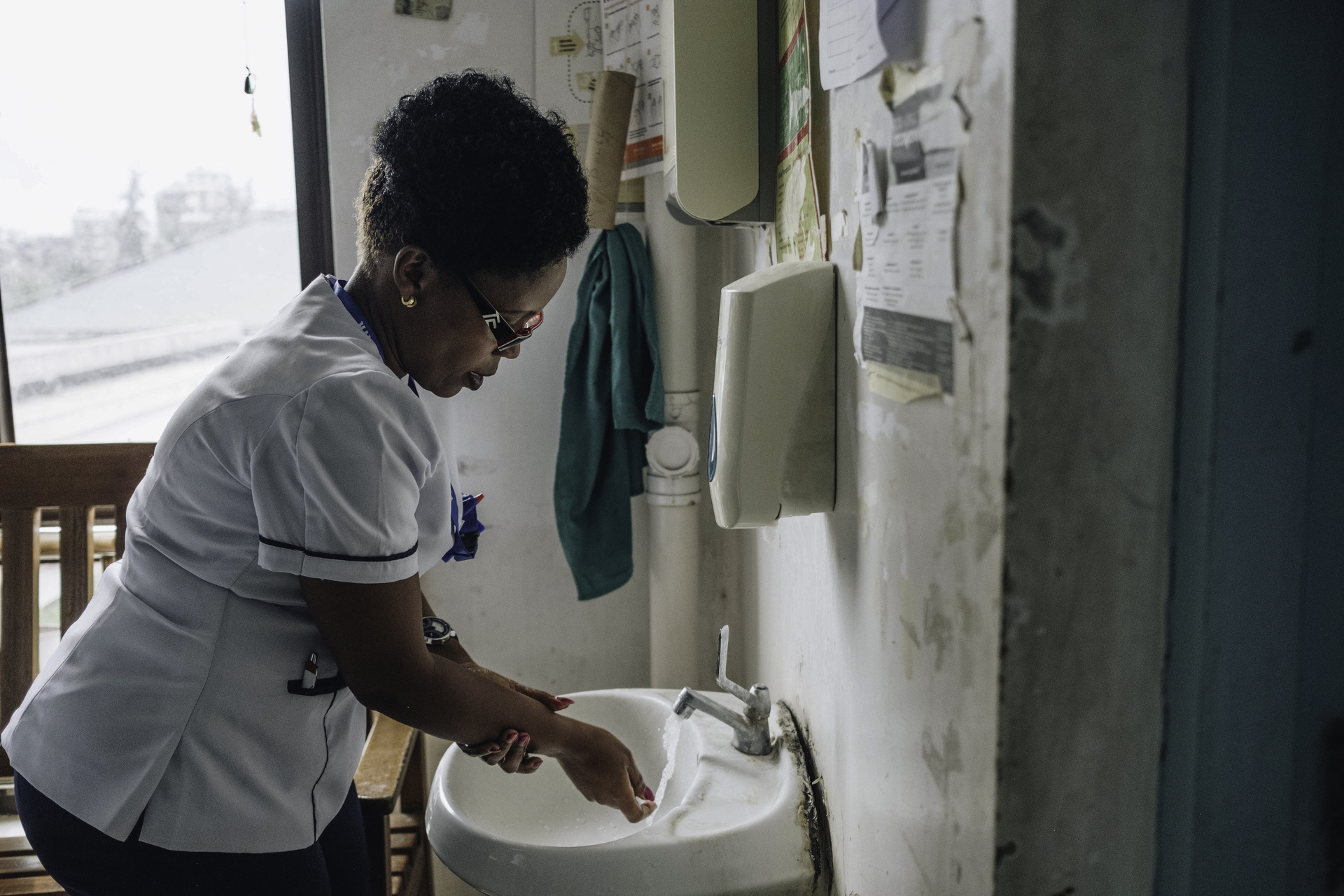
WHO/Q. Mattingly
© Credits

Antimicrobial resistance

    Overview

    Antimicrobial resistance (AMR) threatens the effective prevention and treatment of an ever-increasing range of infections caused by bacteria, parasites, viruses and fungi.

    AMR occurs when bacteria, viruses, fungi and parasites change over time and no longer respond to medicines making infections harder to treat and increasing the risk of disease spread, severe illness and death. As a result, the medicines become ineffective and infections persist in the body, increasing the risk of spread to others.

    Antimicrobials - including antibiotics, antivirals, antifungals and antiparasitics - are medicines used to prevent and treat infections in humans, animals and plants. Microorganisms that develop antimicrobial resistance are sometimes referred to as “superbugs”.
    WHO’s AMR response

    4 key priorities

    lead global efforts, drive public health impact, promote R&D, monitor AMR burden and response

    WHO AMR priorities

    Addressing SDGs

    Mitigating AMR will have a huge impact on reaching 6 of the 17 sustainable development goals (SDGs)

    AMR & SDGs

    1.2 trillion USD

    additional health expenditure per year expected by 2050 due to the rise of antimicrobial resistance.

    Regional news

    "Together with our partners, we’re also stepping up the fight against antimicrobial resistance, one of the most urgent health threats of our time."

    Dr. Tedros Adhanom Ghebreyesus, WHO Director-General

    Publications

    All →
    Strategic framework for collaboration on antimicrobial resistance

    Building on the momentum of increased collaboration, the WHO, FAO, OIE and UNEP have developed a Strategic Framework for collaboration on antimicrobial...

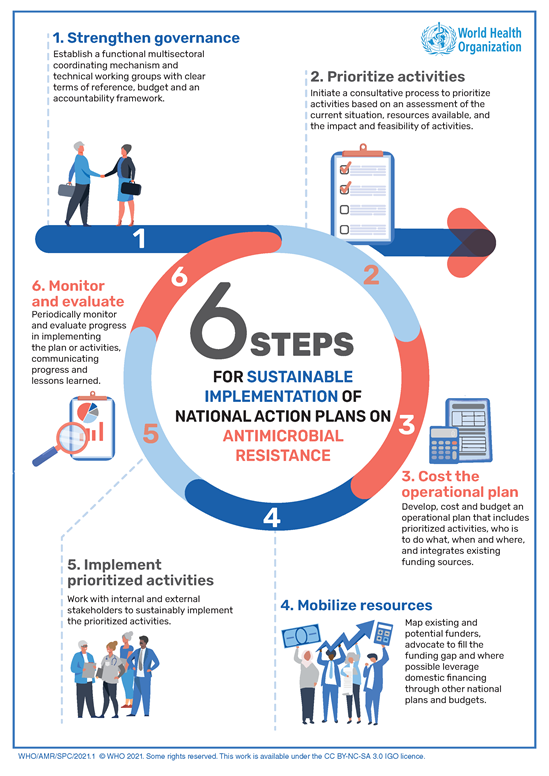
    WHO implementation handbook for national action plans on antimicrobial resistance: guidance for the human health sector

    In 2015 the World Health Assembly endorsed the Global action plan on antimicrobial resistance (AMR) calling on countries to develop and implement national...

    Burkina Faso national action plan on antimicrobial resistance: review of progress in the human health sector

    This policy brief aims to provide a review of the current progress on implementing the Burkina Faso national action plan on AMR, identifies critical gaps,...

    Antimicrobial resistance and the United Nations sustainable development cooperation framework: guidance for United Nations country teams

    The United Nations Sustainable Development Cooperation Framework (“Cooperation Framework”) is an agreement between the UN and the host government...