WHO/Lars Møller
© Credits

Addressing sanitation challenges in the European Region

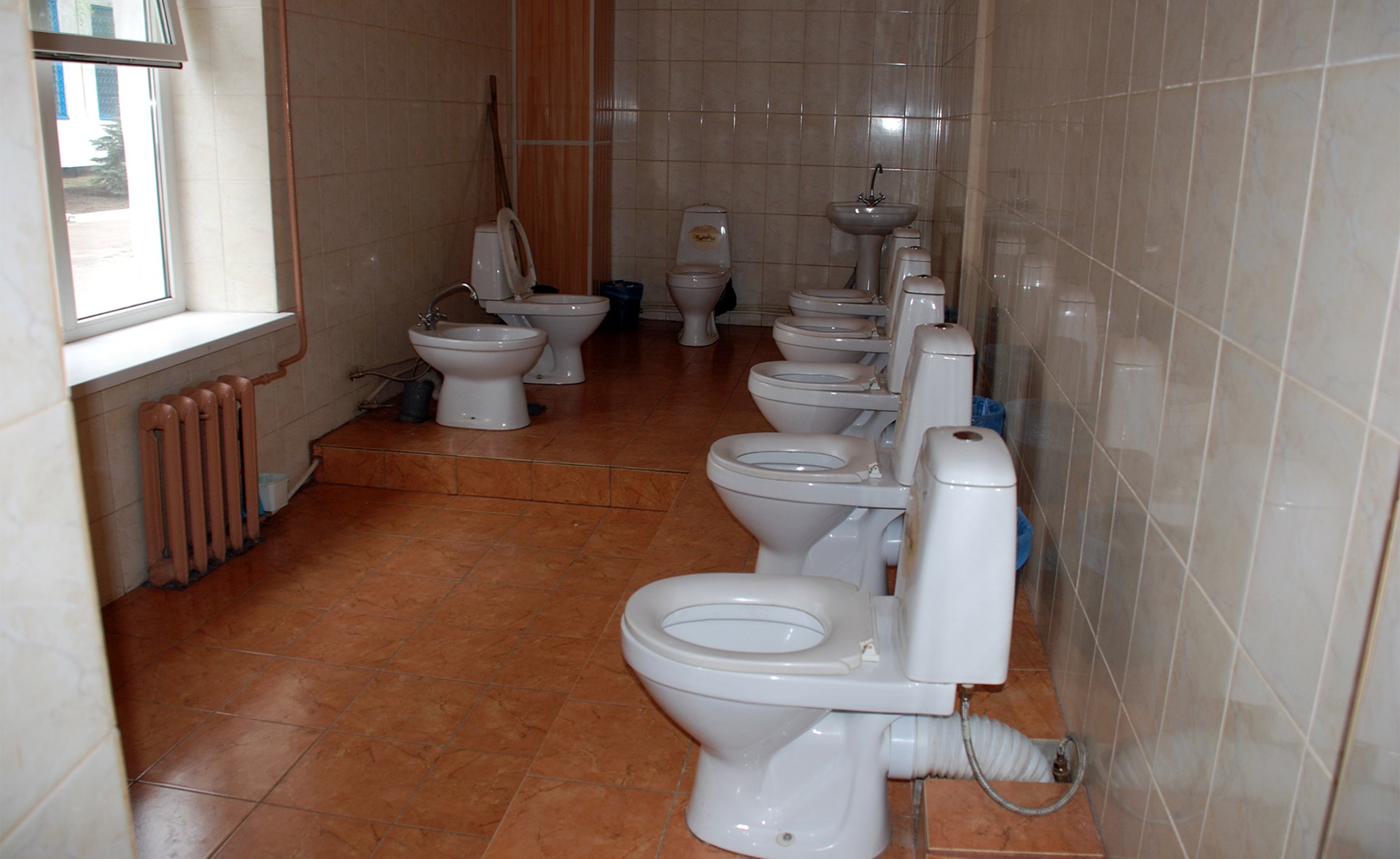
Sanitation is defined as access to and use of facilities and services for the safe disposal of human urine and faeces. Access to safely managed sanitation plays a crucial role in protecting public health and in reducing the global infectious disease burden.

In the WHO European Region, sanitation still poses various challenges, giving rise to the spread of disease and broader impacts on well-being.

  • More than 300 000 people still practice open defecation.
  • More than 36 million people lack access to basic sanitation services on premises, as well as in institutional settings, such as schools and health care facilities.
  • The release of untreated urban wastewater to the environment damages water ecosystems and exposes local communities to pollution.
  • Inequalities in access to basic sanitation services persist, especially between rural and urban areas, rich and poor communities, and disadvantaged and general populations.

Addressing sanitation challenges remains a high priority in the Region. While closing the sanitation gap in the Region requires significant public investment, this is cost-effective: US$ 1 spent on improving sanitation brings a return of US$ 5 by keeping people healthy and productive.

WHO promotes the sanitation safety plan (SSP) approach in support to country efforts towards achieving Sustainable Development Goal (SDG) target 6.2 on providing access to adequate and equitable sanitation and hygiene for all by 2030. The SSP approach is a means to manage systematically health risks along the entire sanitation chain, from collection of human waste to disposal or reuse of wastewater. It is a tool based on risk-based principles, which aims to ensure safely managed sanitation services. Key steps in SSP development include:

  • description of the sanitation system;
  • identification of hazards and hazardous events, and the assessment of associated health risks;
  • development and implementation of an incremental improvement plan to mitigate the identified risks;
  • establishment of effective control measures and monitoring of their performance;
  • regular review of the risk assessment and management plans.

The SSP approach supports the implementation of WHO’s “Guidelines on sanitation and health” (2018) and “Guidelines for the safe use of wastewater, excreta and greywater” (2006). The Declaration of the Sixth Ministerial Conference on Environment and Health and the Protocol on Water and Health promote the adoption of the SSP approach in policies, regulations and practice across the Region.

News

Publications

Workshop on wastewater and environmental surveillance for public health in central Asia: meeting report, Astana, 5 June 2025

The Workshop on wastewater and environmental surveillance (WES) for public health in central Asia, held on 5 June 2025 in Astana, convened national and...

Workshop on safe sanitation for public health protection in central Asia: meeting report, Astana, 3–4 June 2025.

The Workshop on safe sanitation for public health protection in central Asia, held on 3–4 June 2025 in Astana, convened national and regional stakeholders...

Small-scale sanitation and drinking-water supply systems: driving country action towards safer services

Ensuring access to safe services from small-scale sanitation and drinking-water supply systems is crucial for protecting health. However, such systems...

Delivering safe sanitation for all: areas for action to improve the situation in the pan-European region

Sanitation is a fundamental determinant of human health and well-being and is essential for protecting the environment and enabling economic and social...

Drinking-water, sanitation and hygiene in the WHO European Region: highlights and progress towards achieving Sustainable Development Goal 6

Universal and equitable access to safe water, sanitation and hygiene (‎WASH)‎ services for all in all settings is of vital importance in achieving...

Inequalities in lack of a flush toilet in the dwelling [‎February 2022]‎: environmental health inequalities: fact sheet series

This fact sheet series documents the magnitude of environmental health inequalities within countries in the WHO European Region. Environmental health...

Inequalities in access to at least basic sanitation services [‎February 2022]‎: Environmental health inequalities: fact sheet series

This fact sheet series documents the magnitude of environmental health inequalities within countries in the WHO European Region. Environmental health...

Sanitation in the pan-European region: 12–13 February 2019, Bonn, Germany: meeting report

On 12 and 13 February 2019, 90 policymakers and experts from around the pan-European region came to Bonn for a workshop on sanitation under the Protocol...

Costing and financing of small-scale water supply and sanitation services

Small-scale water supply and sanitation systems form an essential part of the provision of services in the pan-European region, particularly in rural...

Taking policy action to improve small-scale water supply and sanitation systems: tools and good practices from the pan-European region

Access to adequate water and sanitation services is essential for good individual and population health. People served by small-scale systems in rural...

Guidance on water supply and sanitation in extreme weather events

Extreme weather events, including floods and droughts, occur increasingly often. They affect the operational efficiency and sustainability of water...

Multimedia

Related activities

All →
Ensuring water, sanitation and hygiene in schools

Ensuring water, sanitation and hygiene in schools

WHO
© Credits

Overview

The child’s right to education, and water and sanitation are human rights that cannot be taken away or compromised. Children deserve a healthy learning environment with easy access to safe and sustainable water, sanitation and hygiene (WASH) services. Lack of access to adequate WASH facilities can lower attendance and educational achievement in schools. A considerable proportion of children in the WHO European Region attend schools that do not provide sufficient WASH services that meet pupils’ needs. A lack of adequate toilets, toilet avoidance, dehydration, poor hand hygiene and inadequate provisions for menstrual hygiene management are common phenomena across the Region. Good WASH services respect the rights of the child by ensuring that children are healthy and able to learn. WASH in schools is a priority under the Protocol on Water and Health.

Adequate provision of WASH in schools:

  • protects the rights and preserves the dignity of children by providing them with access to safe, acceptable and reliable WASH services;
  • is non-discriminatory and ensures equitable access to quality education;
  • helps create conducive learning environments;
  • is a means of disease prevention and promotes health and well-being;
  • needs to provide sustainable infrastructure, which includes operation, maintenance and management.

Our work

WHO/Europe supports countries by enabling them to set targets towards achieving adequate WASH services in schools that meet pupils’ needs. In facilitating this process, WHO assists countries in creating informed policies and strengthening surveillance. The process of setting targets and monitoring their implementation facilitates reporting under the Sustainable Development Goals (SDGs), and contributes to global and regional monitoring instruments. WHO/Europe also promotes and fosters collaboration with the education sector and provides advocacy materials and practical guidance for school-based WASH management and education for health promotion.

Commitments

The work done by WHO/Europe is central to achieving several SDGs, particularly SDG 3 on ensuring and promoting health and well-being, SDG 4 on providing quality education and promoting lifelong learning, and SDG 6 on safe, adequate and equitable water and sanitation for all. The Ostrava Declaration on Environment and Health (2017) also stipulates actions towards ensuring safe and equitable access to water and sanitation facilities in the Region. Moreover, it is central to meeting the target of the 2016 Paris Declaration on partnerships for the health and well-being of our young and future generations, of making every school a health promoting school. The Protocol on Water and Health is the primary implementation instrument in the European Region, prioritizing WASH in institutions and facilitating the development of integrated policies and targets to achieve universal access to WASH in schools.