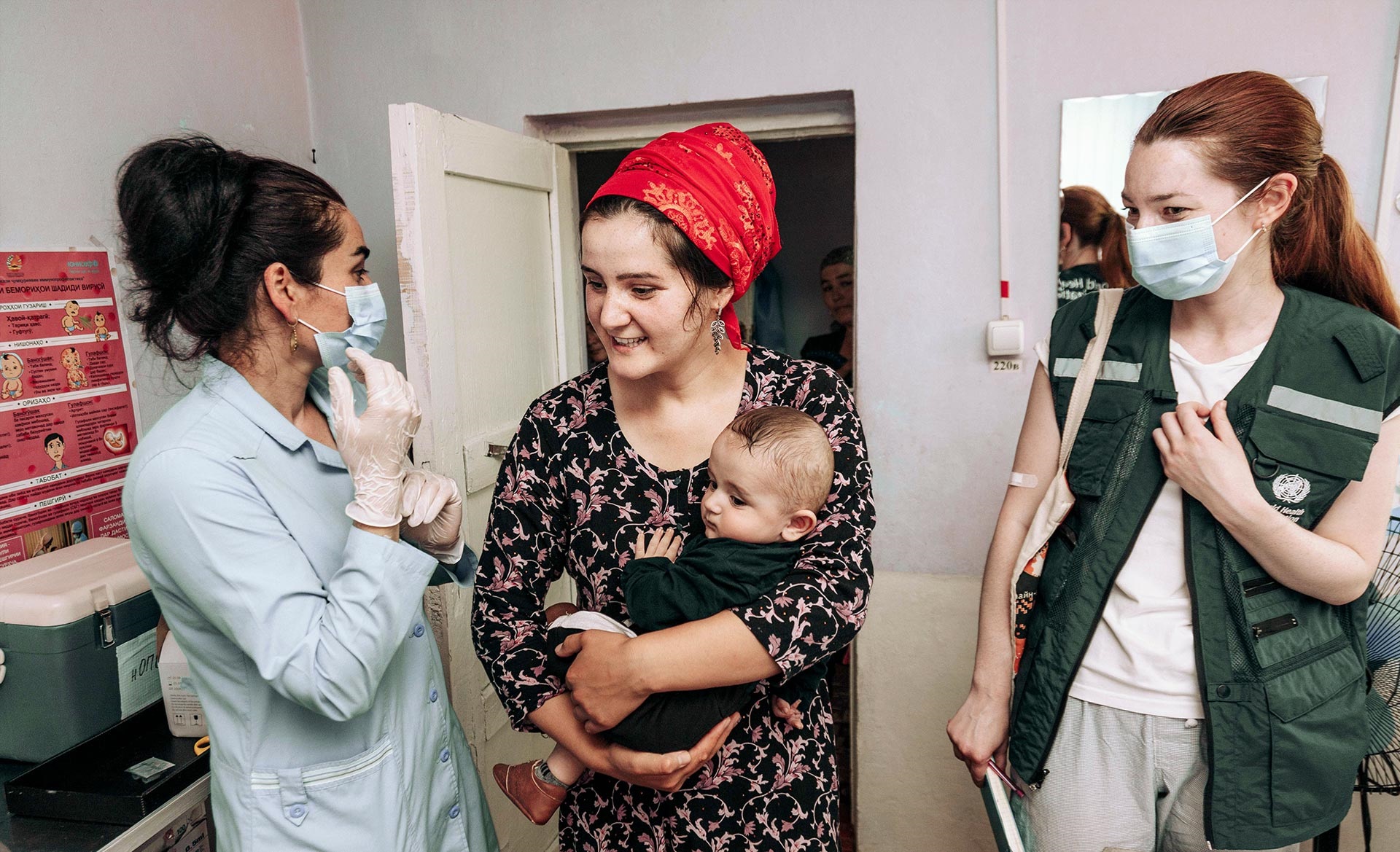
WHO/Mukhsindzhon Abidzhanov
© Credits

Supporting vaccine-preventable disease elimination and eradication efforts

Measles and rubella elimination

The Member States of the European Region recommitted to the joint goal of eliminating measles and rubella, through unanimous adoption of the European Vaccine Action Plan 2015-2020 (EVAP). WHO/Europe supports Member States in their efforts to reach this milestone.

A Regional Verification Commission for Measles and Rubella elimination (RVC) was established in 2011, for which WHO/Europe serves as secretariat. This independent group of experts is tasked with verifying measles and rubella elimination in the WHO European Region. National verification committees for measles and rubella elimination (NVCs) compile and submit data annually to the RVC, in order to provide evidence for the interruption of measles and rubella transmission per country and eventually for the Region as a whole.

Polio eradication

At an historic ceremony held in Copenhagen in 2002, the European Regional Commission for the Certification of Poliomyelitis Eradication (RCC) certified that indigenous transmission of wild poliovirus (polio) in the European Region had ceased. Certification followed years of intensive effort by Member States, supported by a public–private coalition of WHO, the United Nations Children’s Fund (UNICEF), Rotary International and the United States Centers for Disease Control and Prevention (CDC). This collective achievement demonstrated the value of large, internationally coordinated vaccination campaigns and of special efforts to reach traditionally underserved groups, such as migrants or nomads.

By 2010, however, immunity had dropped to the point where an importation of wild polio type 1 led to a large polio outbreak in Tajikistan and three neighbouring countries. This outbreak led to 478 cases in both adults and children, and it killed 29.

As of the start of 2017, circulation of wild polio was at its lowest levels since records began, with fewer cases in fewer districts of fewer countries than at any previous time. Polio remains endemic in parts of only three countries. Until polio is eradicated worldwide, however, all polio-free regions, including the European Region, remain at risk of importation. WHO/Europe supports Member States in their efforts to maintain the Region’s polio-free status.

News

All →

Publications

All →
WHO EpiBrief: a report on the epidemiology of selected vaccine-preventable diseases in the European Region: No. 2/2025

This issue of WHO EpiBrief provides an overview of selected epidemiological characteristics of measles and rubella in the WHO European Region based on...

Thirteenth meeting of the European Regional Verification Commission for Measles and Rubella Elimination: 10–12 September 2024, Copenhagen, Denmark

The Thirteenth meeting of the European Regional Verification Commission for Measles and Rubella Elimination (‎RVC)‎ took place in Copenhagen, Denmark...

Related activities

All →
Monitoring and reporting of routine immunization-related data

Monitoring and reporting of routine immunization-related data

WHO
© Credits

Overview

WHO supports countries in monitoring and showcasing the progress and impact of immunization strategies aimed at controlling, eliminating or eradicating vaccine-preventable diseases (VPDs), as outlined in the European Immunization Agenda 2030 (EIA2030).   

Monitoring immunization and VPD epidemiology is crucial for identifying and addressing gaps in population immunity and disease surveillance. Addressing these gaps is essential to ensuring that everyone everywhere at every age fully benefits from vaccines for good health and well-being.  

WHO collects and analyses data on VPDs and other indicators of immunization progamme performance for all countries in the Region. Data on acute flaccid paralysis and measles and rubella cases are collected weekly and monthly, respectively, through the WHO Immunization Information System. This information is then extensively analysed and shared through data dashboards, monthly summaries, the WHO EpiBrief and global WHO databases. 

In addition, WHO and UNICEF collect annual data on all VPDs, vaccination coverage and several other programme performance indicators through the joint reporting form. This information is published in the WHO Immunization Data Portal. Further insight comes from regional committee reports that assess progress in disease elimination and control as well as and vaccine safety monitoring.  

The EIA2030 dashboard brings together data for the European Region as reported by Member States and available through other sources. 

Related health topics