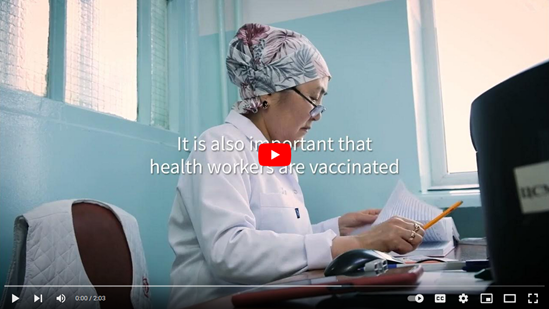
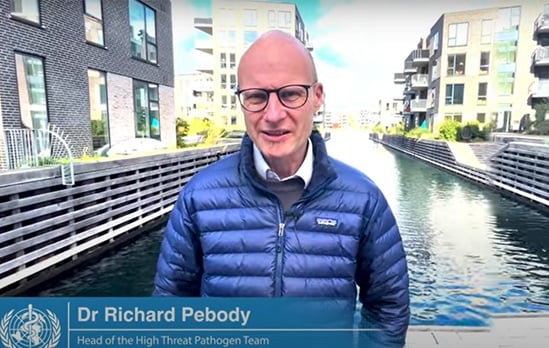
Vaccination is the most effective measure to prevent severe disease caused by influenza. Influenza vaccines are safe, effective, and the principal measure for preventing influenza and reducing the impact of epidemics.
WHO/Europe and partners estimate that over 44 000 people die annually of respiratory diseases associated with seasonal influenza in the WHO European Region. This is out of a total of up to 650 000 such deaths globally.
Yet, influenza vaccination coverage among high-risk groups has unfortunately been declining in a number of countries in the Region in recent years. In fact, half of the countries in the Region are vaccinating fewer than 1 in 3 older people.
This is in spite of World Health Assembly resolution WHA56.19 and the European Council recommendation urging Member States to increase influenza vaccination coverage of all people at high risk and to attain coverage of 75% among older people.
Low and declining use of seasonal influenza vaccines not only reduces the number of vulnerable people who are protected during annual epidemics, but can also negatively impact the capacity to produce vaccines in the event of a pandemic.
Inadequate regional coverage
Seasonal influenza vaccination coverage among high-risk groups varies considerably between countries in the Region – from below 1% to over 75% among older people, the target group for which most data exist. Vaccination coverage among people with chronic diseases and health-care workers is lower than 40% in most countries.
Influenza vaccination uptake depends on a number of factors that are highly context-specific. In the Region’s less resourced countries, where influenza may not be considered a high-priority disease, low coverage is a consequence of limited vaccine procurement.
Where vaccines are more widely available, low or dropping influenza vaccination uptake may be attributed to different factors, including lack of confidence in the vaccine, low perceived need for vaccination, lack of recommendation from health-care providers or out-of-pocket costs to receive vaccination.
Vaccine effectiveness
WHO updates its recommendations for which influenza viruses to include in the composition of vaccines twice a year – once for the southern hemisphere and once for the northern hemisphere. This is to target the viruses expected to circulate most frequently in each hemisphere’s coming season.
Seasonal influenza vaccines are designed to protect against 3 or 4 influenza viruses (trivalent vaccines and quadrivalent vaccines, respectively). Current trivalent influenza vaccines contain antigens of influenza A(H1N1)pdm09, A(H3N2) and 1 influenza B strain, while quadrivalent vaccines contain antigens of A(H1N1)pdm09 and A(H3N2), as well as 2 B strains (Victoria and Yamagata lineages).
Frequent mutations in circulating influenza viruses, and to some extent mutations that influenza viruses may undergo during the manufacturing process, can sometimes result in mismatched vaccines. In seasons when this occurs, vaccine effectiveness may be lower than expected.
How effectively a vaccine for a season protects against influenza also depends upon the person being vaccinated (for example, their age and health status); the vaccine product; which virus types/subtypes circulate; and timeliness (because immunity from vaccination wanes over time). Influenza vaccine effectiveness can also differ between people that have previously been infected or vaccinated, and those naive to circulating viruses.
Nonetheless, while vaccine effectiveness can vary from season to season, vaccination reduces the overall risks of influenza – both for the vaccinated individual and those in contact with them. Vaccination remains the most effective measure to prevent severe disease caused by influenza.