Midwife showing a woman how to breastfeed her newborn baby, Raja Isteri Pengiran Anak Saleha Hospital in Brunei.
Infant nutrition
Proper infant nutrition is fundamental to a child’s continued health, from birth through adulthood. Correct feeding in the first three years of life is particularly important due to its role in lowering morbidity and mortality, reducing the risk of chronic disease throughout their life span, and promoting regular mental and physical development.
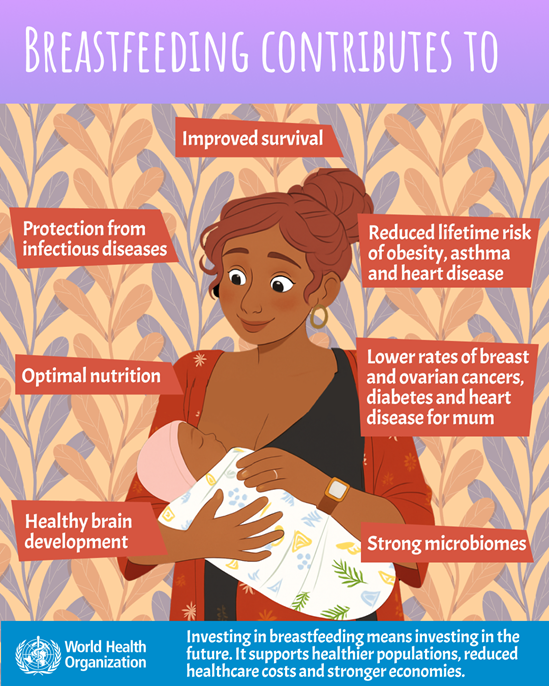
Although every infant and child has the right to good nutrition under the Convention on the Rights of the Child, in many countries less than a fourth of infants have access to the required dietary diversity and feeding frequency. Inappropriate feeding practices contribute up to a third of all cases of child malnutrition. This is compounded by the proliferation of processed foods like infant formula and products rich in salt, free sugars and trans fats. This causes an increase in poor diets, obesity and a marked reduction in the number of mothers breastfeeding their babies. Breastfeeding has been shown to be of critical importance to a child’s development, including increased IQ, school performance and higher income in adult life.
WHO continues to work with Member States and partners to promote proper infant and child nutrition, including breastfeeding information campaigns and efforts to prevent malnutrition at the local, national, and international levels.
Malnutrition affects over 2 billion people worldwide, and the burden is felt disproportionately by people in low- and middle-income countries. Infants and children are particularly vulnerable, with most deaths due to malnutrition occurring in children under 5 years of age.
It is estimated that more than 144 million children under 5 are stunted (meaning too short for their age) and 47 million are wasted (too thin for their height). A further 38.3 million are overweight or obese. Undernutrition, which can occur alone or concurrently with obesity in what is called the double burden of malnutrition, is associated with 2.7 million child deaths each year, or 45% of all deaths in children.
Malnutrition in the early years of life can have long-lasting impacts on physical and mental development, which in turn affect a person’s educational performance and later employment opportunities. The extent of this issue is such that it has a sizable effect on economic markers in some countries and is considered a major global health problem.
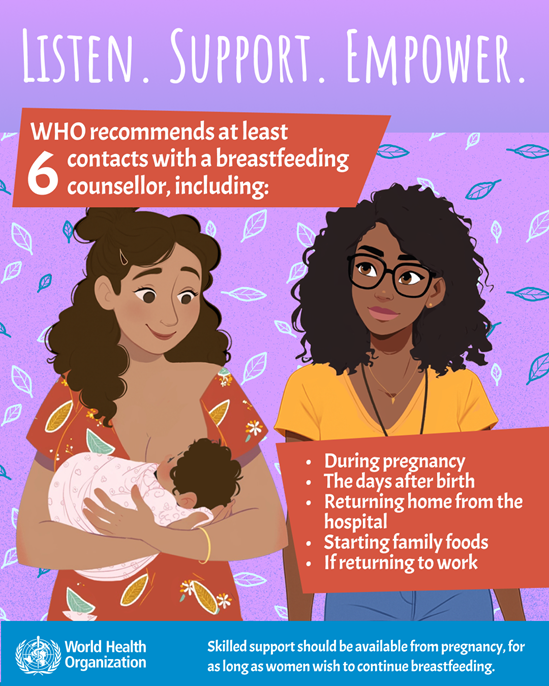
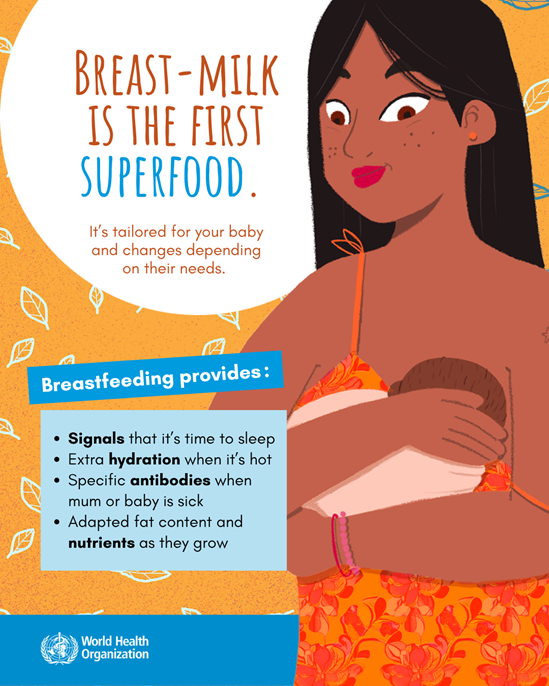
Reducing global malnutrition begins with a proper diet during pregnancy and correct breastfeeding of infants. WHO recommends breastfeeding babies exclusively for 6 months, with safe and complementary foods being added slowly until age two or beyond. This means babies should receive only breastmilk from the mother or wet nurse with no other liquids or solids, including water unless required (such as oral rehydration solutions or vitamin and mineral supplements).
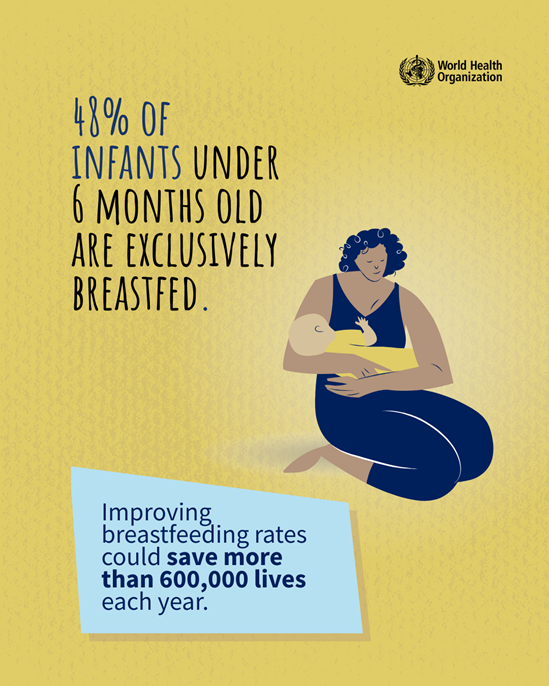
With proper breastfeeding, it is estimated that over 820 000 children’s lives could be saved each year, with marked improvements in other development markers throughout the child’s life. Currently, only about 40% of infants are exclusively breastfed.
WHO works to implement the initiatives outlined in the United Nations Decade of Action on Nutrition 2016–2025 in collaboration with Member States and partners. The goals of the campaign include improving the nutritional status of the population in all areas, particularly in early life, by preventing and treating malnutrition among pregnant women and young children.