
Supporting COVID-19 response at all levels
In Nepal, a nationwide network of 15 WHO surveillance medical officers (SMO) has been supporting the national programme for immunization and surveillance for polio and other vaccine preventable diseases for over two decades.
In addition, since the 2015 earthquake, a network of WHO field medical officers (FMO) has supported the Government in emergency response. There is also a team of seven WHO provincial health officers (PHO) to strengthen health systems.
When COVID-19 struck Nepal in March 2020, all teams jumped into the fray to support the nationwide response at the subnational level guided by central level IPD (Immunization Preventable Disease), WHE (WHO Health Emergencies), and HSS (Health system strengthening teams).
Dr Saru, SMO shared an interesting story. A few asymptomatic COVID-19 cases were detected in a municipality in Morang district, but the infected did not want to go to the isolation centre. Villagers gathered in big numbers at the quarantine site to bar the health workers and police from taking the patients into isolation. As the cases were asymptomatic, the villagers contested that those testing positive, were healthy and they did not have any symptom.
"There was chaos. But after we went there, we were able to convince the villagers and then take those affected to an isolation centre," says Dr Saru. "This is the level of trust the people have in the WHO."
Dr Sabita, FMO based at Biratnagar of Province-1, shares a similar story. It had just been a few days since she had been deputed to the province, that the city of Udaypur witnessed Nepal's first large-scale outbreak. "I was all alone representing the WHO then. After such a massive outbreak, everybody was confused as to what to do and what not," says Dr Sabita. "But luckily, I was able to convince the local government on the importance of contact tracing and case investigation. Now the local government has, with the assistance of the WHO, a 10-member contact tracing team. The team has logged the case history of all the cases."
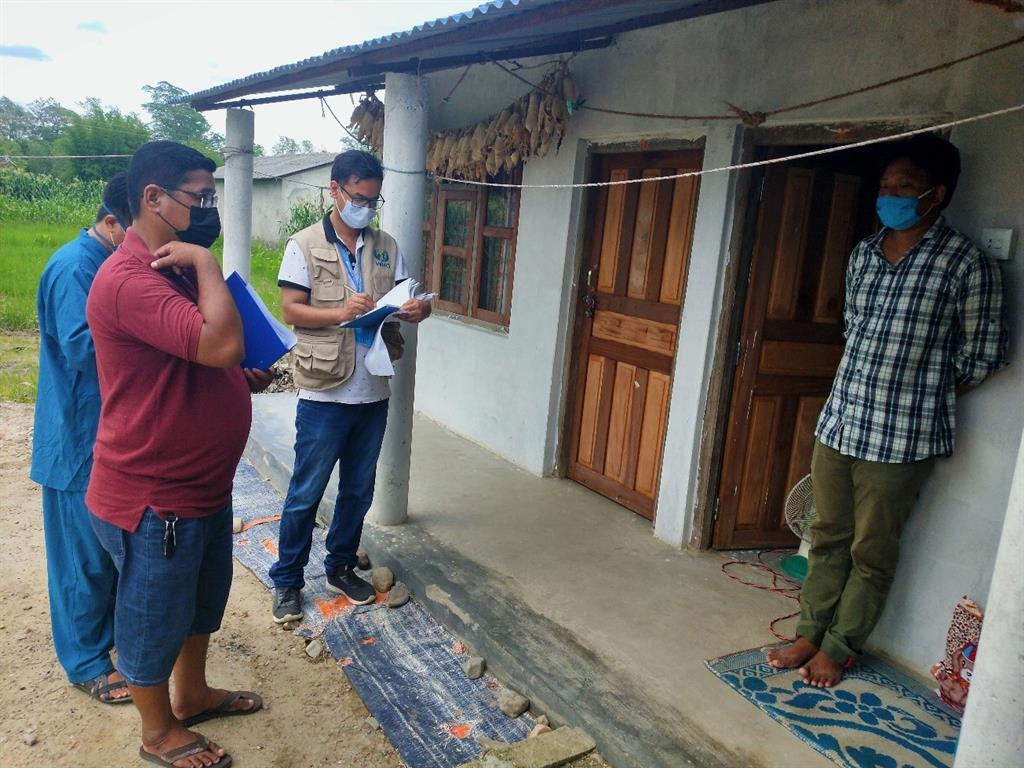
Photo Caption: Investigation of a COVID-19 death by the WHO SMO, at Bara, Nepal; Photo Credit: WHO Nepal/D. Khatiwada
Similar stories have been repeated in other provinces too, and the field network is also able to engage with political leaders to garner their support in the united fight against the scourge of the pandemic.
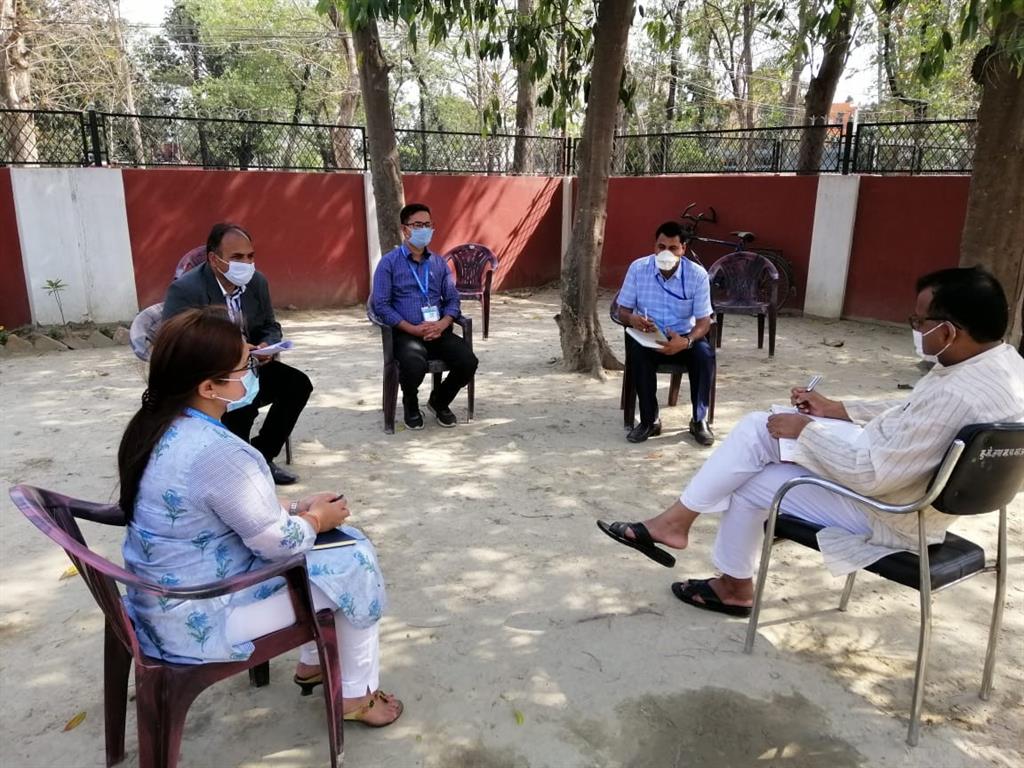
Photo Caption: High level political commitment - meeting with Hon’ble Chief minister of Province 2 on COVID-19 preparedness and response; Photo Credit: WHO Nepal
"In terms of COVID-19 response, we have been supporting in the areas of guidelines adoptions, quarantine, isolation, testing, contact tracing, and case investigation. We also conduct orientation and training for frontline staff," says Dr Shree Ram Shah, the WHO SMO based in Lahan of Province 2.
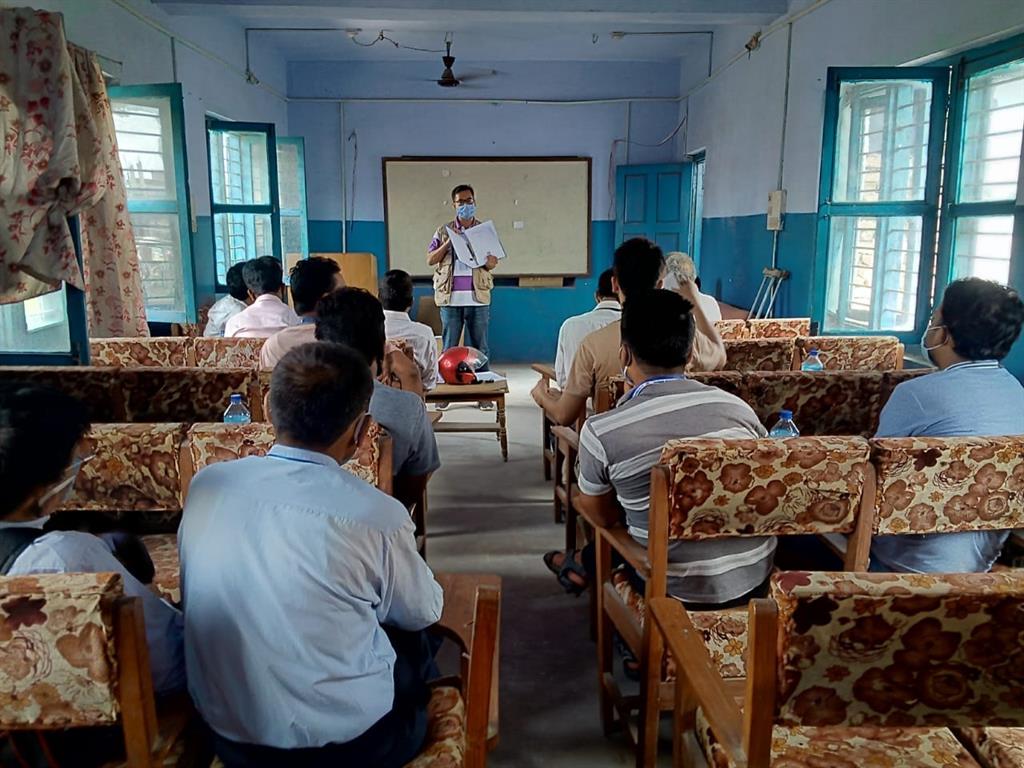
Photo Caption: COVID-19 orientation to health coordinators in Sarlahi regarding CICT; Photo Credit: WHO Nepal/ D. Khatiwada
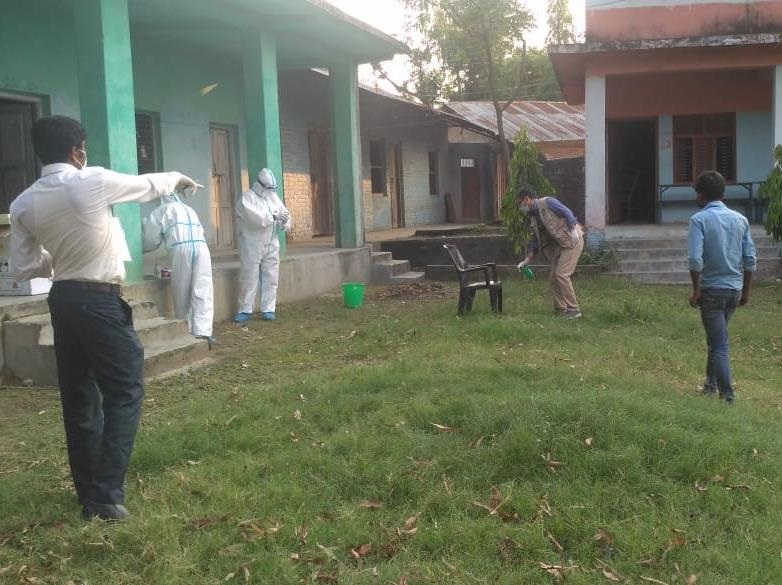
Photo Caption: Preparation of swab collection in Sarlahi; Photo Credit: WHO Nepal/ D. Khatiwada
Continued support to immunization and VPD surveillance
Dr Anindya Bose, Team Lead of the IPD team, warns VPD surveillance and immunisation programmes are not to be neglected as the country responds to COVID-19. "No country can afford to stop their Immunisation and Preventable Disease programme and lose the gains made over the years. It has to go on simultaneously with the COVID-19 response," says Dr Anindya, acknowledging Nepal's much applauded more than ninety per cent immunisation coverage.
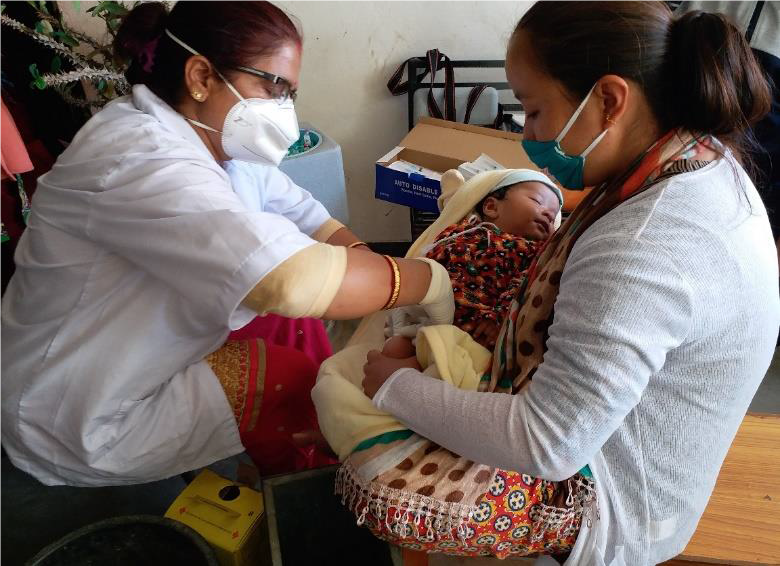
Photo Caption: Immunization with measles and rubella vaccine at a primary health centre; Photo Credit: WHO Nepal/ S. Shakya
Dr Pawan Upadhyaya, the WHO SMO based at Nepalgunj, Province-5, cannot agree more. "Presently, the country is polio-free. But if we fail to continue our surveillance, it will be difficult for us to maintain the gains. Same is the case with measles. If we fail to timely test samples of suspected measles cases, we might see an outbreak soon," says Dr Pawan. He spoke from a remote district of Pyuthan where he had arrived for VPD surveillance.
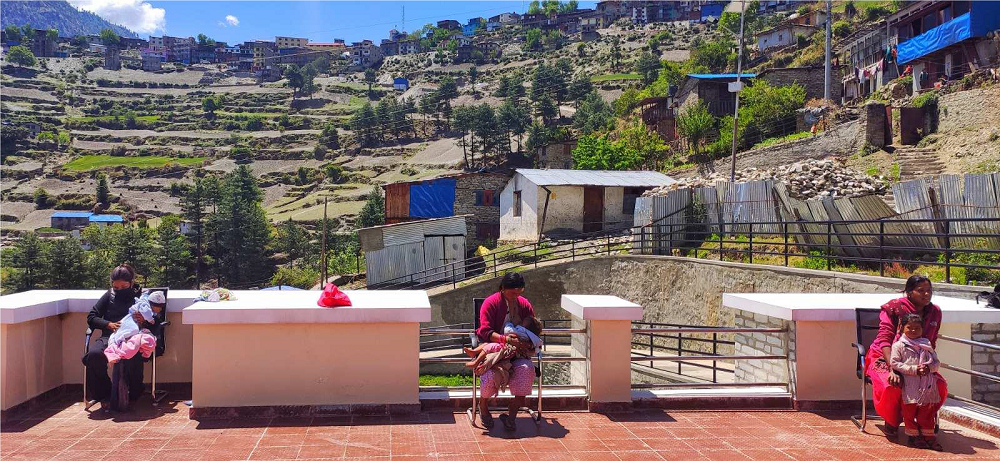
Photo Caption: Mothers waiting with children for vaccination maintaining physical distancing; ; Photo Credit: WHO Nepal/A. Gautam
Immunization coverage rates also dipped to less than half of the usual monthly coverage during the lockdown as routine outpatient and outreach services were interrupted for more than a month. The second phase of a campaign with measles-rubella and polio vaccines was also momentarily halted due to the national lockdown declared in late March but later resumed in April and successfully completed in July 2020.
With routine immunization services again being prioritized, the monthly coverage rates have bounced back and are exceeding monthly achievement above pre-lockdown levels according to monthly HMIS data as well as field level monitoring by WHO-IPD SMOs.
This augurs well for the national immunization programme which has now incorporated new norms for basic infection prevention and control practices to be followed in all immunization sessions. The WHO-IPD team has now expanded its technical assistance way beyond a vertical approach to polio eradication and is a trusted partner on the ground along with other WHO teams.
In 2017, a senior MOH official said, “It would be a disaster” when asked about discontinuation of the WHO-IPD team with reduction or cessation of funding support from the Global Polio Eradication Initiative. MOH advocated with Gavi, the global vaccine alliance for supplementary funding support for a limited time to WHO-IPD. The MOH official was prescient, as the present support for COVID-19 response as well as immunization and surveillance would not have been there for Nepal without the WHO-IPD team.
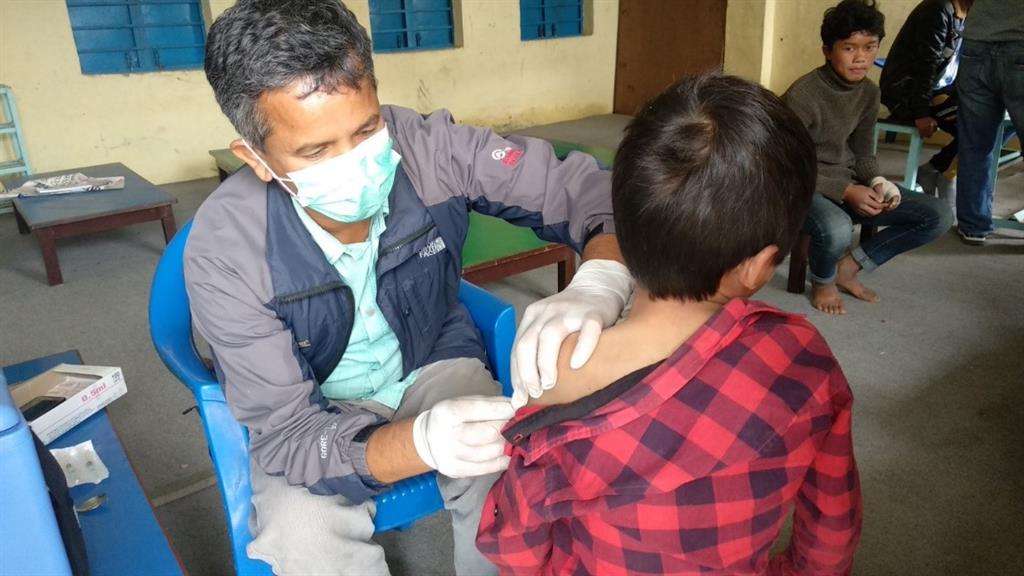
Photo Caption: Vaccinating child using PPE during measles outbreak response; Photo Credit: WHO Nepal/ A. Gautam
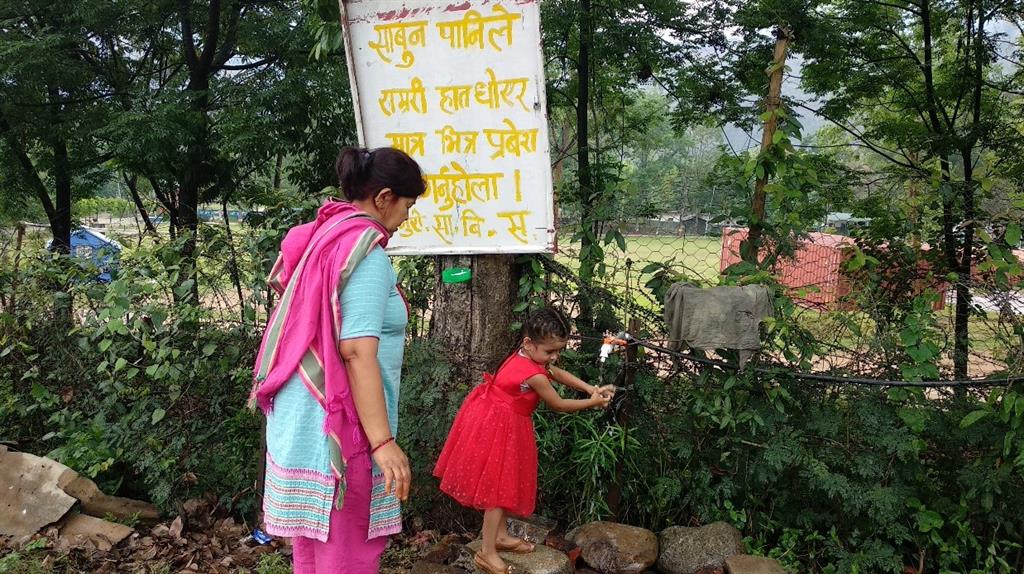
Photo Caption: Hand washing before immunization; Photo Credit: WHO Nepal/A. Gautam