
Implementation of the Pandemic Influenza Preparedness (PIP) Framework
Influenza remains one of the most significant respiratory health threats globally, causing annual epidemics and posing the risk of new pandemic strains emerging.
Seasonal and pandemic influenza continue to present persistent and evolving threats to public health and health systems across the WHO South‑East Asia Region (SEAR). In 2025, WHO SEARO intensified efforts to translate the Pandemic Influenza Preparedness (PIP) Framework and WHO Global Influenza Strategy (2019–2030) into practical, country‑level actions. These efforts are aimed at strengthening national capacities to detect, prevent, and respond to future respiratory pathogen pandemics, while supporting Member States in building resilient and sustainable preparedness systems.
Under the leadership of the WHO Health Emergencies Programme, targeted investments under the PIP Framework Partnership Contribution (PC), enabled SEARO to support Member States in strengthening national and regional preparedness systems. These efforts focused on enhancing surveillance and laboratory capacities, improving readiness for seasonal and pandemic influenza, and generating timely evidence to inform policies, plans, and response actions.
Implementation activities were guided by the PIP PC High-Level Implementation Plan III 2024–2030 (HLIP III) and aligned with regional health security priorities and the International Health Regulations (IHR 2005). Throughout 2025, SEARO worked closely with the PIP PC Secretariat and WHO country offices to support prioritized Member States in meeting HLIP III deliverables and in systematically applying the HLIP III Monitoring and Evaluation Framework.
SEARO provided country‑level technical support to strengthen influenza preparedness and response across the Region. In Sri Lanka, a national feasibility assessment was undertaken to estimate the influenza burden of disease, engaging the National Influenza Centre, the Epidemiology Unit, and sentinel hospitals. Bhutan conducted simulation exercises and preparedness trainings to test coordination mechanisms, laboratory surge capacity, and decision‑making in pandemic influenza scenarios. Bangladesh, Maldives, Nepal, and India received technical guidance to strengthen ILI/SARI surveillance, data management practices, and sentinel site coordination. Multisectoral One Health collaboration was further reinforced through technical exchanges integrating human and animal health laboratory systems. Bangladesh, India, Nepal, and the Democratic People’s Republic of Korea advanced the revision of their national pandemic influenza preparedness plans in alignment with the WHO Preparedness and Resilience for Emerging Threats (PRET) initiative. Despite operational constraints in Myanmar, SEARO continued to support influenza surveillance in hard‑to‑reach and conflict‑affected areas.
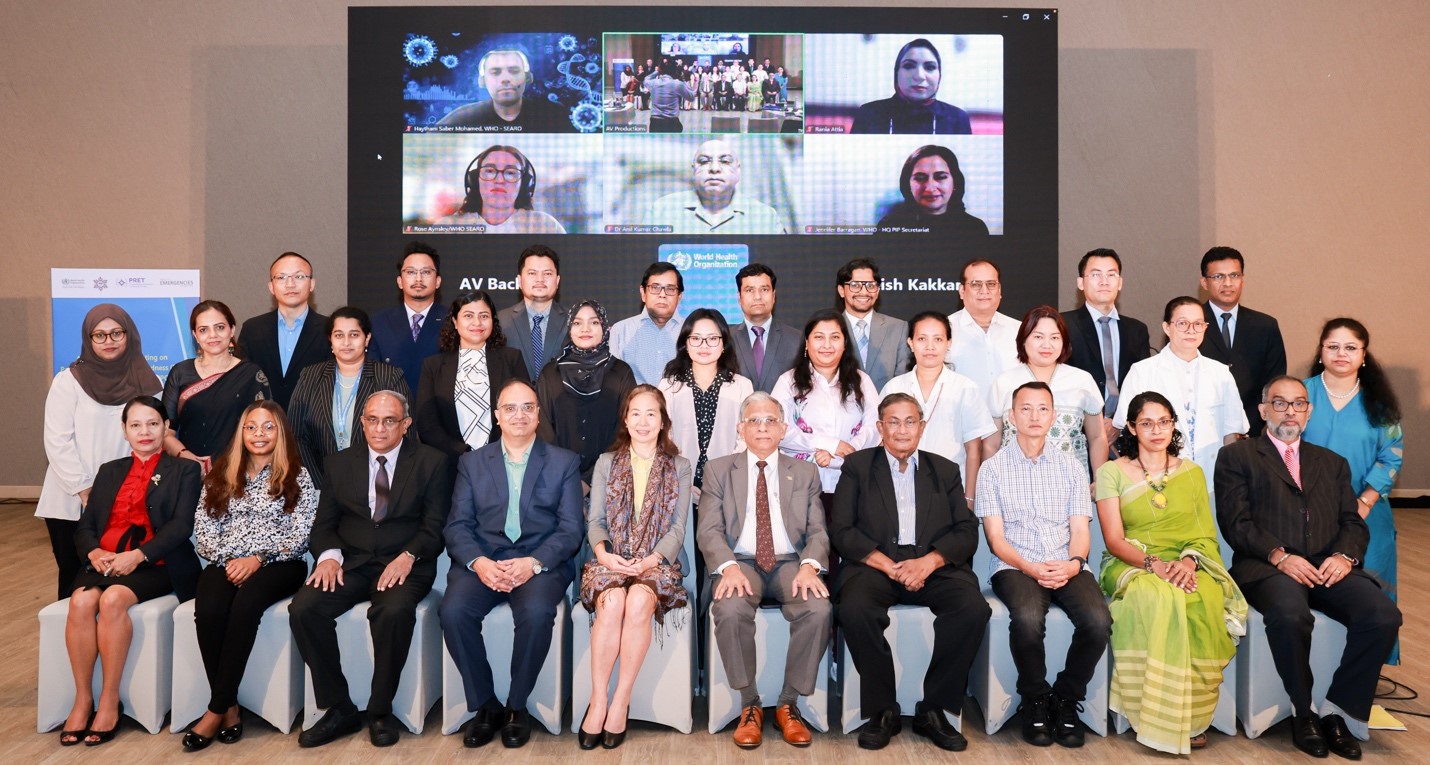
Participants of the Annual Regional Review Meeting (hybrid) of the PIP PC Implementation in SEAR, 27-28 October 2025, Colombo Sri Lanka. Photo Credit: IHM/WHE/SEARO
In October 2025, the Annual Regional PIP PC Meeting held in Colombo, Sri Lanka, reviewed implementation progress, consolidated challenges and lessons learned, and aligned regional priorities for the coming year. To further support Member States, SEARO developed regional guidance on influenza prevention and control and conducted a landscape analysis of seasonal influenza vaccine introduction and procurement systems. These initiatives strengthened accountability under HLIP III and contributed to robust pandemic influenza preparedness and response, consistent with the objectives of the WHO PIP PC Framework and the Global Influenza Strategy.
Preparedness and Resilience for Emerging Threats (PRET)
The WHO Preparedness and Resilience for Emerging Threats (PRET) initiative provides a strategic framework that supports countries in planning for future pandemics through integrated, whole‑of‑government and whole‑of‑society approaches. PRET Module 1 focuses on preparedness for respiratory pathogen pandemics, including influenza, and complements long‑standing influenza preparedness efforts and investments under the PIP Framework.
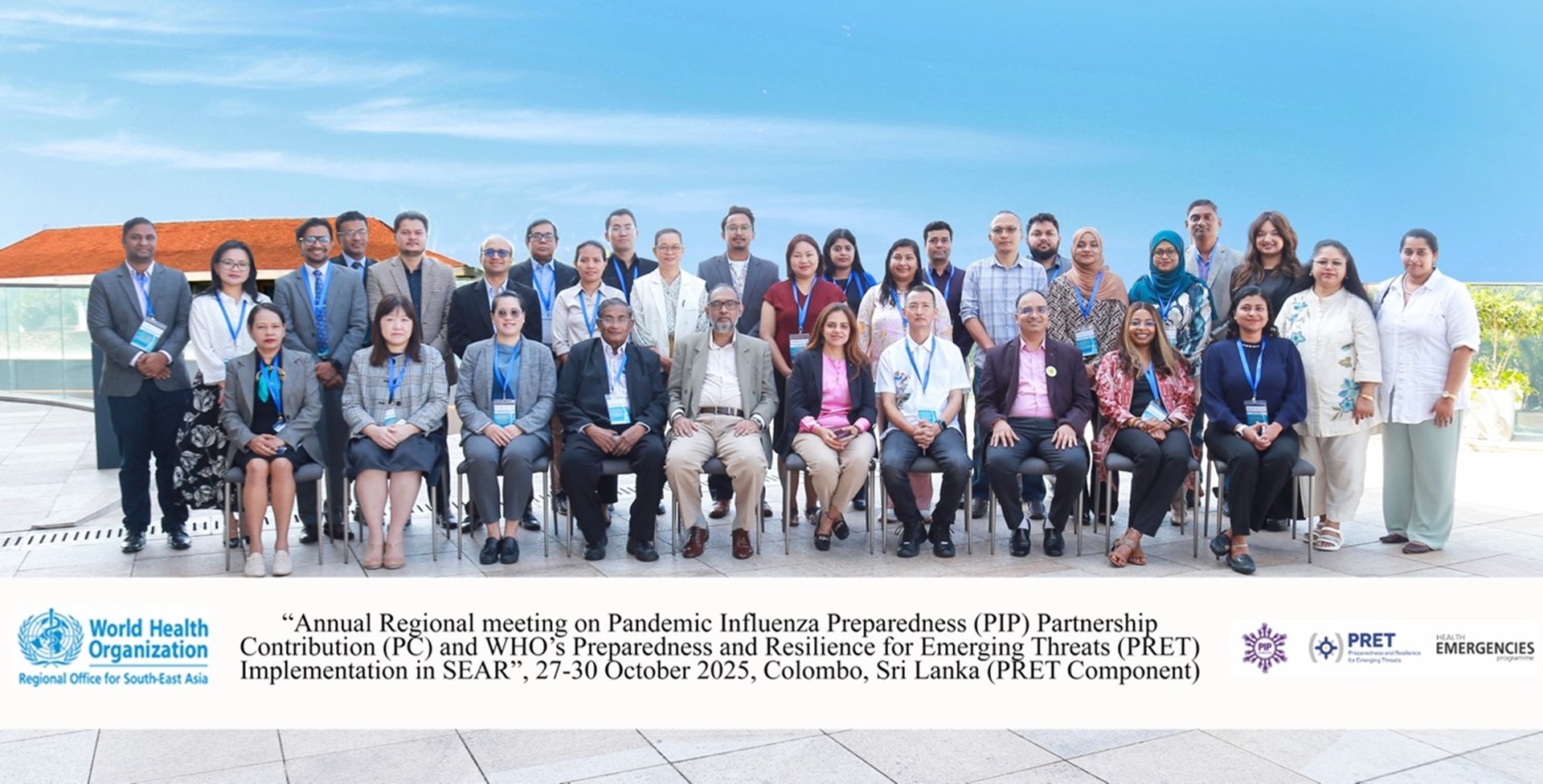
In 2025, SEARO advanced PRET implementation by embedding influenza preparedness within broader respiratory pathogen planning efforts. A regional consultation held in Colombo, Sri Lanka, convened Member States, WHO country offices, SEARO, headquarters teams, partner agencies, and multidisciplinary technical experts to review and provide feedback on the draft SEAR Roadmap and Strategic Action Framework for PRET‑based broad respiratory pathogen pandemic planning for 2026–2031. Supported through PIP PC funding, the roadmap establishes a coherent and integrated approach to pandemic preparedness, balancing pathogen‑agnostic strategies with continued influenza‑specific contingency planning. It prioritizes strengthened governance, multisectoral coordination, and core capacity enhancement. Aligned with global commitments, including the International Health Regulations (IHR 2005) and theRegional Strategic Roadmap on Health Security and Health System Resilience for Emergencies (2023–2027), the roadmap aims for all Member States to have operational, regularly tested PRET‑aligned national plans by 2031. The launch of the roadmap is anticipated at the Seventy‑Ninth Session of the Regional Committee in 2026.
The Regional Office also documented the evolution of pandemic influenza preparedness planning in SEAR, tracing progress from the avian influenza preparedness efforts initiated in 2006 through subsequent pandemics, and culminating in the adoption of PRET‑based approaches. Covering all ten Member States, this work identified strengths, gaps, and priority actions to guide the transition from influenza‑specific plans to integrated respiratory pathogen pandemic preparedness.
At the country level, WHO PRET principles informed concrete planning processes across the Region. While most countries initiated updates to their national pandemic preparedness plans, in the Democratic People’s Republic of Korea SEARO facilitated a PRET‑aligned mini‑simulation exercise using the panPRET‑1 scenario. This exercise strengthened multisectoral coordination, clarified institutional roles, and built national capacity for future simulation activities.
These activities reflect SEARO’s continued commitment in 2025 to strengthening preparedness and resilience through integrated planning approaches, while consolidating the gains achieved over years of sustained influenza‑focused investments.
Strengthening Surveillance and Early Investigation through WHO Unity Studies Network
In 2025, WHO SEARO established and strengthened the operational readiness of WHO Unity Studies as a core component of pandemic influenza preparedness and collaborative surveillance, supported through catalytic PIP PC funding. Unity Studies complement routine influenza surveillance by enabling rapid, standardized epidemiological investigations to assess transmission patterns, disease severity, population susceptibility, and the effectiveness of public health and social measures during epidemics and pandemics.
Building on lessons from the COVID‑19 pandemic, SEARO established a regional chapter of the Unity Studies Network, aligned with theGlobal Influenza Strategy 2019–2030 and Output 2 on collaborative surveillance under the PIP PC HLIP III. Following regional consultations and the adaptation of the global Terms of Reference, six institutions across five Member States formally joined the network by the end of 2025, with designated national focal points and strengthened coordination among academic institutions, ministries of health, WHO country offices, the Regional Office, and WHO headquarters. The formal global launch of the Network within the Global Influenza Surveillance and Response System (GISRS) in mid‑2025 marked an important milestone, transitioning Unity Studies from an emergency‑adapted approach to an established preparedness mechanism in the Region.
The network currently includes follwing unity studies sites :
- Bangladesh – Institute of Epidemiology, Disease Control and Research (IEDCR), Dhaka
- India – All India Institute of Medical Sciences (AIIMS) and Hamdard Institute of Medical Sciences & Research (HIMSR)
- Nepal – National Public Health Laboratory (NPHL)
- Sri Lanka – University of Sri Jayewardenepura (USJ)
- Thailand – Prince of Songkla University (PSU)
In 2025, Member States advanced the operationalization of Unity Studies across the Region. Bangladesh finalized ethical and institutional processes to implement protocols investigating non‑seasonal influenza and emerging respiratory diseases. India strengthened national capacity through protocol trainings at AIIMS and adopted household transmission investigation protocols for influenza and RSV at HIMSR. Nepal conducted structured reviews of Unity Study protocols for future integration into laboratory‑linked surveillance systems. Sri Lanka reinforced collaboration between academia, the National Influenza Centre, and the Ministry of Health, drawing on lessons from the COVID‑19 pandemic. Thailand developed an integrated respiratory disease surveillance framework utilizing standardized approaches to enhance early detection and response.
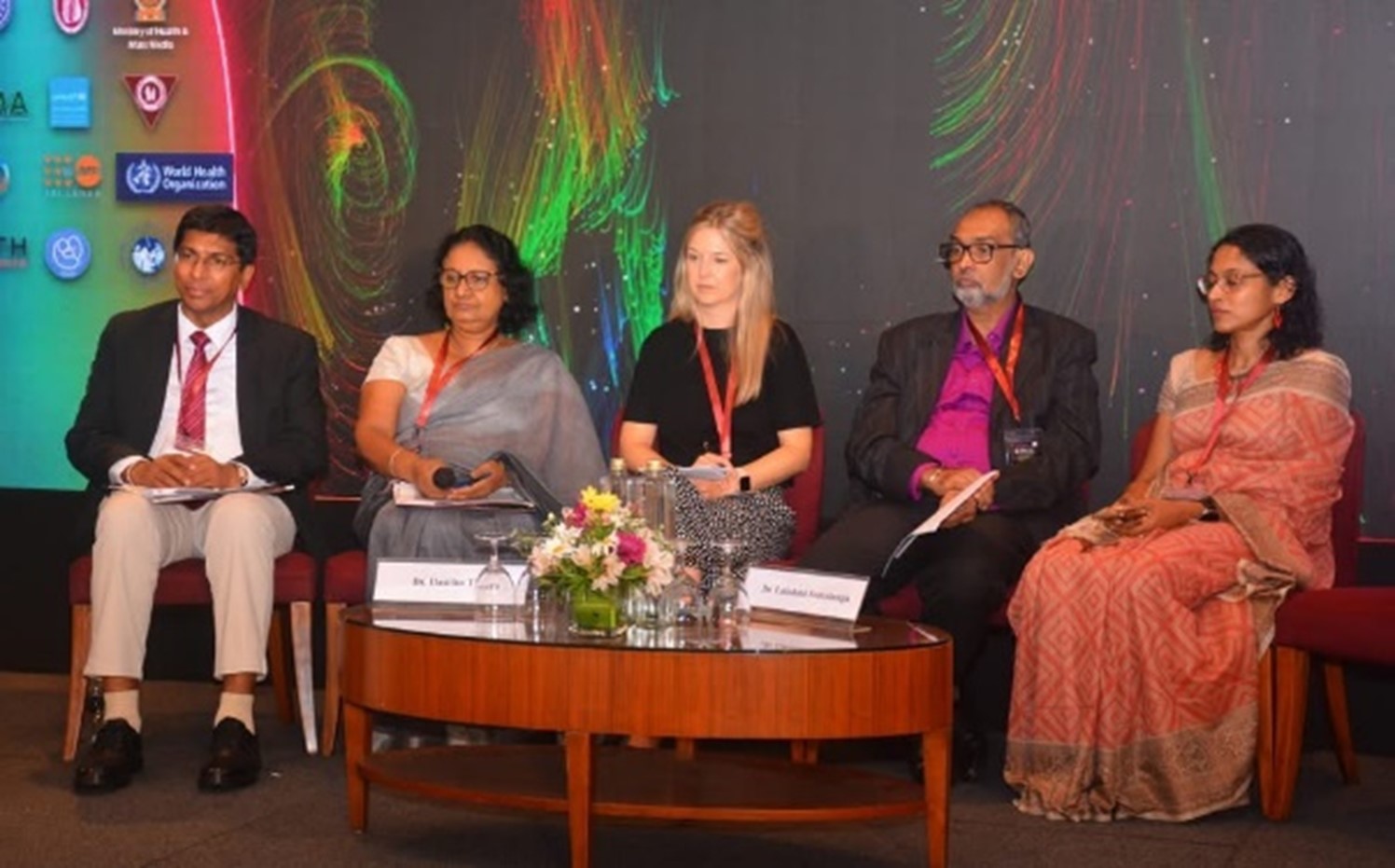
Panelists of the Unity Studies plenary during Global Public Health Summit 2025, Sri Lanka including experts from the Ministry of Health, academia, and WHO. (Photo credit: College of Community Physicians of Sri Lanka)
At the regional level, WHO SEARO provided coordinated technical and operational support to advance Unity Studies implementation, including adaptation of the global Terms of Reference, facilitation of cross‑country learning, and alignment with PIP PC priorities and GISRS collaborative surveillance. Regional engagement was further strengthened through technical exchanges, participation in the global launch of the Unity Studies Network, and targeted in‑country interactions. A dedicated Unity Studies session and accompanying technical exchanges held alongside the Global Public Health Summit 2025 in Colombo supported peer learning, showcased national implementation experiences, and reinforced country ownership of standardized early investigation approaches.
These efforts strengthened the Region’s capacity to generate high‑quality, comparable epidemiological evidence during influenza and other respiratory pathogen outbreaks. By the end of 2025, Unity Studies had progressed from planning to early implementation, reinforcing collaborative surveillance, country ownership, and evidence‑based decision‑making across SEAR.
Looking Ahead
The progress achieved in 2025 underscores the complementary roles of the PIP Framework, the PRET initiative, and Unity Studies in strengthening preparedness, resilience, and evidence generation across the WHO South‑East Asia Region. Their coordinated implementation has reinforced national capacities, enhanced regional collaboration, and positioned Member States to respond more effectively to future seasonal and pandemic influenza threats.