Gender and immunization
Why does gender matter for immunization?
Gender-related barriers and gender inequality can prevent people, both male and female, from getting vaccinated. The goal of gender equity is to ensure that everyone has the same chances and opportunities to access and benefit from immunization services.
Gender impacts immunization both on the demand side, through people’s health seeking behaviours, and on the supply side provision of health services. By applying knowledge about gender and taking action to design gender-responsive interventions it is possible to implement more effective immunization programmes and increase coverage for all.
WHO is working with countries and partners to address gender-related barriers to healthcare and to implement programmes, services and policies that promote gender equality.
Resources
Why Gender Matters : Immunization Agenda 2030
Critical Sex and Gender Considerations for Equitable Research, Development and Delivery...
Gender and COVID-19: Advocacy brief
Webinar series
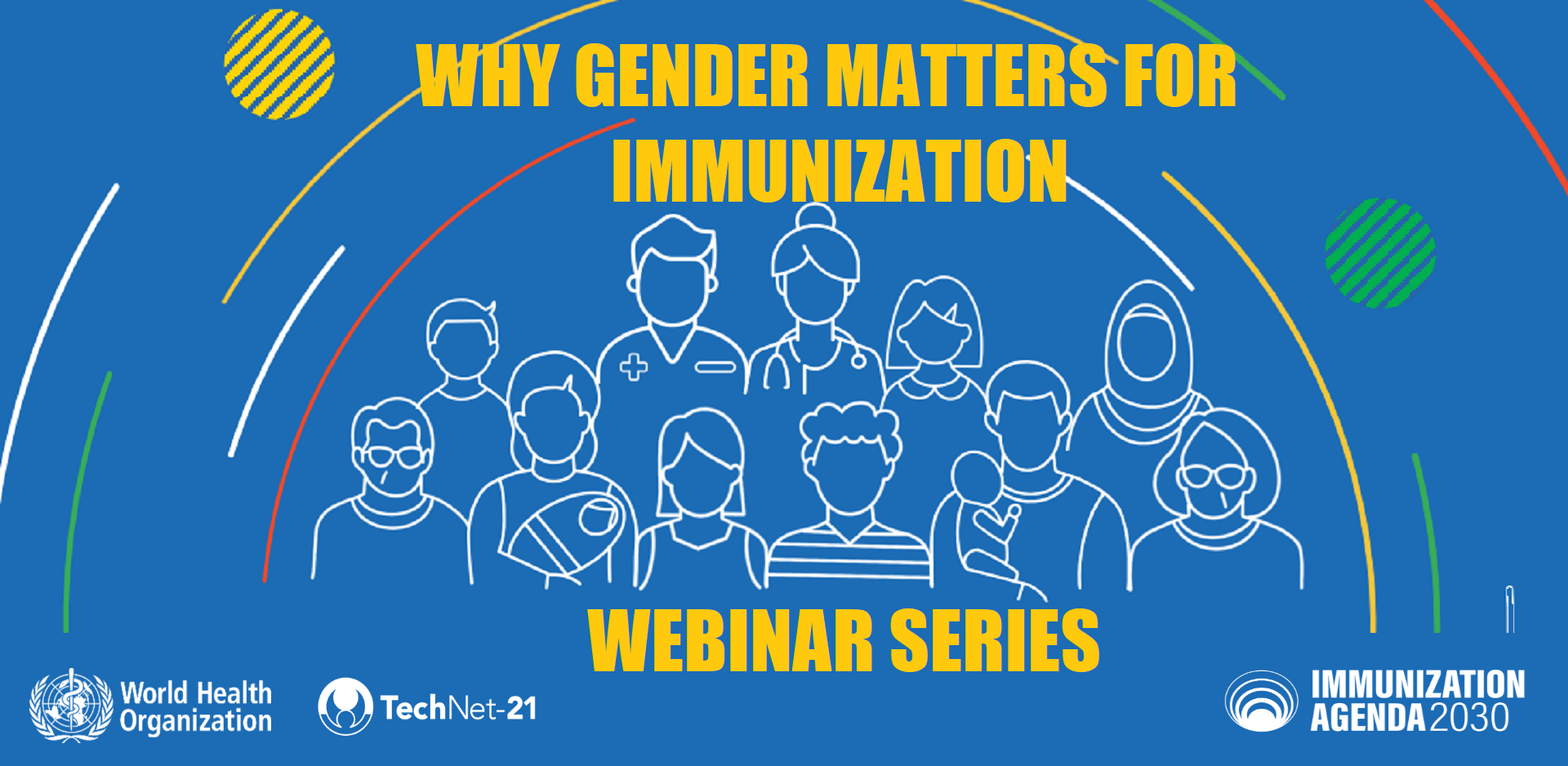
This Why Gender Matters webinar series aims to improve awareness and understanding of how gender-related barriers impact immunization and to showcase examples of gender-responsive programming to improve coverage and equity.
All materials and recordings are available here.
- Why Gender Matters for Immunization
- Understanding gender-related barriers to immunization: importance of gender data and analysis
- Gender responsive actions for the health workforce
- Making community engagement and social mobilization gender responsive and transformative
- Engaging with men and promoting a family approach to transform gender norms
- Empower and collaborate with civil society and change agents to overcome gender barriers
- Advancing gender equality and improving coverage through integrated services and collaboration across sectors
- Applying a gender lens to research and innovation
- Implementing gender-responsive immunization services in emergency settings