

Invisible numbers
The true extent of noncommunicable diseases and what to do about them
Blood glucose testing during a STEPS noncommunicable disease risk factor survey in Senegal.
The true extent of noncommunicable diseases and what to do about them
Noncommunicable diseases cause nearly three quarters of deaths in the world. There are four major NCDs: cardiovascular diseases (heart disease and stroke), cancer, diabetes, and chronic respiratory disease. Their drivers are social, environment, commercial and genetic, and their presence is global.
This report reminds us the true scale of the threat posed by NCDs and their risk factors. It also sheds light on what we can do about them. The data paint a clear picture. The problem is that the world isn’t looking at it.
By seeing the invisible, you can be the change.
Invisible numbers: the true extent of noncommunicable...
NCD data portal
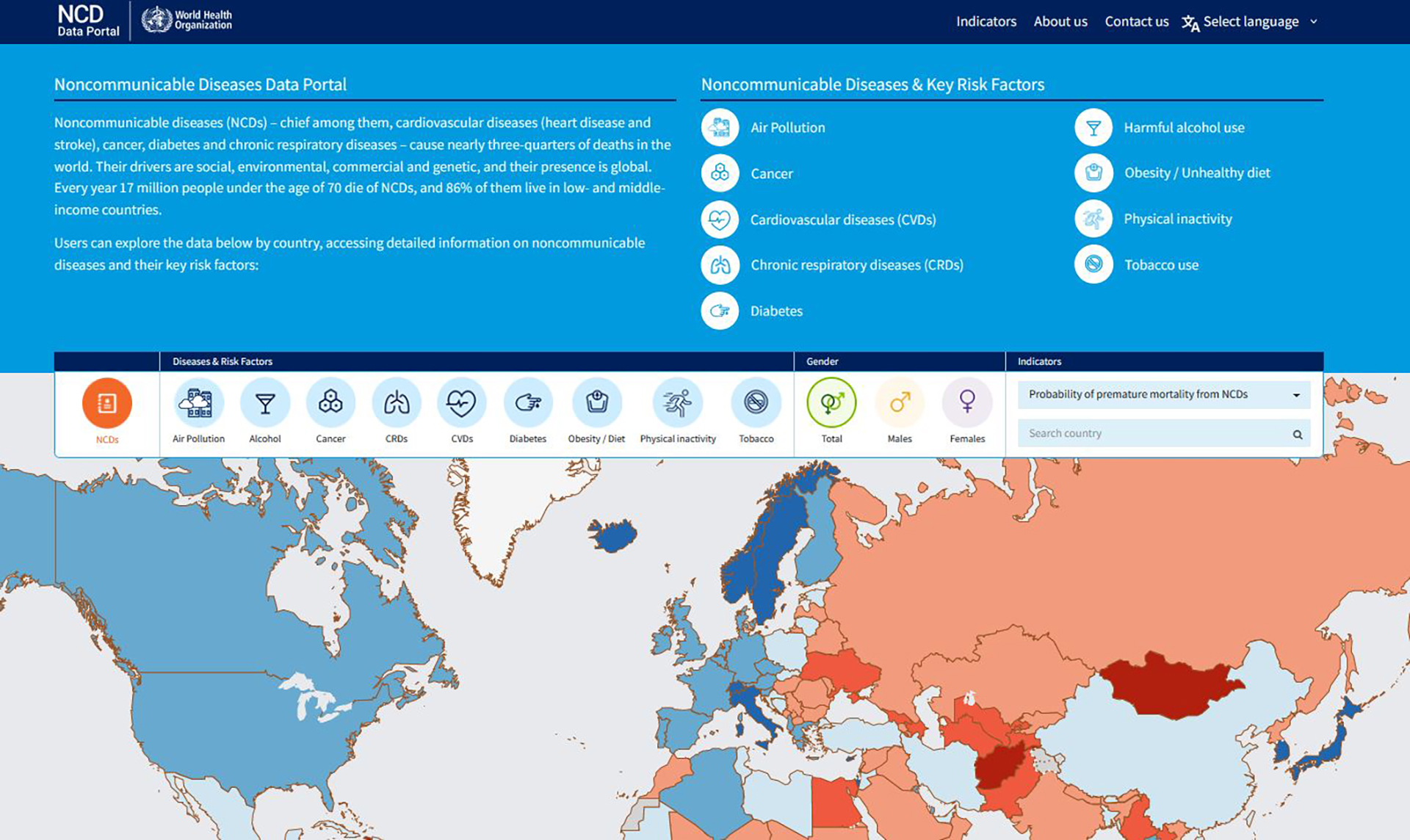
The noncommunicable diseases data portal aims to raise awareness on progress in tackling NCDs and their risk factors and strengthen accountability for action by countries. It displays data to highlight current status of NCD mortality, morbidity and risk factor exposures, and track global and national progress against key targets, identify common challenges, and signpost useful resources.
NCD questions and answers
Technical packages
NCDs are a problem for all countries. However, there is a silver lining to the problem: it means that there can be strong political interest in finding solutions at both the national and international level.
WHO has been working in this space for decades and has extensive technical resources, guidance and mechanisms to support the prevention and management of NCDs.
The WHO technical packages are appropriate for use in every country, including in low-income and humanitarian settings. Each one outlines the evidence and rationale for intervention, with guidance and toolkits on how best to implement each step.
ACTIVE: a technical package for increasing physical activity
The Global Action Plan on Physical Activity 2018–2030 provides a shared vision of More active people for a healthier world and sets out goals to achieve...
HEARTS: Technical package for cardiovascular disease management in primary health care: Risk-based CVD...
The HEARTS technical package provides a strategic approach to improving cardiovascular health in countries. It comprises six modules and an implementation...
Tobacco is the single greatest preventable cause of death in the world today, killing up to half the people who use it. More than one billion people worldwide...
REPLACE trans fat: an action package to eliminate industrially produced trans-fatty acids
Elimination of industrially produced trans-fatty acids (TFA) from the food supply is one of the priority targets identified in the draft 13th General...
The Global NCD Investment Case, as the report is also known, outlines the health and economic benefits from investing in the 16 NCD Best Buys in low-...
SHAKE the salt habit
The SHAKE package contains a general framework for the overarching elements needed to create a successful salt reduction strategy: political commitment,...
The SAFER technical package
The technical package for the SAFER initiative focuses on five key alcohol policy interventions that are based on accumulated evidence of their impact...
WHO package of essential noncommunicable (PEN) disease interventions for primary health care
Noncommunicable diseases (NCDs), also known as chronic diseases, tend to be of long duration and are the result of a combination of genetic, physiological,...
Publications
All→Toolkit for the analysis and use of facility-based data on noncommunicable diseases: Module 2: companion...
This exercise book offers noncommunicable disease (NCD) programme managers in health facilities and national offices the opportunity to practice the analysis...
Toolkit for the analysis and use of facility-based data on noncommunicable diseases: Module 3: District...
This manual for deploying, configuring, and using the NCD DHIS2 aims to provide clear, detailed instructions for the following: installing and configuring...
Toolkit for the analysis and use of facility-based data on noncommunicable diseases: Module 1: surveillance...
The guide contains practical tools and methodologies for evaluating the detection, diagnosis, and treatment of NCDs such as cardiovascular diseases (CVDs),...