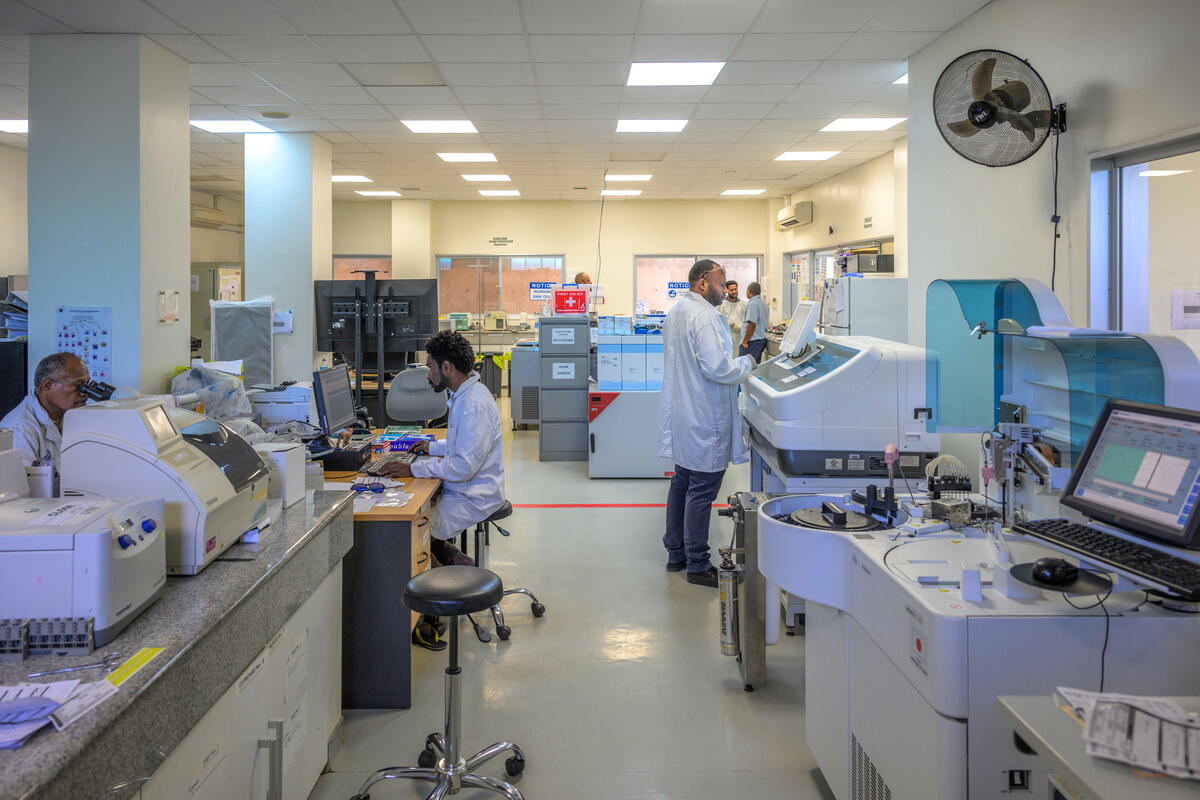
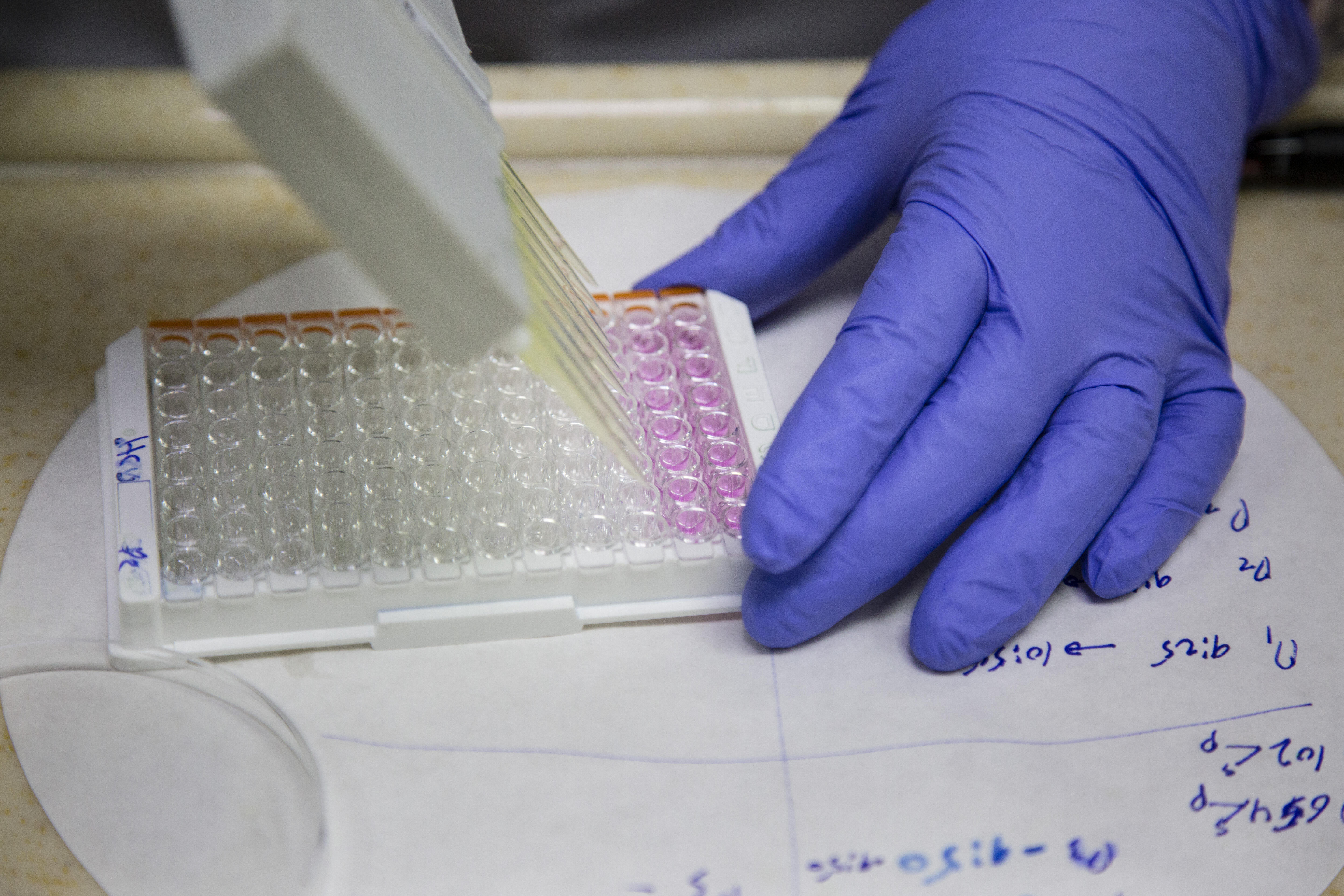
WHO / Sarah Pabst
Biochemical tests rely on the principle that different microorganisms have unique metabolic pathways, enzymes, and biochemical characteristics
© Credits

Advancing laboratory diagnostics for outbreak detection

WHO works to ensure that every country in the Western Pacific Region has timely access to reliable, safe, and quality‑assured diagnostic services before, during, and after public health emergencies. 

By partnering with ministries of health, national public health laboratories, regional networks, and global programs — WHO strengthens detection of priority pathogens, improves laboratory systems, and accelerates adoption of innovative and sustainable diagnostic solutions. 

This work spans preparedness, response, and long‑term systems strengthening—anchored in equity, quality, and resilience.


Regional target

In response to regional gaps revealed during the COVID‑19 pandemic, WHO aims to ensure that all Member States in the Western Pacific Region — including  small island developing states — have timely access to genomic sequencing, with at least 70% achieving in‑country genomic sequencing capability by 2029.

Our approach

A facilitator (middle) supervising trainees during the training on basic mycology culture and Antifungal Susceptibility Testing (AFST) for laboratory workers held in Bagmati province, Nepal

Strengthening Laboratory Systems

Supporting national laboratory policies, strategies, and governance; strengthening laboratory workforce capabilities; enhancing quality management systems; and strengthening biosafety and biosecurity implementation.

Public Health Laboratory Networks

Facilitating regional laboratory collaboration, referral pathways, and surge support; and coordinating cross‑border specimen transport, testing, and characterization.
A facilitator teaching trainees during the training on basic mycology culture and Antifungal Susceptibility Testing (AFST) for laboratory workers held in Bagmati province, Nepal

Emergency Laboratory Diagnostics

Deploying diagnostic support during outbreaks and disasters; establishing emergency testing capacity and mobile laboratory capabilities; and providing guidance on diagnostic algorithms for priority epidemic‑prone diseases.
Diagnostics for Hepatitis C virus

Innovations & Digital Transformation

Supporting adoption of rapid tests, point‑of‑care testing, and multiplex platforms; promoting digital diagnostics, connectivity, and real‑time data use; facilitating evaluations and implementation of new diagnostic technologies.

Global Laboratory Leadership Programme

Building the next generation of laboratory leaders

The Global Laboratory Leadership Programme (GLLP) strengthens leadership, management, and systems‑thinking capabilities in the laboratory workforce through cohort‑based learning, mentorship, and practical projects. The programme:

  • enhances strategic planning and laboratory governance;
  • strengthens quality management and biosafety systems; and
  • builds resilient, well‑led national laboratory networks.


Pathogen Genomic Surveillance

Strengthening Pathogen Genomics for Early Detection

Genomic surveillance is central to detecting new variants, understanding pathogen evolution, and guiding real‑time public health actions. WHO supports pathogen genomic sequencing capacity, bioinformatics, and data‑to‑decision workflows through:

  • establishing in‑country or subregional sequencing hubs;
  • strengthening specimen referral and metadata systems; 
  • expanding bioinformatics training and secure data‑sharing platforms; and
  • integrating genomics into routine surveillance and emergency response.