
Publications
All →Global patient safety report 2024
Global Patient Safety Action Plan 2021-2030
Patient safety is fundamental to the provision of health care in all settings. However, avoidable adverse events, errors and risks associated with health...
Global patient safety report 2024
The "Global Patient Safety Report 2024" is the first-ever WHO report offering a comprehensive overview of patient safety implementation worldwide. Aligned...
Global burden of preventable medication-related harm in health care: a systematic review
Medication-related harm is considered preventable if it occurs as a result of an identifiable, modifiable cause and its recurrence can be avoided by appropriate...
Medication without harm: Policy brief
Patient harm due to unsafe care is a leading cause of death and disability worldwide and most of this harm is avoidable. Harm due to medicines and therapeutic...
Medication safety for look-alike, sound-alike medicines
Medication errors are a leading cause of patient harm globally. WHO launched the Global Patient Safety Challenge: Medication Without Harm, with the...
World Patient Safety Day (WPSD) is an official World Health Organization (WHO) global public health day. It brings together patients, families, caregivers,...
The pandemic has emphasized the high risk of avoidable harm to patients, health workers, and the general public, and has identified a range of safety gaps...
World patient safety day goals 2021-2022: safe maternal and newborn care
World Patient Safety Day is observed on 17 September each year with the objectives of increasing public awareness and engagement, enhancing global understanding,...
Global Patient Safety Action Plan 2021-2030
Patient safety is fundamental to the provision of health care in all settings. However, avoidable adverse events, errors and risks associated with health...
Charter: health worker safety: a priority for patient safety
This Charter is presented by the World Health Organization (WHO) on the occasion of World Patient Safety Day, 17 September 2020, which is dedicated to...
Patient safety incident reporting and learning systems: technical report and guidance
This document is to urge the readers to understand the purpose, strengths and limitations of patient safety incident reporting. Data derived from incident...
5 moments for medication safety
The 5 Moments for Medication Safety is a patient engagement tool developed to support implementation of the third WHO Global Patient Safety Challenge:...
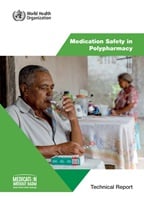
Medication safety in polypharmacy: technical report
As part of the Global Patient Safety Challenge: Medication Without Harm, WHO has asked countries and key stakeholders to prioritize three areas for...
Medication safety in transitions of care
As part of the Global Patient Safety Challenge: Medication Without Harm, WHO has asked countries and key stakeholders to prioritize three areas for...
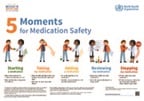
5 moments for medication safety: Infographics
The 5 Moments for Medication Safety is a patient engagement tool developed to support implementation of the third WHO Global Patient Safety Challenge:...
Medication safety in high-risk situations
As part of the Global Patient Safety Challenge: Medication Without Harm, WHO has asked countries and key stakeholders to prioritize three areas for...
5 moments for medication safety: Pamphlet
The 5 Moments for Medication Safety is a patient engagement tool developed to support implementation of the third WHO Global Patient Safety Challenge:...

5 moments for medication safety: Flyer
The 5 Moments for Medication Safety is a patient engagement tool developed to support implementation of the third WHO Global Patient Safety Challenge:...
Integrating health services: brief
The joint WHO-UNICEF vision for primary health care in the 21st century in support of the Global Conference on Primary Health Care on 25–26 October...


.tmb-549v.jpg?Culture=en&sfvrsn=d9491a45_3)


