Making listening safe
More than 1 billion young people (12–35 years old) are at risk of hearing loss due to recreational exposure to loud sound.
Unsafe listening practices, including exposure to high sound levels from personal audio devices, entertainment venues, and digital environments, are placing a generation at risk of preventable hearing damage.
The “Make listening safe” initiative aims to realize a world where people of all ages can enjoy recreational listening without risk to their hearing.
Approach
The approach of this initiative is to change listening practices and behaviours. WHO aims to achieve this through:
- Raised awareness about the need for and means of safe listening
- Implementation of evidence-based standards that can facilitate behaviour change in target population groups
- The Make Listening Safe mission is performed via three main pillars, developed and carried out in collaboration with all stakeholders in the field.
Pillar 1: Creation of Evidence-Based Standards
WHO creates standards that outline safe listening features for a variety of situations where unsafe practices are common. These include:
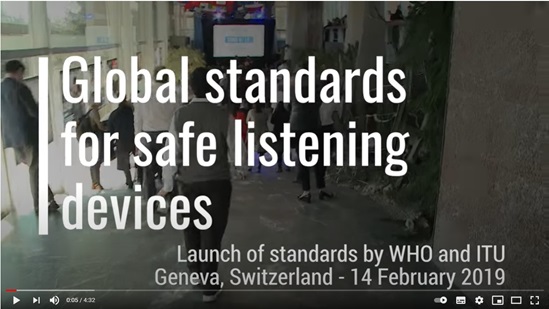
- The WHO-ITU Global standard for safe listening devices and systems
- The Global standard for safe listening venues and events
- The Global standard for safe listening in video gameplay and esports
WHO offers support to its Member States, private sector entities, and civil society in adoption and implementation of these standards.
Pillar 2: Increasing Awareness
WHO develops and disseminates evidence-based awareness materials for safe listening. These include:
- Be he@lthy, be mobile – a handbook on how to implement mSafeListening
- mSafeListening message libraries
- Media brief on safe listening
- Communication materials such as flyers, posters, brochures, infographic
Pillar 3: Investing in Research
Research into safe listening is performed in collaboration with global partners to better understand the current state of affairs, to ensure WHO leverages current best practices around the globe, and to uncover future need of safe listening interventions.
Examples of recent research informing the initiative include:
This systematic review provides global prevalence estimates of unsafe listening practices among young people and supports the estimate that over one billion young individuals may be at risk.
This systematic review examines emerging evidence on hearing risks associated with video gameplay and esports exposure, helping inform the development of safe listening guidance in digital environments.