Risk Communication, Community Engagement and Infodemic Management (RCI) Unit
The Risk Communication, Community Engagement and Infodemic Management (RCI) Unit belongs to WHO/Europe’s Health Emergencies Programme. Its vision is a WHO European Region where people and stakeholders are enabled and empowered to take informed decisions that protect them from health emergencies.

Highlights

Publications

All →
Community mapping in health emergencies: strengthening preparedness, response and resilience

This document provides a comprehensive toolkit for community mapping to support emergency preparedness and responses for public health emergencies as defined...

Report of the fourth plenary meeting of the Technical Advisory Group on the risk communication, community engagement and infodemic management in the WHO European Region: virtual meeting, 5-6 December 2024

The fourth plenary meeting of the Technical Advisory Group (TAG) on risk communication, community engagement and infodemic management (RCCE–IM) in...

Report of the third plenary meeting of the Technical Advisory Group on risk communication, community engagement and infodemic management in the WHO European Region: Lisbon, Portugal, 17–18 April 2024

The third plenary meeting of the Technical Advisory Group (‎TAG)‎ on risk communication, community engagement and infodemic management (‎RCCE-IM)‎...

Unlocking insights, building capacities, and forging ahead: forum on risk communication, community engagement, and infodemic management: meeting report: 5-7 December 2023, Copenhagen, Denmark

This report details the forum on risk communication, community engagement, and infodemic management (‎RCCE-IM)‎ hosted by the WHO Regional Office...

Documents

All →
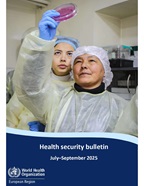
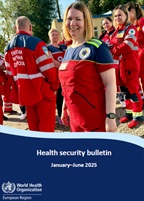
WHO Europe Health Security Bulletin, January–June 2025

Health security is inseparable from regional security. Strong, resilient health systems and comprehensive public health services, are the foundation of...

“The overriding goal for outbreak communication is to communicate with the public in ways that build, maintain or restore trust.” 

EuroPride 2025 brings Europe’s largest LGBTQI+ celebration to Lisbon, Portugal, from 14 to 21 June 2025. During the event, Lisbon transforms historic...

Our work

All →
Communicating risks in emergencies

Communicating risks in emergencies

WHO
© Credits

Overview

WHO/Europe supports countries by providing technical support and tailored, engaging, accurate and relevant health information and advice so that at-risk and affected populations can take informed decisions to protect themselves. It does this through traditional mass media, social media, multimedia, data visualization and web, as well as through physical products such as leaflets and posters, and other two-way communication channels, such as hotlines.

In the response to emergencies, effective risk communication must be trustworthy. This involves communicating early and transparently and acknowledging the uncertainty of the emergency’s evolution – communicating what is known and what is not known and what is being done to learn more – while still maintaining credibility.

Close links with affected communities allow risk communication to reflect people’s up-to-date, on-the- ground realities. Risk communication addresses their concerns, and through social and community listening, media monitoring, and behavioural insights, it ensures that messages are related to risk perceptions, tested and tailored to needs.