

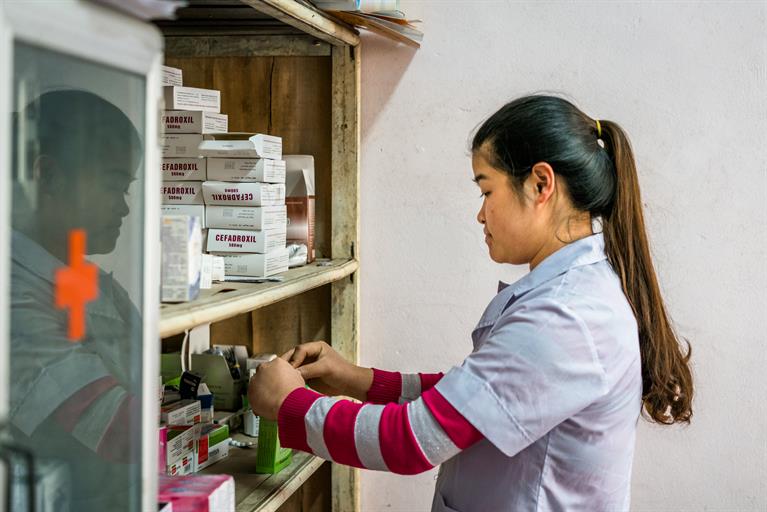

/access-to-medicines-and-health-products-adgo-(mha)/pharmacists-checking-medicines-stocks.tmb-1920v.jpg?sfvrsn=3b0196be_1)
Access to medicines and health products
Universal health coverage can only be achieved when there is affordable access to safe, effective and quality medicines and health products.
Countries face a range of obstacles to achieving this, including rising prices for new medicines; shortages and stock outs of essential medicines, especially for noncommunicable diseases, and the growing problem of substandard and falsified medical products entering the global supply chain. Added to this, there are other challenges to ensuring that medicines are not only available, but are used appropriately. Antimicrobial resistance has become a worldwide problem largely due to overuse, and misuse of opioids has led to an addiction epidemic in some countries. Knowing where to tackle the problem is the first step. WHO works with Member States to identify what their priorities are on the road to achieving this universal access.
Areas of work
Regulation and Prequalification
Progress towards enhancing regulatory practices related to medical products around the world is supported by capacity building, promoting regulatory convergence and harmonization.

Universal Health Coverage Day
Annually 12 December
Highlights
School of INN
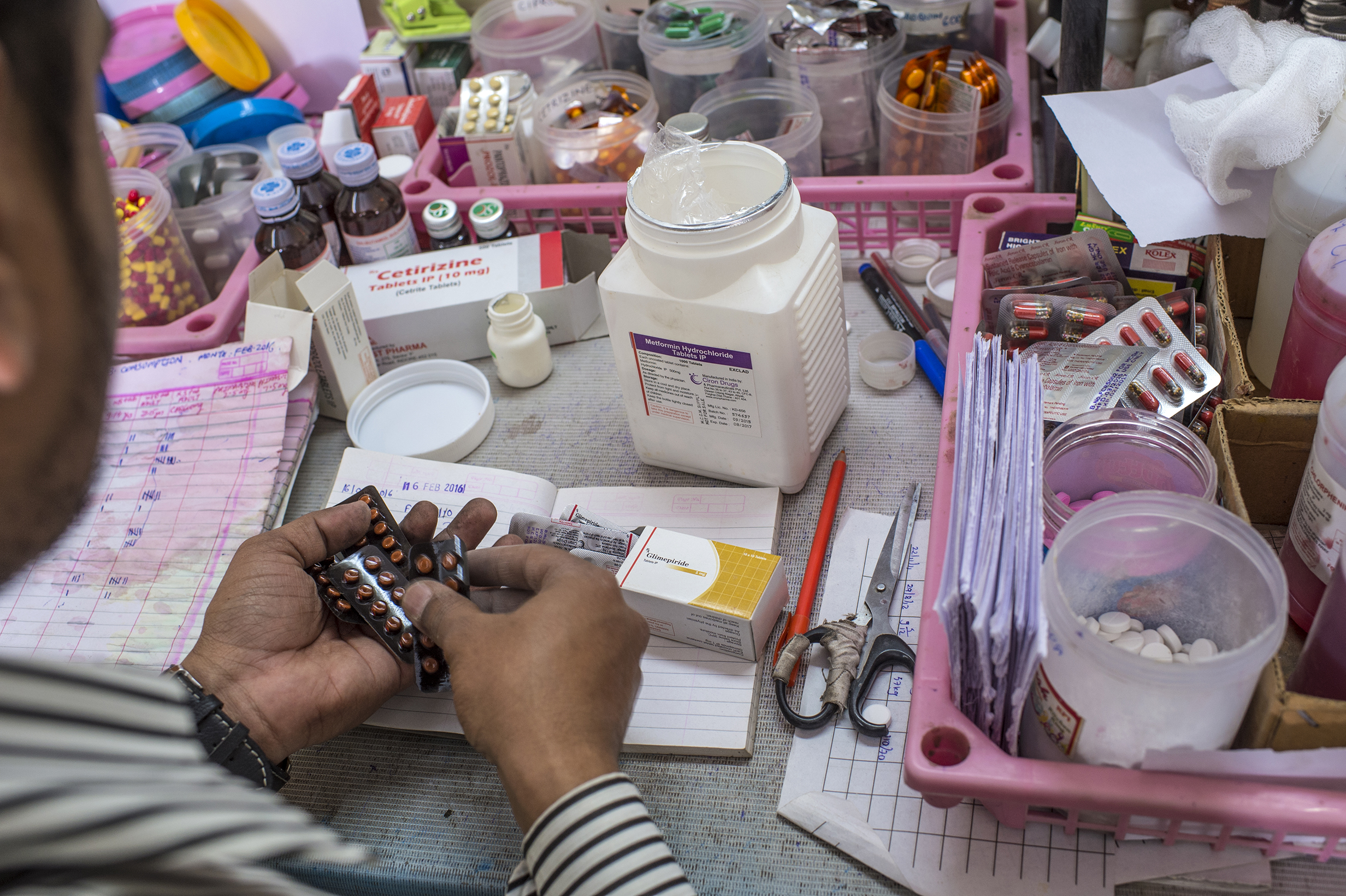
Medicine price information
News
All →Our work
All →
Promoting national medicines policies
Overview
National medicines policies are an essential piece of WHO’s goal of universal health coverage, or health care for all. Strategies to promote these policies aim to increase access to and use of high quality and affordable medicines and health products in every country. WHO supports Member States to develop, implement and monitor national medicines policies that ensure these products are appropriately prescribed and dispensed, affordably priced and protected against high out-of-pocket expenses for users, and accessible to all countries and regions, particularly within health facilities. This approach focuses on equitable access to medicines through the development of products to treat diseases that primarily affect low-income areas and innovations based on established public health needs.
WHO works to provide guidance on key medicines and health technologies though policy briefs, technical seminars and collaboration with partners and Members States. Through the Department of Essential Medicines and Health Products (EMP), WHO also acts as the secretariat for the Interagency Pharmaceutical Coordination (IPC) group, which facilitates the development and implementation of policies and programmes relating to medicines and health products.
Publications
All →The document outlines key concepts related to substandard and falsified medicines, including their sources, risks and impact on health systems and communities....
This report provides an overview of the Fifth WHO Global Forum on Medical Devices held from June 2 to 5, 2025, in Geneva, Switzerland through a virtual...
Whether or not xenotransplantation should be done is beyond the scope of this paper. Therefore, this paper does not examine the important ethical issues...
This comprehensive document deals with the relevant WTO agreements and the way they may influence health and health policies. In undertaking this joint...