

IN THE SPOTLIGHT
PRET for impact: Advancing pandemic preparedness in the Democratic People’s Republic of Korea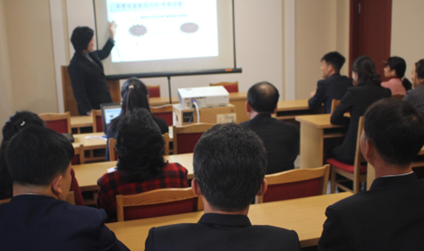 The Democratic People’s Republic of Korea (DPR Korea) is making significant progress in strengthening pandemic preparedness, with dedicated support from the WHO South‑East Asia Regional Office (SEARO) and the Pandemic Influenza Preparedness (PIP) Partnership Contribution (PC). Aligned with the WHO Global Influenza Strategy and the Pandemic Influenza Preparedness (PIP) Framework Partnership Contribution High‑Level Implementation Plan III (2024–2030), the country is strengthening its capacity to prepare for and respond to influenza and other respiratory threats. In early 2025, a core team from the Ministry of Public Health of the Democratic People’s Republic of Korea (DPRK) participated in a two‑day virtual workshop, which included a mini‑simulation exercise. The workshop was organized by WHO SEARO in collaboration with the Preparedness and Resilience for Emerging Threats (PRET) Secretariat at WHO headquarters and the WHO Country Office for the DPRK. Read more |
A REGIONAL CONSULTATION GUIDES WHO SEARO IN DEVELOPING A ROADMAP FOR IMPLEMENTING THE PREPPAREDNESS AND RESILIENCE FOR EMERGING THREATS (PRET) INITIATIVE BASED RESPIRATORY PATHOGEN PANDEMIC PREPAREDNESS
Influenza and other respiratory pathogens with pandemic potential continue to pose major public health risks globally. To strengthen regional preparedness and response, Member States of the WHO South‑East Asia Region (SEAR) convened in Colombo, Sri Lanka, to review and provide input on the draft Roadmap and Action Framework for Broad Respiratory Pathogen Pandemic Planning (2026–2031). Supported through the Pandemic Influenza Preparedness (PIP) Partnership Contribution (PC) funds, the proposed roadmap aims to advance robust, integrated preparedness and response capacities for influenza and other respiratory threats across SEAR. This work is aligned with the Preparedness and Resilience for Emerging Threats (PRET) initiative and the SEAR Strategic Roadmap on Health Security and Health System Resilience for Emergencies
SRI LANKA’S USE OF ANTIVIRALS TO REDUCE THE SEASONAL INFLUENZA BURDEN
Sri Lanka is strengthening its influenza response by placing greater emphasis on rapid testing, timely treatment, and integration with maternal health services. With support from WHO, the country is building a stronger evidence base on the burden of influenza and the value of vaccination, advancing a holistic approach to protect vulnerable populations and enhance pandemic preparedness. To reduce hospitalizations and deaths from seasonal influenza, Sri Lanka is taking proactive steps to expand access to rapid diagnostic testing and ensure prompt initiation of treatment. National clinical guidelines recommend the use of oseltamivir for individuals at high risk of complications, helping prevent severe illness and shorten the duration of infection. This strategy not only saves lives but also supports local pharmaceutical production, contributing to a reliable supply of antivirals for both seasonal outbreaks and future pandemics.
BHUTAN BOOSTS PANDEMIC INFLUENZA READINESS WITH PANDEMIC INFLUENZA PREPAREDNESS FRAMEWORK PARTNERSHIP CONTRIBUTION SUPPORTED TRAINING AND SIMULATIONS
Originally developed in 2012, the National Influenza Pandemic Preparedness and Response Plan (NIPPRP) has long served as Bhutan’s central framework for managing influenza threats. In 2024, the plan underwent a comprehensive update to reflect evolving global and regional guidance, lessons learned from the COVID‑19 pandemic, and new capacities developed under the PIP Framework. The revised NIPPRP is now more clearly aligned with Bhutan’s broader emergency and disaster risk management structures, ensuring a coordinated, whole‑of‑government approach to pandemic response. As part of efforts to strengthen national pandemic preparedness, Bhutan conducted three national‑level training sessions followed by simulation exercises on influenza pandemic preparedness and response at five sentinel hospitals between April and May 2025, with support from the PIP Partnership Contribution (PC). These activities brought together more than 140 health professionals and key partners from across the country, with a focus on operationalizing the updated NIPPRP and enhancing readiness at key frontline facilities.
STRENGTHENING INFLUENZA SURVEILLANCE: WHO BRINGS TOGETHER INFLUENZA EXPERTS FROM SOUTH-EAST ASIA AND WESTERN PACIFIC REGIONS
The World Health Organization (WHO) convened the 18th Bi‑regional Meeting of National Influenza Centres (NICs) and Influenza Surveillance for the WHO South‑East Asia and Western Pacific Regions from 9–11 September 2025. Hosted by the WHO South‑East Asia Regional Office (SEARO), the meeting brought together representatives from Member States, Territories, and Areas across both regions, alongside experts from the WHO Collaborating Centres for Reference and Research on Influenza in Australia and Japan, the WHO Collaborating Centre for Studies on the Ecology of Influenza in Animals in the United States, quadripartite partners (WOAH and FAO), and other technical counterparts. The consultation provided a platform to review progress, share experiences, and outline priorities for strengthening influenza and respiratory pathogen surveillance across the two WHO regions.
NETWORKS AND TECHNICAL PARTNERSHIPS |
STRENGTHENING PANDEMIC READINES: SOUTH-EAST ASIA ADVANCES UNITY STUDIES UNDER THE PANDEMIC INFLUENZA PREPAREDNESS INITIATIVE
The WHO Global Influenza Surveillance and Response System (GISRS) Investigations & Studies initiative, also known as Unity Studies, provides a standardized, globally coordinated framework to support these efforts. Originally developed for influenza and adapted during COVID-19, Unity Studies enable countries to conduct rapid, nationally led investigations and studies to assess transmissibility, severity, susceptibility, and intervention effectiveness. To better prepare for future influenza pandemics, WHO has recently launched a network of sites which will be ready to conduct these investigations and studies rapidly in the event of a pandemic, or epidemic of an emerging or re-emerging respiratory pathogen. The WHO South-East Asia Region now hosts six sites of WHO GISRS Unity Studies across the five countries including Sri Lanka, strengthening regional capacity for early pandemic investigations. From 13–16 July 2025 in Colombo, the Global Public Health Summit offered an opportunity to advance this agenda.
STRENGTHENING PANDEMIC PREPAREDNESS THROUGH UNITY STUDIES: REAL-WORLD APPLICATIONS FROM INDIA IN WHO’S SOUTH-EAST ASIA REGION
As countries continue to strengthen their pandemic preparedness through investments in resilient health systems during the interpandemic period, the World Health Organization’s (WHO) Global Influenza Surveillance and Response System (GISRS) Investigations & Studies Global Initiative, Global Initiative, commonly known as Unity Studies, remains a vital framework for respiratory pathogen pandemic preparedness. These standardized epidemiological protocols enable countries to rapidly generate high‑quality data on transmissibility, infection severity, population immunity, and the effectiveness of public health interventions. To highlight how Unity Studies protocols are being adapted and applied in national settings, WHO Headquarters, together with WHO Regional Offices, including the WHO South‑East Asia Regional Office (SEARO), hosted a global webinar. The session showcased case studies from India and the United Kingdom (UK), demonstrating innovative approaches to respiratory virus surveillance and pandemic readiness.
STRENGTHENING REGIONAL INFLUENZA SURVEILLANCE AND PREPAREDNESS: WHO SEARO HOSTS HIGH-LEVEL WEBINAR AMID RISING H5 THREATS
In response to the increasing detection of avian influenza A(H5) cases in humans globally and within the WHO South‑East Asia Region, the WHO Regional Office for South‑East Asia (SEARO) convened a regional webinar on 25 July 2025 to review preparedness mechanisms, strengthen surveillance pathways, and promote timely reporting of unusual respiratory events. The virtual session brought together more than 50 participants from Ministries of Health, National Influenza Centres (NICs), National IHR Focal Points (NFPs), WHO Headquarters, WHO Country Offices across the Region, and WHO Collaborating Centres (CCs) for influenza. The webinar provided an opportunity to share situational updates, discuss surveillance gaps, and reinforce coordination mechanisms critical for early detection and rapid response to avian influenza threats.
Other Key PIP Updates (July-December 2025) |
MEMBER STATES:
- Bangladesh drafted and conducted a series of Core Group Meetings in 2025 to review and update the National Pandemic Preparedness and Response Plan for Respiratory Pathogens. In addition, the country carried out Rapid Response Team (RRT) trainings on seasonal and avian influenza and other re‑emerging infectious diseases. Bangladesh also updated its epidemiological data‑training programme for physicians at sentinel surveillance sites, using a revised epidemiological data‑collection tool.
- Bhutan revised and updated its National Influenza Pandemic Preparedness and Response Plan (NIPPRP) in 2025 and developed a national Standard Operating Procedure (SOP) for influenza outbreak management.
- DPR Korea conducted a nationwide simulation exercise in July 2025 to support the update of its National Influenza Pandemic Preparedness Plan (2019). This followed a PRET‑based virtual orientation and mini‑simulation exercise held in May 2025 by SEARO and the WHO PRET Secretariat. The comprehensive exercise, conducted across central and provincial levels, assessed strengths and gaps in pandemic influenza preparedness and response. The feedback gathered has been incorporated into the revised draft plan to address identified weaknesses and strengthen overall readiness.
- India conducted a targeted nationwide online re‑orientation training on review and updates to the influenza portal for all State Surveillance Officers (SSOs) and relevant officials using the Integrated Health Information Platform (IHIP). The training emphasized correct marking and reporting of influenza samples as “unsubtypable” or “not subtyped” where applicable, to ensure accurate national surveillance.
- Maldives conducted simulation exercises in three atolls based on its existing National Pandemic Preparedness and Response Plan (NPPRP). The country plans to conduct similar exercises in three additional atolls after updating the NPPRP in 2026. In addition, Maldives conducted training on FluID and FluMart as part of a broader data‑management training package for Ministry of Health and Health Protection Agency officials, aimed at improving routine reporting to WHO platforms and the DHIS2 system.
- In Myanmar, technical support was provided to the National Influenza Centre (NIC) through dedicated human‑resource support (January–December 2025) to sustain data management and laboratory detection capacity for influenza and other emerging and re‑emerging respiratory viruses. This support also included strengthening genomic sequencing capacity.
- Nepal conducted a consultative workshop on the National Pandemic Preparedness and Response Plan (NPPRP) in July 2025. The workshop engaged key stakeholders from multiple sectors to review lessons from past pandemic responses, assess current mechanisms, and gather critical inputs for strengthening national preparedness. Key recommendations included revising the 2019 NPPRP and developing an updated Influenza Pandemic Preparedness Plan aligned with emerging risks, national priorities, and relevant international frameworks. Nepal also held a two day workshop dedicated to advancing the National Action Plan for Genomic Surveillance, aimed at reinforcing the country’s capacities for early detection and monitoring of emerging respiratory pathogens.
- Sri Lanka received the final report from WHO on the feasibility assessment for conducting an Influenza Burden of Disease (BoD) study in the country. The assessment, conducted from 28 April to 9 May 2025, included a desk review of existing data sources, document review, visits to sentinel surveillance sites, and key informant interviews. The study identified critical data sources required for a future BoD assessment, as well as their availability and quality. Officials from the Epidemiology Unit, the National Influenza Centre (NIC), and SARI/ILI sentinel hospitals across the country participated in the assessment.
- Timor Leste conducted on‑the‑job training and monitoring activities at two sentinel surveillance sites to strengthen surveillance and laboratory capacity for the detection of SARI, ILI, ARI, and other respiratory infections.
REGIONAL OFFICE:
- SEARO conducted a Member States Consultation on the first draft of the Regional Roadmap and Strategic Action Framework for implementing WHO’s PRET‑based broad respiratory pathogen pandemic planning for 2026–2031. The consultation took place on 29–30 October 2025 during the final two days of the Regional PIP PC Annual Review and PRET Meeting in Colombo, Sri Lanka. Participants included representatives from Member States, WHO Country Offices, WHO SEARO, WHO Headquarters, partner agencies, and invited multidisciplinary technical experts. They reviewed the draft and provided detailed feedback, which has since been incorporated into a revised version. The consultation helped shape a shared regional vision for robust, PRET‑aligned pandemic preparedness, building on country‑level progress, addressing existing gaps and challenges, and aligning with global and regional health security frameworks. The publication is planned for release during the SEAR regional committee in 2026.
- SEARO documented the evolution of the National Influenza Pandemic Preparedness Planning process in the Region, tracing its development from its origins as a planning tool for responding to avian influenza outbreaks in 2006, through the experiences of the 2009 and 2019 pandemics, to the current status. The document outlines the way forward for respiratory pathogen pandemic planning across all 10 SEAR countries, aligning future national plans with WHO’s PRET Framework for broad respiratory pathogen pandemic preparedness.
- The Infectious Hazard Management (IHM) Unit has drafted the WHO South‑East Asia Regional Guidance on Influenza Prevention and Control, aligned with the Global Influenza Strategy and other regional initiatives. The draft is currently under review. Although this technical product was developed in response to a request from the Ministry of Public Health of the Democratic People’s Republic of Korea (MoPH‑DPRK), SEARO is finalizing it for use not only in DPRK but also across all Member States in the Region.
- The Immunization and Vaccine Development (IVD) Unit, in collaboration with WHE/SEARO, completed a regional landscape analysis on key barriers, challenges, and opportunities for the introduction of seasonal influenza vaccination in WHO South‑East Asia Regional (SEAR) countries.
- Additionally, the Immunization and Vaccine Development (IVD) Unit has completed a regional landscape analysis of influenza vaccine procurement systems across the WHO South‑East Asia Region (SEAR).
KEY MEETINGS AND PUBLICATIONS |
MEETINGS:
- Six-month progress review of the implementation of the PIP-PC workplans in SEAR, focusing on Outputs 1 and 2 for the period January to June 2025, and held virtually across three sessions on 4, 8, and 10 July 2025. Read more
- Annual Regional Meeting (Hybrid) on Pandemic Influenza Preparedness (PIP) Partnership Contribution (PC) and WHO’s Preparedness and Resilience for Emerging Threats (PRET) Implementation in SEAR in Colombo, Sri Lanka, 27 to 30 October 2025. Read more
- 18th Bi-regional Meeting (Virtual) of National Influenza Centres (NICs) and influenza surveillance in WHO South-East Asia and Western Pacific Regions from 9 to 11 September 2025. Read more
PUBLICATIONS
- Implications of influenza A virus surveillance in Southeast Asian Region countries: a scoping review of approaches for the surveillance of swine influenza viruses at human-swine interfaces. Read more
|
|
|